Why Work?

Why Work?

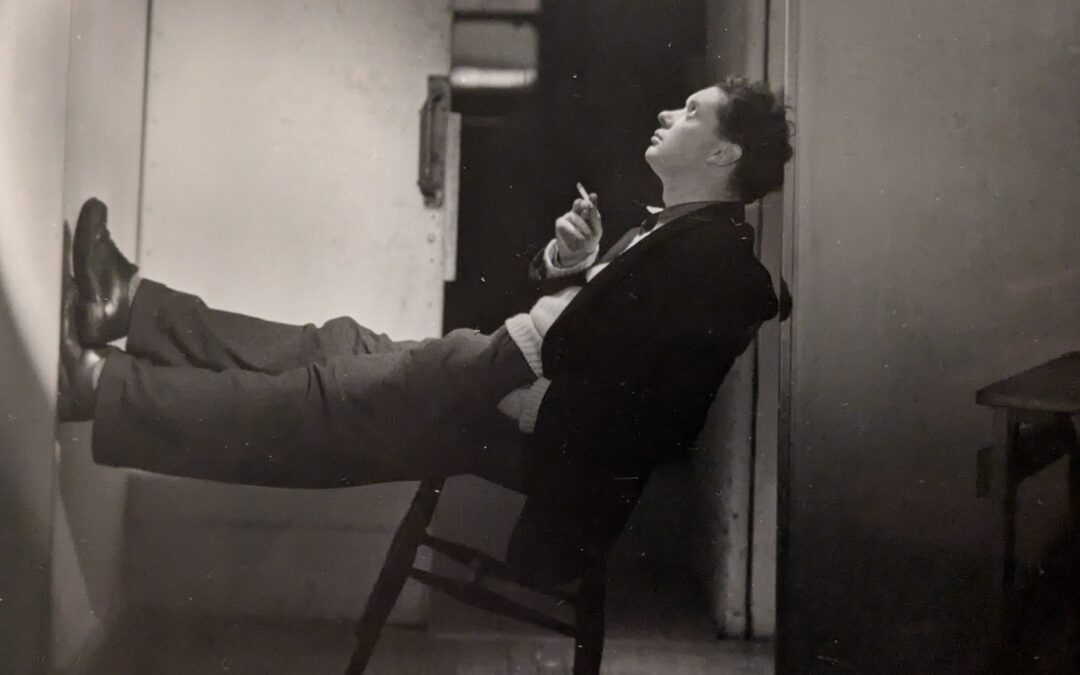
Photo: Dylan Thomas by Lee Miller.

There’s plenty of videos, articles and books about how to write a book, make a video, do any kind of art form, or even learn a trade — and this is great as it gives people enough of an insight to try things out.

But I’ve never come across anything that discusses why we should work. Maybe it’s so embedded in our culture, from our earliest years, all through school and over family meals, that it’s just taken for granted that we simply have to get a job after our educational process. Like walking or breathing, we just do it. But why?

Why do I work? 

The starting point for me was when I was 9 years old, the age that I became aware that I was an independent entity and didn’t have to rely on my parents for everything. But I had a problem with school — I didn’t understand why I was there or what was going on. I felt stupid, bored and angry. I took out my frustrations on my three brothers, all of whom got on really well at school, and we fought like cat and dog most days of the week.

I knew I had to get away from the toxic family environment I had created and the first opportunity was to visit my aunt Virginia in England (we lived in Scotland). I was allowed to get the train to visit her and nobody blinked an eyelid that I was travelling alone. This, to me, was excitement and independence and when my cousin taught me how to smoke cigarettes I felt very grown up. 

At around that age I realised that work (doing a job) was another means of getting away from my brothers, from boredom, and the expectation to do homework. It was also what adults spent their days doing so it had, for me, a certain allure, an attraction.

My first “job” was more like a short lived company: I would cut down Christmas trees in the local woods — we lived in deep countryside near the Scottish town of Peebles — and sell them to neighbours. It was a powerful moment as I was proving to myself that I could take a step towards independence.

My next big moment was at university in Liverpool where I realised that going to lectures, reading books in the library, and hanging out with my geeky colleagues was really boring. I met a relative at a wedding who put me in touch with a property developer who hired me as a labourer on his building site — and I was in heaven as most of the tradesmen on site were ex-cons and the banter was hilarious. Lunch break consisted of going to the pub and drinking as much beer as we could. One of them later told me, “What we like about you Rupert is that we can take the piss, but you don’t take offence. It’s like water off a duck’s back.” That was high praise from a tough scouser who’d spent three years inside for burglary. 

By this stage in life I had worked out how to play the educational game — a minimal effort would see me through. The burden I’d carried through my first 10 years of school — that I’m an idiot — had been replaced with a powerful confidence that I could do anything I put my mind to — and a drive to help others get over those same barriers. The fact that I’d been able to get work easily — driving a truck for my Dad and selling books for my Mum’s publishing company were other jobs I did when a student — added to my self confidence. And confidence is a key requirement when travelling independently or getting jobs.

After university I avoided the siren call of big business and decided to hitchhike to Shanghai, and prove to myself that I’d be able to get a job without the benign influence of my parents. I never made it to Shanghai as I fell in love with Tibet where I found work as an English teacher, got kicked out by the Chinese police and ended up falling into journalism. 

Since then I worked as a volunteer aid worker in Romania and Bosnia-Herzegovina and, after getting married, I realised that I needed to earn some real money. I managed to worm my way into working as a consultant for EU and British government projects in Romania, Russia and the former Yugoslavia. I also worked as a PR consultant and, since lockdown, as a painter/decorator and gardener.

If I look back and ask myself why I did all those jobs, and what drove me, the main answer can be summed up in one word: independence. It’s all very well wanting to be independent but how can you survive for more than a few months on your savings? You may have rich parents but they’ll probably be worried, nagging you to come home, find a suitable wife, get a well paid job (“Daddy will arrange it!”) and settle down. You’ll soon realise that the only way to stay on the road, to maintain your independence, is to not only get a job — but learn how to get jobs quickly, anywhere.

But that’s not a complete answer; there’s something else at play here. I need to work or I get bored, lazy and depressed. The fact that work gives me motivation to get up in the morning, and provides an easy-to-follow programme for the day is what I’ve grown up with. It’s a part of my culture.

I first became aware of this problem — the sloth that comes with unemployment — when I finished running an EU project in Romania. The project had been really demanding, it required all my energy and time, and I was looking forward to a few months off when I’d be able to catch up with my sleep, hobbies, house repairs etc. But what happened? Nothing. Doing the most basic tasks seemed to take forever. All my energy, drive, and focus just evaporated. Why? Because I didn’t have anything I had to do every day; I had no reason to get up in the morning. When your intention is to do hobbies or exercises you always have a choice: shall I do it today or not? With work you don’t have that choice — you just have to show up. 

In order to stay motivated, structured and focused I realised that I need a job — or an intense project — or I would enable the lazy part of my character, get nothing done and end up being miserable. I need a job of some sort to get out of bed in the morning. 

Retirement is a useful concept to end this article on, but I think that it’s a trap. If I stop working in four years time, at the age of 67, as one is supposed to do, it will emotionally disable me and probably lead to an early grave. I intend to work until I drop, or have to be carried off, gibbering and dribbling, to a care home. 

So, in conclusion, why work? I do it so I can live happily and longer than I would do otherwise.

Now it’s over to you: Will you leave a comment below? Most comments add to the richness of my articles. Maybe you could explain what motivates you to work? Or not; I’d also be interested in any comments that explains the rationale for not working, or describing something other than work which can provide the daily motivation we all need to go on. Or maybe you could just tell the story of your first job?

My book 12 Jobs in 12 Months will be published in February 2026, by Stone Books (Edinburgh).

Final note: the photo associated with this article is of the great Welsh poet Dylan Thomas, by Lee Miller. 
What is the Psychology of Travel?

What is the Psychology of Travel?

If you're pressed for time, scroll down and see links to some really useful resources.

What does “The Psychology of Travel” mean? Is it some weird form of therapy? Am I a psychologist? The answer to these questions is NO, but I used to get mistaken for a therapist when I worked for a rehab clinic.

The psychology of travel is a means of preparing mentally for independent travel. It's valid for students about to leave education and embark on the great journey of life, as well as older people stuck in jobs or worrying about what to do in retirement.

I think the psychology of travel the most important thing to do before embarking on a long journey. It took me years and I wrote about it in my first travel book, 9 Months in Tibet.

When travelling for up to a year, or leaving home, you need to prepare psychologically. This is very different from “normal” travelling when you know exactly where you’re going and for how long. When you go on holiday, or a short trip, you don’t need to make any internal changes to the way you approach life. But when travelling properly you need to have no deadline; you may be travelling indefinitely -- or at least until you find a place that fits.

I developed the term after getting back from a trip to Thailand and India and suffering what is known as “culture shock”. Thailand had been so exotic and India so amazing that getting back to a grim and freezing homeland (Scotland) was really depressing. I also wanted to avoid what happened to me after that trip which was to become a pub bore on travelling in Asia, in fact that was why I started writing (to get the experiences out of my system and move on).

I went through a big learning curve after my first Asian trip and I really want to help people overcome the fear of travelling alone -- which held me back for many years -- share my experience of humility (which is essential for getting along with random strangers and also how to get jobs in foreign countries. My new book is called 12 Jobs in 12 Months and its aim is to help people realise that getting a job is easy if you have the right attitude.

Phases of Independent Travel

I think there are three phases of independent travel:

  1. Before – Mentally preparing for your journey into the unknown;
  2. During – The attitudes you need when you’re on the road;
  3. After – How to deal with the shock of coming home after a long time in somewhere totally different.

Each one of these phases is critical for the independent traveller: if you don’t learn how to “let go” of things at home you’ll never get away; if you don’t develop the right attitude towards people you’ll meet on the road you risk getting ripped off; and if you don’t prepare for the psychological shock of coming home you could end up in a depression.

If you want to travel independently you’ll need to develop a series of skills that will help you to cruise through these challenges, but like any new skills you need to practice them.

When I first wanted to travel independently I had three big problems: fear, no cash and no source of inspiration. I overcame my fear by a series of near-death experiences, all described in my Tibet book; I earned cash by driving a truck (and realised that earning money was the easiest problem to overcome); and I found inspiration by reading Bruce Chatwin and Ryszard Kapuscinski.

If you need inspiration to get up and go you might like the following articles, all of which have been written for people who want to start travelling independently (or escape from home):

Sources of Inspiration for future travellers

Get in Touch

I set up this blog to inspire people to travel independently, find work and get into their creative groove. That's what I've been doing for the last 40 years -- travelling, working and writing. I’m keen to write more articles about the psychological issues around travel, so I’d be very grateful if you would suggest a topic you’d like to learn more about. You can suggest a new topic, and experience or insight, by leaving a comment below this article.

First published in 2021, revised and updated in 2025.

#thepsychologyoftravel


Why Change Jobs?

Why Change Jobs?

One of the reasons I wrote a book called 12 Jobs in 12 Months was to show people that getting a job is easy.

Why is this important?

So many people I know feel stuck in their jobs. There are many reasons for this: the familiar complaints about bosses, colleagues, pay, hours; and a more deep seated fear that no job is safe, no company is immune from the vagaries of a globalised economic system. 

Some of these fears go back to the dawn of the industrial revolution when jobs had none of the legal protections we take for granted today, and workers could be fired on a whim. Other worries are new, like the threat of AI taking over office jobs. 

As I've managed to overcome these fears, it would be easy for me to dismiss them. But that would be arrogant and my aim in life is to help people -- to change jobs, overcome fear and travel independently. I spent the last 40 years working freelance, from project to project, in many different countries, and having built a reputation for honesty and hard work I went easily from one short term job (or project) to the next. All this gave me a sense of job security.

I know what it's like to feel trapped by a mortgage, I have experienced the way that HR departments treat applicants (like cattle), and I sympathise with anyone who just can't face these demons. 

My message isn't for everyone. It's for students who need to know the lay of the land before throwing themselves on the mercy of the job market. It's also for retired people who are wondering what they can do with the tremendous skills and energy they built up over 40 years; and I want to offer a lifeline for anyone who can't stand their job and is ready to jump. 

Two Approaches to Getting a Job

It's clear to me there are two approaches to getting a job: the formal, traditional way of approaching big organisations, joining thousands of others, filling in endless forms, being evaluated by an algorithm and probably getting rejected.

The other approach, my way, is to simply ask people if they need any help with their house. Many people complain they can't find anyone to paint rooms, fix walls, clear gardens, garages and attics. It may start out at just a few hours work and a good way to learn is to do the first few jobs unpaid -- treat it as a training session. 

I charge a low fee of £15 an hour, plus expenses, and can make enough to get by. I find that one job leads to another, one happy client becomes an advocate and people contact me out of the blue asking me to fix this, clear that, or paint their house. In my book I squeezed 12 jobs into a year and there's a certain amount of comedy involved -- constantly hustling for work, getting fired, and doing some quite bizarre jobs -- as well as moments of doubt ("will I be able to get a job next month?")

Doing building work is only one option: a retired person could do consultancy; anyone can do creative work, or casual work; all that's needed is courage and determination. The main thing to know is that there's plenty of work out there and by taking a job you will be doing the employer a favour. Another option is to write a book, and if you'd like to find out how to do it check out this article: 5 Reasons to Publish an Ebook.

For me, the key to getting work like this is humility, in other words I need to come off my high horse about being a successful project manager and EU consultant in the past, and embrace a future as a simple labourer.  This results in a great feeling of satisfaction. In fact, this whole experience results in a general feeling of liberation.

I'm sure many of you reading this article are not convinced; those short term jobs sound flaky, you may be worried about a lack of experience and qualifications, and I doubt you'll believe that you can learn most of these skills "on the job."

A more secure and profitable way into a new job is to learn a trade. The market is crying out for joiners, plumbers, electricians, plasterers and brickies -- look at how we've soaked up so many tradesmen from abroad -- and courses are available everywhere. Once you've learned the trade you can charge up to £350 a day, and that's enough to sustain the most expensive lifestyle. I looked for an article about this in the media but couldn't find anything useful in what Trump calls "The Lamestream Media", but I did find this article from a training agency which is worth looking at: How Learning a Trade is Helping Disillusioned Young People Get Back on Track.

If you want to move on but you feel a lack of courage, just get in touch and I'll try to help you. I love talking to people who want to change their life. It's something we can all do, it's never too late and I'm inspired by helping people bridge that gap. 

Contact me via this article -- just leave a comment below and I'll get back to you

#

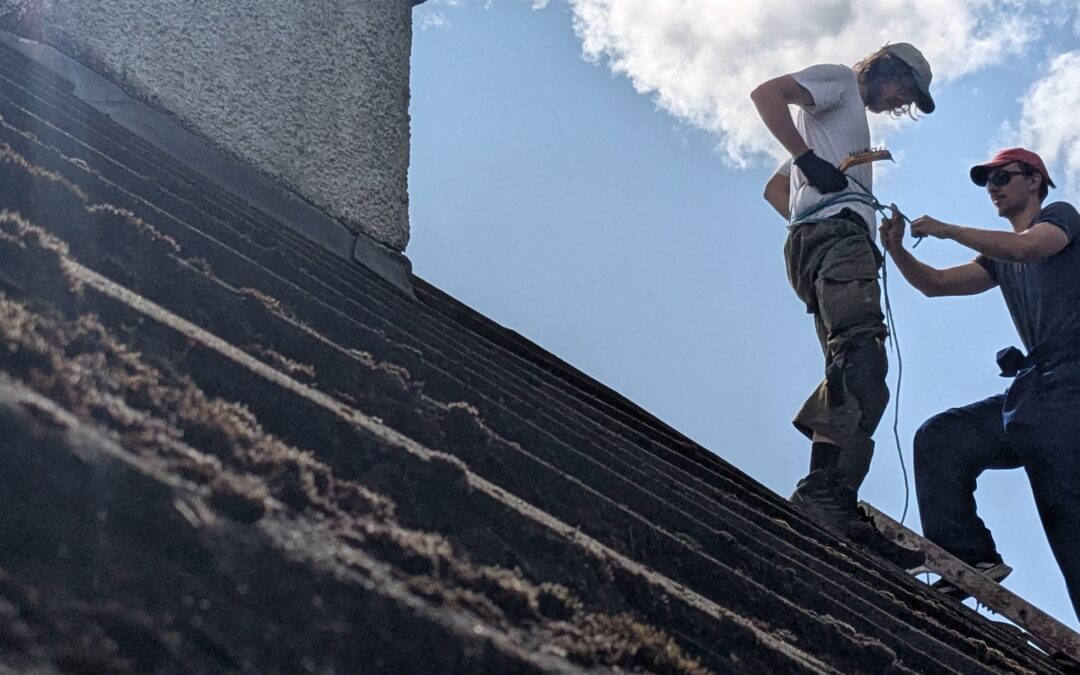
In case you're wondering: none of this article is written with AI. Also, you may be wondering who's in the photo: it's my son Luca and his cousin Rares Boboc.


My last three years in 7 bullet points…

My friend Dave Barnicle runs a bar in Liverpool. But he’s not your typical bar manager who hires and fires and shouts and chucks people out. In fact, Dave’s bar doesn’t even serve alcohol as it’s one of very few “dry bars” where addicts in recovery can hang out without feeling under pressure to drink. The place is called The Brink and, if you’re ever in Liverpool, I suggest you get some lunch there (the fish n’ chips are epic).

Dave is one of those people who’s searching for the meaning of life. Not satisfied with the Hitch Hiker’s Guide to the Galaxy answer to this question (42) he reads all sorts of impressive books, teaches Qi Gong, runs events and is what I would call a Creative Project Manager.

He recently set up a podcast where he talks to people he thinks are inspiring. I found his first podcast really gripping, even though the subject might seem a bit esoteric. It’s a 90 minute talk with Phil Shepherd about how the brain isn’t the only part of the body with intelligence. It’s one of those life-changing resources that I’ll save and listen to again at future moments.

When Dave asked me if I wanted to be interviewed for his podcast I thought: “Great…Okay…Fame at last…Hang on a minute! Me? Why would he want to interview me?”

Dave answered this question by saying: “I’ll be asking about the journey through Tibet, about your time in Romania, about your time with the military and the subsequent book, your semi-nomadic lifestyle, the trials and tribulations of being an author and trying to get published and self publish.”

Then I thought about something which has been bugging me for over a year: Why haven’t I written any blog articles about what I’ve been up to? I spent much of the last year on houseboats, but not a word has been written about it. Who not?

Now I’m in Liverpool (about to do the podcast) and I’ve just been in Scotland and Romania — shouldn’t I write about that? Shouldn’t I tell people what I’m up to? Apart from anything else, it might help Dave an outline formulate some questions for our podcast.

I’d like to start using this blog as a place to record all the weird and wonderful things I do. I have an interesting life, I’m on the road constantly, working all over the place, and I’d like to share the best moments.

So, without further ado, let’s get on with it…

What have I been up to?

  • About three years ago I moved from Bucharest to Liverpool and set up a PR business. But it didn’t work so I closed it down, learned from my mistakes and …
  • Went to Scotland where I published my Tibet memoir and promoted it by cycling round the Highlands, selling copies (I had a bike trailer to carry them) and giving talks. I started writing another book on that trip and have been writing ever since (you might like my fairy tale).
  • I then went to live with my parents in the Borders Region of Scotland. My mother had cancer and died about two years ago. That was a big blow as she was really the big love of my life — she inspired me and supported me and I still can’t accept that she’s gone. I did a wee book about her and this slideshow of photos celebrating her life.  
  • At the start of last year (2018) I thought I should get a proper job and ended up working for an insurance company as a copywriter. Needless to say it didn’t last and they spat me out as a misfit; as everyone had said it’s too late for me to change from being a freelancer to a company man. But I learned some interesting things (these companies are sitting on billions of pounds of unclaimed pensions). Also, it brought me down to Reading where I…
  • Lived on a houseboat. I spent 6 months moored up in a huge barge (called Marge) in the centre of Reading, writing books and doing freelance PR for Castle Craig Rehab Clinic. Then I was asked to look after a small houseboat which was mobile and I moved down the Kennet and Avon Canal, spent the winter freezing near Devizes, and seeing a lot of my ex and my kids, who are located nearby, and ended up at Bath. I loved living on houseboats and recommend anyone who’s interested to hire one for a weekend. England has restored 3000 miles of its canal network, which used to be 5000 miles long, and there are 80,000 houseboats with people living on them.
  • This brings us more or less to the present where three words summarise my recent life: Scotland, Wiltshire and Romania. Let me explain…
  • My current job is in Romania where I consult for the EU on energy efficiency; we’re selling the family home in Scotland and I go up there as much as I can to help out; and whenever I go between these two locations I try and stop off in Wiltshire where my kids are located.

That’s it…that’s my last three years in 7 bullet points.

What’s next? My long term plan is to cycle round the world but I need to keep my nose to the grindstone as I’ve got to pay off my debts and that sometimes feels like it’s taking forever.

I’d be really grateful if you would leave a comment under this article. I really appreciate any feedback, even if it’s critical or inane…it’s just a reminded that someone’s reading this stuff and it encourages me to write more. 

Working in Berlin

Working in Berlin

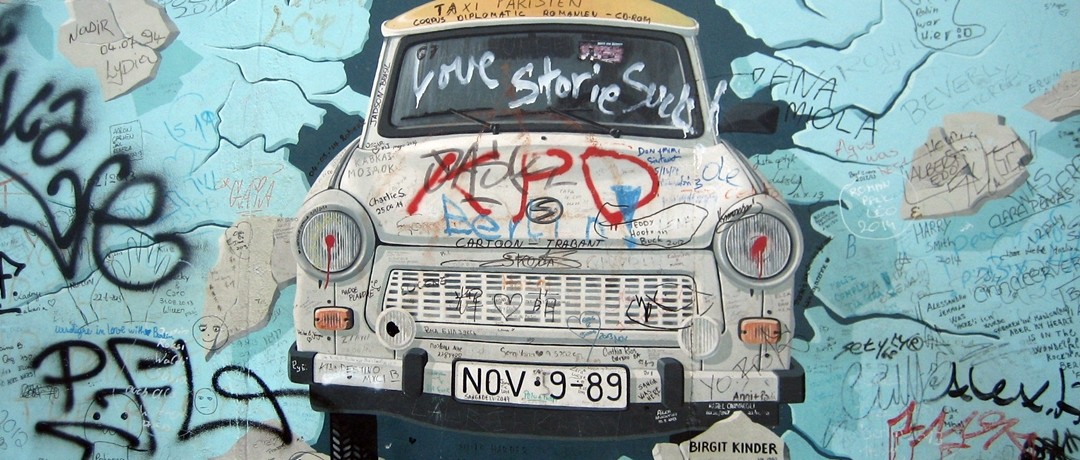
Berlin has played an important part in my life: it was the first place I visited on my trip to Tibet and I spent a month there in 1986, before the wall came down, and I was lucky enough to get a good look at a city that had been carved up by the great powers. (more…)