by Rupert Wolfe Murray | 26 Nov, 2025 | 12Jobsin12Months, Advice for Future Travellers, Journeys, Psychology of Travel, Travel Advice & Skills
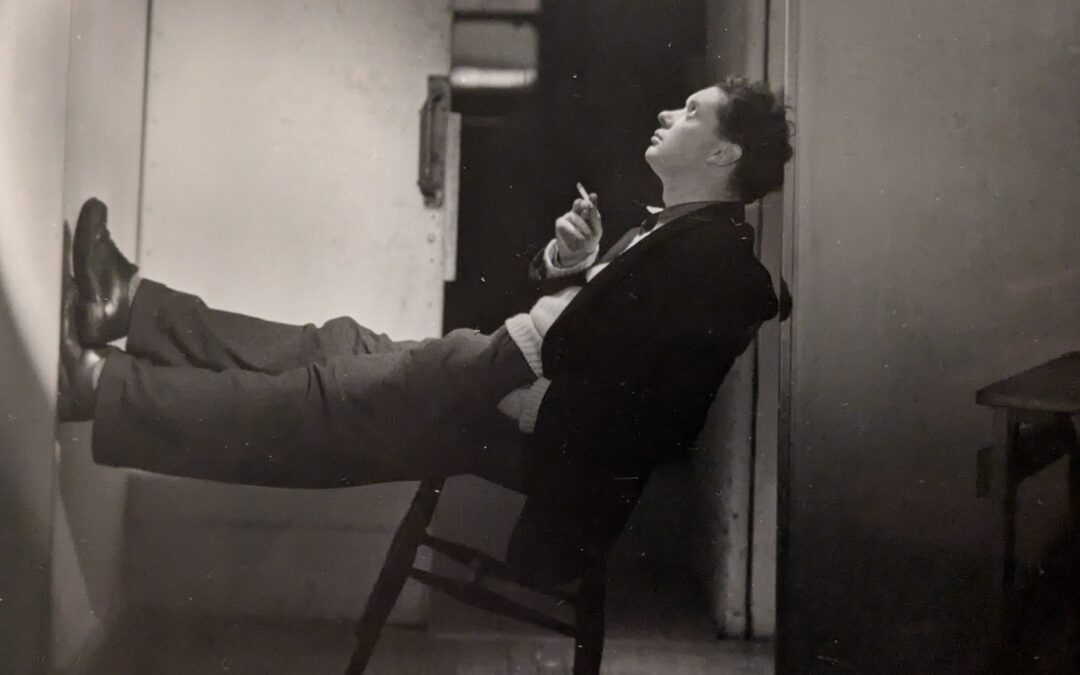
Photo: Dylan Thomas by Lee Miller.
There’s plenty of videos, articles and books about how to write a book, make a video, do any kind of art form, or even learn a trade — and this is great as it gives people enough of an insight to try things out.
But I’ve never come across anything that discusses why we should work. Maybe it’s so embedded in our culture, from our earliest years, all through school and over family meals, that it’s just taken for granted that we simply have to get a job after our educational process. Like walking or breathing, we just do it. But why?
Why do I work?
The starting point for me was when I was 9 years old, the age that I became aware that I was an independent entity and didn’t have to rely on my parents for everything. But I had a problem with school — I didn’t understand why I was there or what was going on. I felt stupid, bored and angry. I took out my frustrations on my three brothers, all of whom got on really well at school, and we fought like cat and dog most days of the week.
I knew I had to get away from the toxic family environment I had created and the first opportunity was to visit my aunt Virginia in England (we lived in Scotland). I was allowed to get the train to visit her and nobody blinked an eyelid that I was travelling alone. This, to me, was excitement and independence and when my cousin taught me how to smoke cigarettes I felt very grown up.
At around that age I realised that work (doing a job) was another means of getting away from my brothers, from boredom, and the expectation to do homework. It was also what adults spent their days doing so it had, for me, a certain allure, an attraction.
My first “job” was more like a short lived company: I would cut down Christmas trees in the local woods — we lived in deep countryside near the Scottish town of Peebles — and sell them to neighbours. It was a powerful moment as I was proving to myself that I could take a step towards independence.
My next big moment was at university in Liverpool where I realised that going to lectures, reading books in the library, and hanging out with my geeky colleagues was really boring. I met a relative at a wedding who put me in touch with a property developer who hired me as a labourer on his building site — and I was in heaven as most of the tradesmen on site were ex-cons and the banter was hilarious. Lunch break consisted of going to the pub and drinking as much beer as we could. One of them later told me, “What we like about you Rupert is that we can take the piss, but you don’t take offence. It’s like water off a duck’s back.” That was high praise from a tough scouser who’d spent three years inside for burglary.
By this stage in life I had worked out how to play the educational game — a minimal effort would see me through. The burden I’d carried through my first 10 years of school — that I’m an idiot — had been replaced with a powerful confidence that I could do anything I put my mind to — and a drive to help others get over those same barriers. The fact that I’d been able to get work easily — driving a truck for my Dad and selling books for my Mum’s publishing company were other jobs I did when a student — added to my self confidence. And confidence is a key requirement when travelling independently or getting jobs.
After university I avoided the siren call of big business and decided to hitchhike to Shanghai, and prove to myself that I’d be able to get a job without the benign influence of my parents. I never made it to Shanghai as I fell in love with Tibet where I found work as an English teacher, got kicked out by the Chinese police and ended up falling into journalism.
Since then I worked as a volunteer aid worker in Romania and Bosnia-Herzegovina and, after getting married, I realised that I needed to earn some real money. I managed to worm my way into working as a consultant for EU and British government projects in Romania, Russia and the former Yugoslavia. I also worked as a PR consultant and, since lockdown, as a painter/decorator and gardener.
If I look back and ask myself why I did all those jobs, and what drove me, the main answer can be summed up in one word: independence. It’s all very well wanting to be independent but how can you survive for more than a few months on your savings? You may have rich parents but they’ll probably be worried, nagging you to come home, find a suitable wife, get a well paid job (“Daddy will arrange it!”) and settle down. You’ll soon realise that the only way to stay on the road, to maintain your independence, is to not only get a job — but learn how to get jobs quickly, anywhere.
But that’s not a complete answer; there’s something else at play here. I need to work or I get bored, lazy and depressed. The fact that work gives me motivation to get up in the morning, and provides an easy-to-follow programme for the day is what I’ve grown up with. It’s a part of my culture.
I first became aware of this problem — the sloth that comes with unemployment — when I finished running an EU project in Romania. The project had been really demanding, it required all my energy and time, and I was looking forward to a few months off when I’d be able to catch up with my sleep, hobbies, house repairs etc. But what happened? Nothing. Doing the most basic tasks seemed to take forever. All my energy, drive, and focus just evaporated. Why? Because I didn’t have anything I had to do every day; I had no reason to get up in the morning. When your intention is to do hobbies or exercises you always have a choice: shall I do it today or not? With work you don’t have that choice — you just have to show up.
In order to stay motivated, structured and focused I realised that I need a job — or an intense project — or I would enable the lazy part of my character, get nothing done and end up being miserable. I need a job of some sort to get out of bed in the morning.
Retirement is a useful concept to end this article on, but I think that it’s a trap. If I stop working in four years time, at the age of 67, as one is supposed to do, it will emotionally disable me and probably lead to an early grave. I intend to work until I drop, or have to be carried off, gibbering and dribbling, to a care home.
So, in conclusion, why work? I do it so I can live happily and longer than I would do otherwise.
Now it’s over to you: Will you leave a comment below? Most comments add to the richness of my articles. Maybe you could explain what motivates you to work? Or not; I’d also be interested in any comments that explains the rationale for not working, or describing something other than work which can provide the daily motivation we all need to go on. Or maybe you could just tell the story of your first job?
My book 12 Jobs in 12 Months will be published in February 2026, by Stone Books (Edinburgh).
Final note: the photo associated with this article is of the great Welsh poet Dylan Thomas, by Lee Miller.
by Rupert Wolfe Murray | 6 Nov, 2025 | 12Jobsin12Months, 9 Months in Tibet, Advice for Future Travellers, Journeys, Psychology of Travel
If you're pressed for time, scroll down and see links to some really useful resources.
What does “The Psychology of Travel” mean? Is it some weird form of therapy? Am I a psychologist? The answer to these questions is NO, but I used to get mistaken for a therapist when I worked for a rehab clinic.
The psychology of travel is a means of preparing mentally for independent travel. It's valid for students about to leave education and embark on the great journey of life, as well as older people stuck in jobs or worrying about what to do in retirement.
I think the psychology of travel the most important thing to do before embarking on a long journey. It took me years and I wrote about it in my first travel book, 9 Months in Tibet.
When travelling for up to a year, or leaving home, you need to prepare psychologically. This is very different from “normal” travelling when you know exactly where you’re going and for how long. When you go on holiday, or a short trip, you don’t need to make any internal changes to the way you approach life. But when travelling properly you need to have no deadline; you may be travelling indefinitely -- or at least until you find a place that fits.
I developed the term after getting back from a trip to Thailand and India and suffering what is known as “culture shock”. Thailand had been so exotic and India so amazing that getting back to a grim and freezing homeland (Scotland) was really depressing. I also wanted to avoid what happened to me after that trip which was to become a pub bore on travelling in Asia, in fact that was why I started writing (to get the experiences out of my system and move on).
I went through a big learning curve after my first Asian trip and I really want to help people overcome the fear of travelling alone -- which held me back for many years -- share my experience of humility (which is essential for getting along with random strangers and also how to get jobs in foreign countries. My new book is called 12 Jobs in 12 Months and its aim is to help people realise that getting a job is easy if you have the right attitude.
Phases of Independent Travel
I think there are three phases of independent travel:
- Before – Mentally preparing for your journey into the unknown;
- During – The attitudes you need when you’re on the road;
- After – How to deal with the shock of coming home after a long time in somewhere totally different.
Each one of these phases is critical for the independent traveller: if you don’t learn how to “let go” of things at home you’ll never get away; if you don’t develop the right attitude towards people you’ll meet on the road you risk getting ripped off; and if you don’t prepare for the psychological shock of coming home you could end up in a depression.
If you want to travel independently you’ll need to develop a series of skills that will help you to cruise through these challenges, but like any new skills you need to practice them.
When I first wanted to travel independently I had three big problems: fear, no cash and no source of inspiration. I overcame my fear by a series of near-death experiences, all described in my Tibet book; I earned cash by driving a truck (and realised that earning money was the easiest problem to overcome); and I found inspiration by reading Bruce Chatwin and Ryszard Kapuscinski.
If you need inspiration to get up and go you might like the following articles, all of which have been written for people who want to start travelling independently (or escape from home):
Sources of Inspiration for future travellers
Get in Touch
I set up this blog to inspire people to travel independently, find work and get into their creative groove. That's what I've been doing for the last 40 years -- travelling, working and writing. I’m keen to write more articles about the psychological issues around travel, so I’d be very grateful if you would suggest a topic you’d like to learn more about. You can suggest a new topic, and experience or insight, by leaving a comment below this article.
First published in 2021, revised and updated in 2025.
#thepsychologyoftravel
by Rupert Wolfe Murray | 4 Apr, 2024 | 12Jobsin12Months, Journeys, My books, Psychology of Travel
This is a difficult question to answer. It was easy enough to make the decision to do 12 jobs in 12 months, but now that I’ve done them (I finished in December last year) and have to write up the stories, I’m faced with strong internal reluctance to get started. Part of me knows that what I did last year was unusual and people, presumably, will be interested.
I’ve just finished a decorating job and it’s always really hard to transition from “normal” work to the introspective task of writing. I feel a strong pull towards YouTube, catching up on the news, sharing silly messages on WhatsApp, organising my next journey, cleaning the house, washing up, going for long walks — doing anything other than looking into my thoughts, feelings and memories. Avoidance is the name of the game
They say that money makes the world go round but the same could be said for jobs. Without jobs people would be broke and they’d also be without a daily structure, a routine that gets them up in the morning and pulls them through life.
Most jobs last for years, some for decades, and wouldn’t it be interesting to read about someone who did 12 of them in a year? When I’ve mentioned it to people they often ask questions: What was your favourite job? (Catering). How did you get jobs? (Networking). Did these jobs take you abroad? (Yes). Were you well paid? (Sometimes). Did you get fired? (Yes). What gave you this idea? (A conversation).
Funnily enough nobody has asked me why I did 12 jobs in 12 months or why I’m writing a book about it, and that’s why I’m writing this article as I think it’s an interesting question.
I haven’t come across many books written about jobs, which is odd considering how much of our lives we dedicate to them. One of the most interesting aspects of jobs, in my view, is HR (Human Resources) — how companies recruit people. Everything I’ve seen and heard about HR professionals is appalling: their approach to recruitment is often idiotic, their value is questionable and if you ask someone who works for a big company they invariably have nothing good to say about HR. This gives me an interesting feature for each chapter — how did I get the job? The characters I worked with will be another interesting element in the book.
In terms of political context an interesting factor is A.I. (Artificial Intelligence) which is so clever that it threatens to take away many types of jobs. One of my jobs (working for the Post Office) felt like it was a role that will soon be replaced by machines; I felt like I was being trained and managed like a robot and the job itself (delivering parcels) is so micromanaged that when the machines take over they’ll know everything their human predecessors did, and do it better (at least in terms of maximising profits).
Maybe all jobs will be replaced by AI and robots soon? This doesn’t worry me as there’s enough money in the system to pay every citizen a Universal Basic Income and people could work as carers, artists/writers/musicians, community entrepreneurs, charity workers, academics, or just follow their dreams. It just needs a change of attitude that fits with new technology, and if you think about jobs they are just tasks that were developed during the industrial revolution. Their central function in our society is never questioned. The technology has changed but our attitudes haven’t: to be “normal” you must get a job.
I still haven’t answered the question about why I’m writing this book about 12 jobs? It feels rather arrogant to say “I’m writing it for people to learn about jobs!” Am I? How do I know if anyone is interested? What if they’re not? I don’t have an answer for these questions but what I can do is make it clear that I’m writing this for my own selfish purposes — because I think it’s interesting and I like to share my experiences in written form– and if nobody else agrees it won’t affect me too much. My pride, vanity and ego won’t be too bruised.
The other purpose of this book is to let people know what I’ve been up to (a nasty voice in my head says “Nobody’s interested and you’re an arrogant shit for assuming that anybody is!”) I have learned to ignore these naysayers in my head. As someone who is always on the move I like to let people know what I’ve been up to. I do this with updates on Instagram, this blog and, sometimes, books.
I find this blog a useful place to discuss ideas, some of which won’t make it into the book, and also my struggles with sloth, complacency and procrastination. You, the person reading this article, can help by writing a comment under here. Comments can help make the book better, as they sometimes challenge my thinking.
Finally, this is a good place to launch my new hashtag: #12×12
by Rupert Wolfe Murray | 19 Mar, 2024 | Opinions, Psychology of Travel
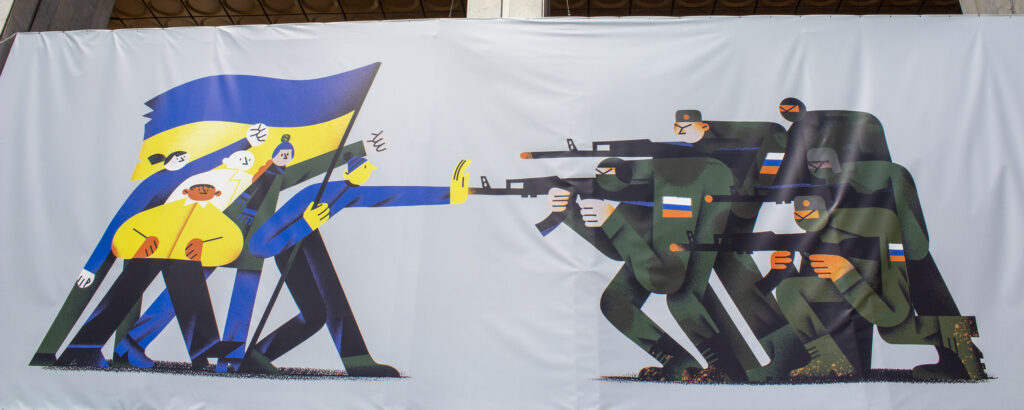
I first published this article in May 2022, just after the Russian Empire invaded Ukraine and I’m re-posting it now as the points I raised here are still very relevant (not much has changed in the Ukraine War).
It’s hard to imagine what could be worse than the barrages that are raining down on Ukrainian cities right now, but the rocket and artillery fire will eventually stop. A more long term risk for Ukraine, one that will permanently hobble its chances of recovery, is a bad peace treaty.
A good peace treaty would recognise Ukraine’s territorial sovereignty and the independence of its government, thus enabling it to rebuild. International aid would pour in and the country could quickly recover. A bad treaty, on the other hand, would disable Ukraine’s government, enshrine outside power brokers, and ensure that the country was so dysfunctional that it could never prosper or defend itself with a powerful army.
But surely a peace treaty is just what’s needed for Ukraine? Surely, anything that ends the war is good? That was the thinking in November 1995 when the leadership of Bosnia Herzegovina was bullied into signing the Dayton Agreement, a deal that is nicely summed up by Wikipedia: “The agreement has been criticized for creating ineffective and unwieldy political structures and entrenching the ethnic cleansing of the previous war.”
One of the problems with the Dayton Agreement was that it created a state within a state – the Serb controlled Republika Srpska – which includes the territory on which (according to international courts and tribunals) Bosnian Serbs committed genocide over the mostly Muslim population. The Serb-controlled entity has been blocking Bosnia’s progress ever since the deal and is now demanding independence. After a decade-long slumber, the Western powers are finally waking up to the risk of Russian/Serb mischief in Bosnia and are reinforcing their paltry armed force based there.
The peace treaty itself is “discriminatory” according to Almira Delibegović -Broome KC, a Bosnian/British lawyer based in Edinburgh. Bosnia’s constitution was drafted as part of the Dayton Agreement and the problem is that it assigns “privileged status” to three main ethnicities – Croat, Serb and Bosniak/Muslim. This means that if you are from a minority, Roma or Jewish for example, or even just want to call yourself a ‘Bosnian citizen’ “you cannot stand for the highest political office in the country, be a member of the presidency or the upper house of parliament”. It also ensures that Bosnia’s neighbours, Croatia and Serbia, have powerful levers of control over Bosnia’s triple-headed presidency. An example of this was when Republika Srpska vetoed Bosnia’s attempts to sanction Russia after they invaded Ukraine.
According to Vehid Šehić, founder of the Tuzla Citizens’ Forum in northeast Bosnia, another problem with the Dayton Agreement was that it made all three warring parties – the Croats, Bosniaks and Serbs – responsible for ongoing peace and development: “It’s not natural that the nationalist political parties that were active during the war were then made responsible for implementing the peace. It’s completely irrational. This is why we are still living in the wartime period of 1992 to 1995.”
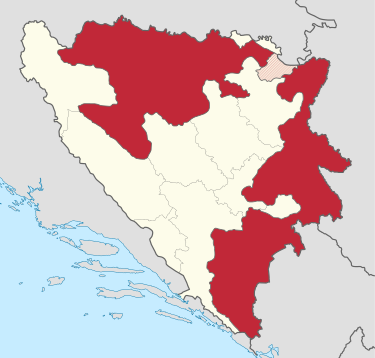
This map shows the extent of Serb-controlled territory within Bosnia Herzegovina. The Serb area is marked in red
Russia learned some valuable lessons at Dayton
Russia was going through one of its rare moments of liberalism at the time of the Dayton Agreement in 1995. Boris Yeltsin was in power and Russia’s Prime Minister, Victor Chernomyrdin (later to be ambassador to Ukraine) witnessed the treaty’s signature alongside the leaders of France, Germany, Spain, the UK and of course the USA. This so-called “Contact Group” of nations followed the USA, which was driving the whole process forward.
In 1995 Russia and the USA were closer than they had been in a century and when the massive NATO “Implementation Force” (IFOR) was imposed on Bosnia Herzegovina the Russians participated with a paratroop brigade, were given an Area of Responsibility in Northeast Bosnia and, extraordinarily, were under the military command of the overall NATO commander, US General Nash. This proves that Russia and NATO forces can work together perfectly well if there is a sensible leader in the Kremlin.
Things seemed to go well in Bosnia Herzegovina for the following years. All sides were glad the fighting was over and, initially, the Bosnian Serb leader (Milorad Dodik) was a gushing advocate of peace and reconciliation with the Bosnian Muslims and Croats. But when he realised that the West was losing interest, and he was losing popularity, he played the nationalist card and started portraying the Croats, Muslims and Western powers as the enemy. Needless to say, he’s very close to the Russians and who knows what advice, arms and propaganda support they give him.
The irony is that a liberal (Yeltsin) handed over the keys of the Kremlin to a man who believes in a governing style that has more in common with Ivan the Terrible. But it has to be said that Putin flirted with liberalism in his early years and had no objection to NATO expansion — as did Dodik and Victor Orban (flirting with liberalism seems to be a way for modern tyrants to get established).
I imagine that Russia’s former KGB operatives observed the Dayton Agreement with fascination; they would have seen how the West, with the best of intentions, enforced a treaty on a nation that has resulted in a totally dysfunctional state. The Russians can’t be blamed for the Dayton shambles, but they almost certainly learned from it and may see it as a useful model for stirring up trouble elsewhere. Maybe their plan in Ukraine is to rain down death and destruction, exhaust all parties, and then present a peace treaty that is based on “special rights” for the Russian minority as well as a large chunk of “autonomous” Kremlin-controlled territory. It would be a cheap way of controlling a large country: no need for an occupying army when you can veto anything you don’t like. This is what they tried to do with the Minsk Accord and after that failed to deliver Russia a suitable puppet, they invaded.
It would compound the tragedy of Ukraine if the Western powers were to bully Ukraine into signing a treaty with the aggressor that would debilitate them for generations to come. There is a tendency to assume that all parties come to peace treaties with good intentions. Such a mistake could be fatal for Ukraine.
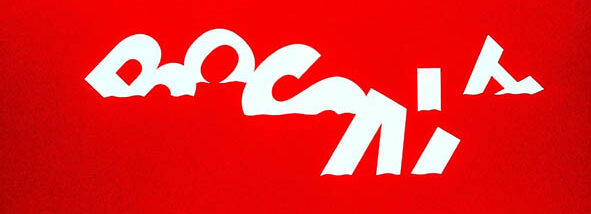
The image associated with this article was designed by the esteemed Bosnian/American graphic designer Čedomir Kostović. This poster appeared in the graphic history book Bosnian War Posters, by Daoud Sarhandi, published by Interlink on May 3rd 2022.
by Rupert Wolfe Murray | 19 Feb, 2024 | My books, Opinions, Psychology of Travel
Art books can be beautiful but often I get a gradual sense of boredom as I turn from one perfect image to another. Too much art, beauty and perfection can be overwhelming.
I don’t like the way art is presented. What bugs me are those convoluted, oh-so-clever texts that are displayed as you walk into exhibitions; texts that are often so full of obscure words that often I think you need to study art at university in order to understand the gobbledegook that curators sometimes write.
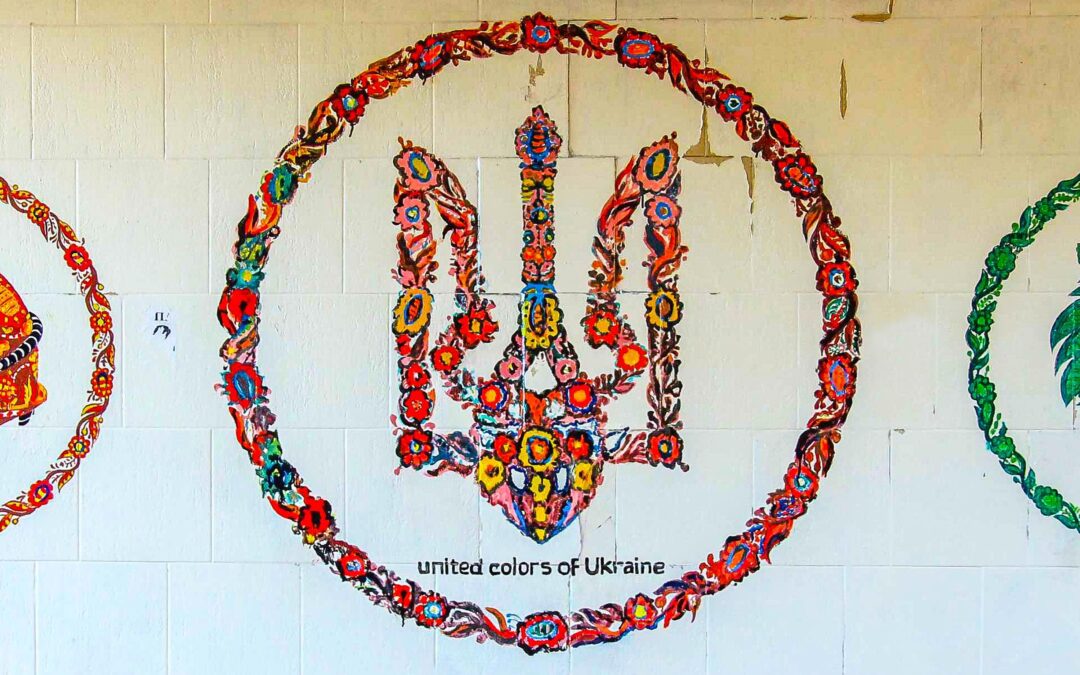
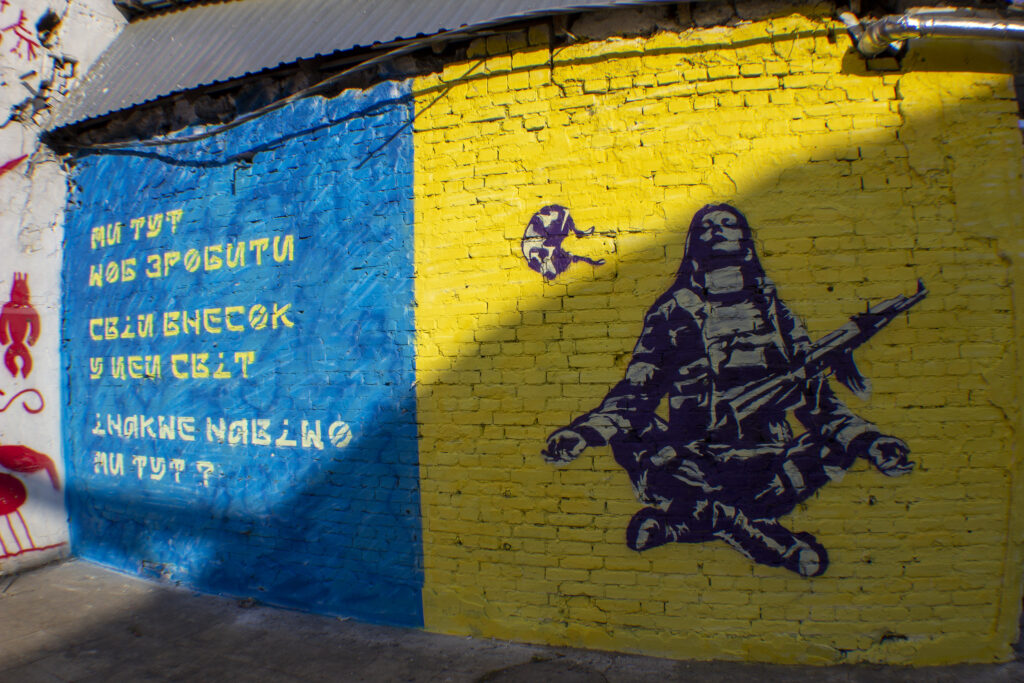
Daoud Sarhandi-Williams, the editor and designer, has avoided these linguistic problems in his latest book — Ukraine at War, Street Art, Posters + Poetry. His descriptions of the street art that he photographed in wartime Kyiv are clear and simple. He guides us through 300 pages of Ukrainian street art — some traditional, some modern — like a friendly local, guiding me (or you) through the medieval backstreets of an ancient Italian city; sharing a deeply personal and light-hearted commentary that’s so much more gratifying than the spiel the official tour guide says every day to the latest batch of tourists.
Since visiting Zaporizhzhia last summer, where I worked as a volunteer, I’ve read several books on Ukraine. The only one I’d recommend is called In Wartime; Stories from Ukraine by Tim Judah. One is a novel called Death and the Penguin by Ukraine’s most famous novelist, Andrey Kurkov. Apparently it’s quite a famous tome among the literati but I found it glum and disappointing. It has black humour in spades but none of the sparkles of joy and humour that can be found in the works of the great Ukrainian-born author, Mikhail Bulgakov, a master of black humour and author of The Master and Margarita.
But I shouldn’t be too harsh on Andrey Kurkov as he did write an excellent foreword for this wonderful book I’m reviewing. Here’s an extract: “Ukraine at War: Street Art, Posters + Poetry will guide you through today’s Ukraine more honestly than any future history might…What this book shows is the restorative power of art in a time of war…Art let’s us look at today’s pain from the viewpoint of the future, so there can be a future.”
It’s not just the images that make this book worth reading. The concise words that accompany the street art transform it into a great book. I don’t think I’ve ever seen an art book like this, with such a subtle written guide easing us through the images, and the tragic modern history of Ukraine. How did this come about? Why isn’t it presented like every other art book — just image after image but no narrative to pull us along.
To answer that question we need to look to the author, an old friend I used to work with in Bosnia: Daoud Sarhandi-Williams. Daoud trained as a film editor at the BBC in London during the late 1980s, when the BBC had a lot more creative freedom than it does now. You might be wondering “What’s this got to do with it?” My answer is “everything”, as he not only wrote the text for this book, he also did the graphic design. (The book was published by Interlink in the USA and is distributed globally by Simon and Schuster).
Daoud’s method is to put together art books in the same way he’d put together a film: selecting images and words that create tension, make highs and lows, and drive the narrative forward. And it works, just as a good film will keep you glued to the screen for two hours. I was pulled through the pages of the book as if by a string.
The bulk of the book covers issues like historic statues being covered with sandbags to protect them against Russian bombs (an image of Dante’s indignant face, peeping out from a pile of sandbags, pops into mind), modern street art and graffiti, traditional Ukrainian folk-art being adapted to a modern setting (like painting flowers on tank traps); a massive display of captured Russian tanks on show in Kyiv’s main boulevard in the summer of 2022, anti-war graphics; and, the most beautiful chapter “Murals, Murals Everywhere” which consists of massive paintings covering the sides of entire blocks of flats. To my surprise, few of these murals show images of war, they tend to portray people, nature and beautiful images from the artist’s fantasy. There’s a lot of children in the book, making their own art and sometimes selling it, and plenty of flowers which are, the author writes, “cherished in Ukraine.” There are photos of people celebrating, having a good time, proving that life goes on despite the war.
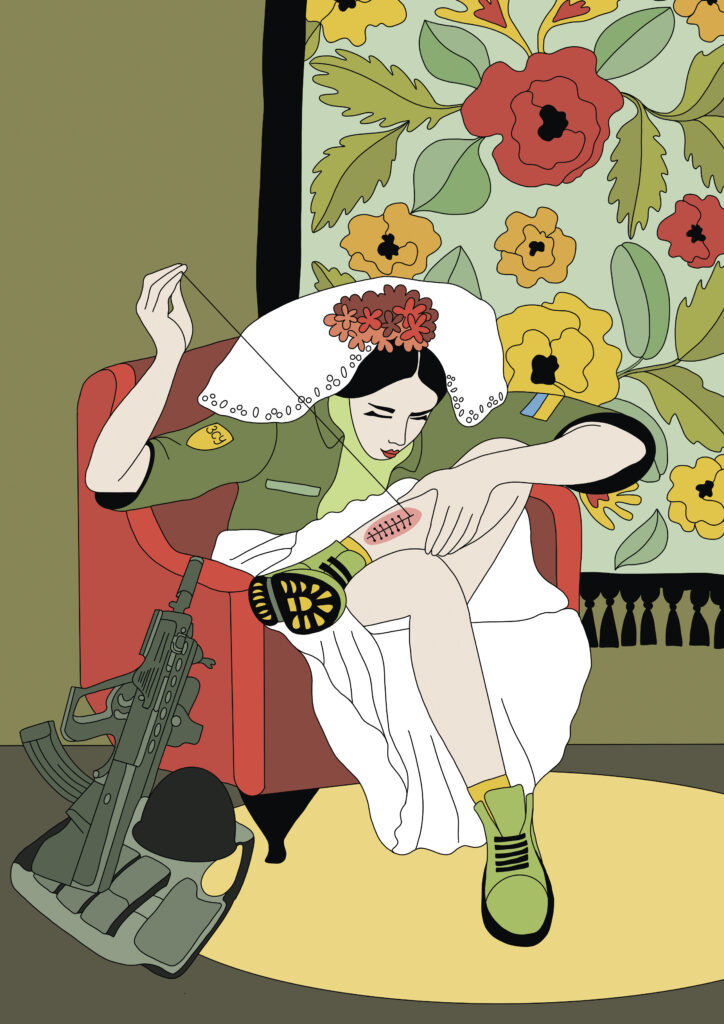
If there is a message in this book it is that artists, and presumably the people of Ukraine, don’t want to dwell on the horrors that the Russian Empire has inflicted on them; they want to celebrate their independence, their freedom, and their ancient culture. A deeper message that I picked up is that the Ukrainian people will never give up. Now they’ve got their independence from the Russian tyrant, there is no way they’ll give it up. Some Western pundits say “If Trump gets in the war is over!” But I don’t buy that line. I’m sure they will fight on, just as the Bosnians did when they were invaded by the much-more-powerful Serbian army and despite the fact they were denied Western arms to defend themselves.
The Museum Blues
By now your attention may be flagging, you may have reached the point that I call “Museum Blues” — when the exhibition, or art book (or this article), has overwhelmed you. When this happens to me, as it often does, in museums and galleries, I feel exhausted.
At this point in the Ukraine book Daoud, the film editor, makes his move. He changes the pace and retains our attention as only the best films succeed in doing.
For me, the chapter on murals was the high point and I needed a break. I was also wondering “How are they made?” Like a butler who anticipates his master’s every need, Daoud plunges the reader into two chapters that give a different perspective: he tells the story of how a group of artists paint a massive mural of “the ghost of Kyiv”, a heroic pilot who stood up to the Russian Air Force when they tried to capture Kyiv in early 2022. The next chapter is a documentary-style presentation of a group of graffiti artists who use their skills to paint camouflage on vehicles which have been donated to the war effort. These chapters are the equivalent of the “making of” documentaries that sometimes accompany films.
Most books of this nature, and most films for that matter, end with a slight sense of disappointment. But Daoud Sarhandi-Williams knows that he must end with a bang. Endings are really important for filmmakers but, I suspect, they’re not for those who make art books. The concluding chapter is titled “To End a Book: In Conclusion”, and it’s a play on the title of a book called To End a War, by Richard Holbrooke, the US Diplomat who coordinated the ending of the Bosnian War in a way that didn’t resolve anything and now, thirty years later, Bosnia is still stuck economically and politically. Holbrooke’s mistake was to award the Serb aggressors with 49% of Bosnia’s territory and force this “solution” on the Bosnians. Subsequently, the same Serbs who ran a war of genocide against their neighbours then set up a racially pure Serbian mini-state within the current nation of Bosnia Herzegovina. What could possibly go wrong?
I agree totally with what Daoud writes in the conclusion: “Russia must be vanquished before any meaningful diplomacy can begin– lest it ends up with a Bosnia-style lethal peace deal. Ukraine fights on with awe-inspiring courage. This quality extends throughout the population…Such bravery and resilience — as well as faith in the power of art — still has the capacity to surprise us. As T.P. Cameron wrote in the trenches of the First World War:
Two things have altered not
Since first the world began
The beauty of the wild green earth
And the bravery of man.
From Magpies in Picardy, published posthumously in 1919.”
N.B. I had no intention of writing a review of Daoud’s Ukraine book as I’d seen it in proof form (I helped in various small ways) and rarely write book reviews. But when I read through the hardback version I released it was quite different, and much better, than the version I’d seen on my screen. It’s a gripping and fascinating insight into a country that is managing to stand up to the world’s biggest bully. It’s also a surprising book in that I had no idea such great street art was being produced in Ukraine, that the local authorities encourage it, and this work may well be the testament to Ukraine’s indomitable spirit, in the future, when they finally break the grip of Russia’s rotten empire.
Ukraine at War, Street Art, Posters + Poetry, by Daoud Sarhandi-Willians, was published in 2023 by Interlink Books. You can get a copy from the publisher here or from Amazon here.
All the photos in this article were taken by the author/designer: Daoud Sarhandi-Williams.