by Rupert Wolfe Murray | 27 Jan, 2021 | Reviews
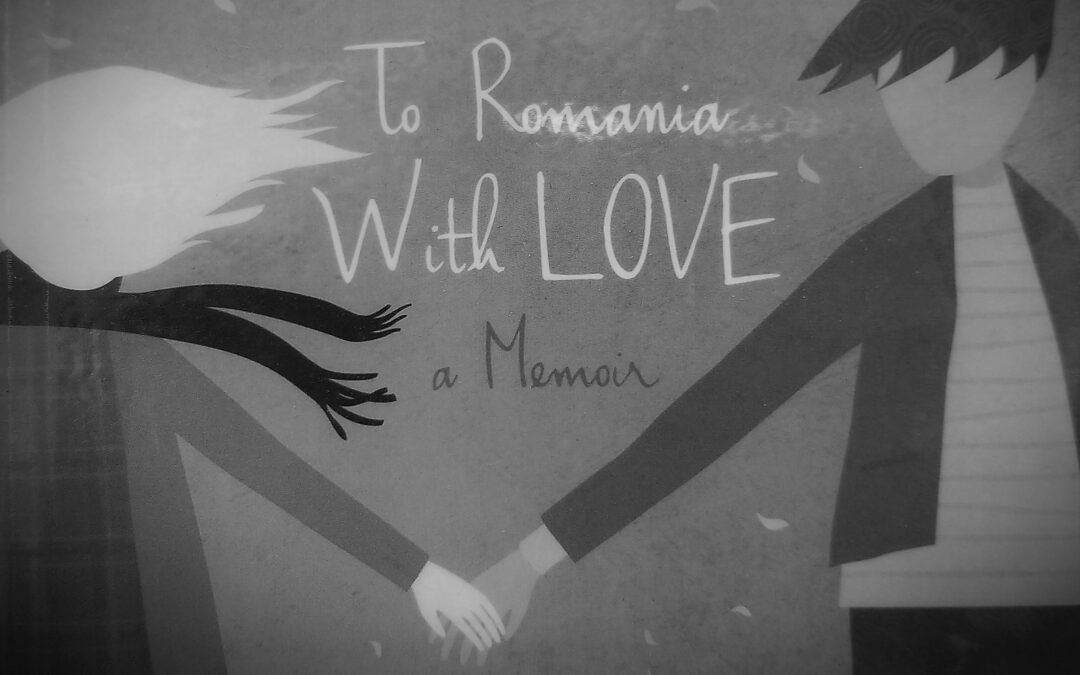
I sometimes review* books on this blog — either because they are totally brilliant or really bad. This one is a bit of both. This is my view of Tessa Dunlop’s To Romania with LOVE, which was published in 2012
This is a book that should never have been published — the author’s introverted husband tried to stop it and is probably still cringing — but I’m glad it was because it’s a snapshot of a particular time in Romanian history and the details of an Anglo-Romanian relationship (endless family misunderstandings, Britain’s horrendous visa application system pre-Brexit, as well as wildly different attitudes towards money, work, leisure) are fascinating.
Now that we’re out of the EU maybe Britain will go back to imposing deliberately opaque immigration rules on people the British tabloids don’t approve of. Maybe it’s the end of easy cross-border marriages and divorces?
On one level I wouldn’t recommend this book to anyone as it’s badly edited (why didn’t they delete all the Romanian words she uses, without translation, plunging all non-Romanian speakers into confusion?); but on the other hand I’d recommend it to all those having a relationship with a Romanian. It offers an insight into their history of poverty and Communism, and the resulting behavioural patterns.
I almost didn’t get past the first few chapters, which are set in Romania, as they really grated. I know the area she describes, and worked in a nearby village at the same time (almost 30 years ago), and while there were no factual errors I didn’t like her style, pace and observations. She’s much better when describing things in the UK.
This rather breathless book is full of things that wouldn’t make sense to anyone who doesn’t know the locations. For example, on page 205 she writes “He almost ran down Jules Michelet…” Surely any normal reader would assume that he had almost “run down” someone with a French name with his car? Fortunately I happen to to know that Strada Jules Michelet is the location of the British Embassy in Bucharest.
What are editors and publishers for if not to spot such problems? Isn’t it obvious that if things only make sense to people who know the Romanian words that fill the book, not to mention the locations, they are drastically reducing their audience?
When I used to run a charity in Romania many of our volunteers would write reports using Romanian words, words like caruta (cart) that we would use daily; but they were writing for an internal audience in a small charity, not a big publishing house like Quartet.
There are also incidents in the UK that don’t make any sense: for example near the end of the book they go to visit her parents in Scotland; they hire a car and then, quite near the parents’ house, crash it; not only is there no mention of any detail of the actual accident; but in the next scene they are in Weston Super Mare — beyond Bristol, 500 miles to the south. Suddenly, in the very next scene, they are arriving at their parents house in the Highlands of Scotland, in a car that has a Tardis-like quality of repairing itself and being in two places at once.
None of this seems to bother the rave reviewers you can see on Goodreads, Amazon and on the back of the book. Toby Clements, of the Daily Telegraph, says “a rare, brave and honest account of finding love and holding on to it.”
The common theme running through all this praise is “honesty” and I have to agree with them. Despite my criticisms I liked this book and felt close to all the characters Tessa so lovingly described. Yes, they are all deeply flawed but aren’t we all? And, come to mention it, aren’t most marriages what the Americans would call “a train wreck”?
Tessa Dunlop not only shows great honesty in writing about a difficult relationship but also a lot of courage. This book should never have been written as one doesn’t write (or even Tweet) about relationship difficulties — it’s not the decent thing — so that bloke Clements from the Telegraph is right in saying that such courage in publishing stories like this is “rare”.
Reading this book makes me feel closer to Tessa, who I met a few times in Bucharest, and her introverted Romanian husband (who I never met and probably never will). Tessa clearly loves Romania as she’s produced a series of short YouTube videos about Great Romanians which are really very good — she has something of the delectable Joanna Lumley on screen — and I’m keen to read her next book which is about Romania’s stylish and clever Queen Marie “of Edinburgh”, who reigned in the inter-war period.
I’ve just realised the parallels between Tessa Dunlop and Queen Marie — both were upper class Scots who married Romanians in difficult circumstances; and I expect that as many people predicted the royal marriage wouldn’t work as said that Tessa’s love affair was just “another of her projects” and she would soon drop him.
As far as I know Tessa has managed to keep her marriage on the road, unlike me (I also married a Romanian) — and for this she deserves a lot of praise. Not only is it hard to keep any marriage together in this day and age, when divorce is so easy, but it’s especially hard when you marry a foreigner from a country that was put through the mill by the Communists.
A shorter version of this review was first published on Goodreads.
*A word about reviews: I only do them for books that inspire or infuriate me. Some of them are very old; books that I’ve stumbled across by chance; but books that are worth knowing about. I don’t think I’ve ever reviewed a new book because I don’t want to fork out an inflated amount — and this is my point here: the media only review new books because publishers send them free copies, take them out to lunch (or send them God knows what incentives during lockdown); the whole “review” part of the modern media is built around new things being sponsored, even though most of them are far worse than the classics. “Why not review the classics?” You might ask. You could make a series of in-depth articles out of them. The answer is simple; there’s no charming public-school girl persuading you do to so on the phone, or offering to take you out for a drink later on.
The other way author’s get reviews is call on their friends. This works particularly well when the friend is a journalist, as they have a lot more reach than my pals who can only post something on Amazon or Goodreads. You can spot this happening every time a journalist writes a book as its cover is plastered with praise from…other journalists.
That’s how the cookie crumbles when it comes to promoting books.
by Rupert Wolfe Murray | 20 Mar, 2020 | Reviews
Here’s the press release for my new travel book:
Escape the virus (at least for a few hours) with Rupert Wolfe Murray’s new travel book: Himalayan Bus Plunge — And other stories from Nepal.
In his introduction to Wolfe Murray’s first travel book, Alexander McCall Smith wrote: “We are there with Mr Wolfe Murray, experiencing his discomfort and anxiety, but sharing, too, his insights.”
Read about the author’s fear of going off a cliff on a rickety Nepalese bus, his horror of going home (“Culture Shock!”), and meet a unusual cast of characters: a gardener who translates for aid agencies; a brain surgeon who drives like a demon; and the Tibetan doctor who diagnosed the author’s fever as “fire in the belly”.
“My original aim was to offer travellers to Nepal a complement to the Lonely Planet type guidebooks,” said Rupert Wolfe Murray, who is currently based in Brighton. “Then along came Coronavirus and I was told now is a terrible time to publish a travel book as nobody is making any travel plans. I’m sure that’s true but I also think this is a good time to publish as people are stuck at home looking for something new to read.”
Pre-publication feedback:
“Stories that are funny and always compelling. Rupert Wolfe Murray is a throwback to an earlier bolder time, like finding Hemingway alive and well on Oxford Street.” Chris Stephen, journalist and war reporter
“Your written prose is strong and well crafted. You have a very interesting personal history in the Himalayas and a deeply involved, embedded brother there. This adds rare insight.
“You connect to people but keep an almost third person perspective: unemotional observation of those with whom you interact. I came away with a deeper understanding of the region.”
Peter Mair, Retired Federal Prosecutor (USA)
#
If you’d like to get copy of this new book on Nepal just click here.
by Rupert Wolfe Murray | 10 Jan, 2020 | Reviews
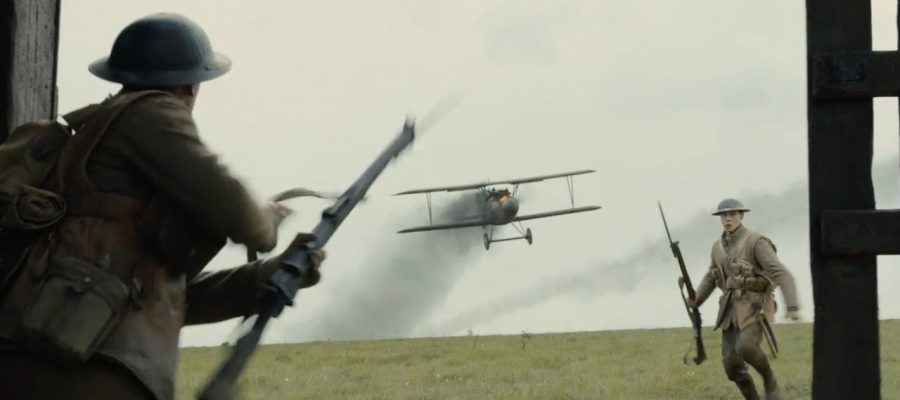
I’m utterly engrossed in the film 1917, but I also need a pee. I wait for a quiet moment and dash across the cinema.
Where am I?
Emotionally I’m in the trenches. But I can see the low lights and dingy carpets of a modern cinema. But it could be anywhere: Romania? England? The USA?
I run across the vast carpeted interior of the cinema, en route to the loo, avoiding German snipers. There’s nobody around, all the popcorn stands and ticket-inspection posts are abandoned. What’s going on?
Within minutes I’m back in my seat, not watching the film but actually in it.
I’ve never seen anything like 1917. I don’t remember being so emotionally sucked into a story, a narrative, a war. I feel like I’m there. I can feel a powerful sense of alienation from everything around me (where am I?) and also a curious mental numbness that enables us to go on, despite a lack of food and water and everything considered normal; and accept the fact that I might be killed at any moment.
I’m with Lance Corporal Schofield as he pushes his way through No-Man’s-Land, past rotting bodies, barbed wires, massive craters and booby traps, to deliver his urgent message. I feel his angry sense of injustice as his comrade (Lance Corporal Blake) was killed by a German pilot they had just pulled from a burning plane; his trauma at having to strangle a German boy; his fear as he runs from endless snipers; his bewilderment at still being alive; and his desperate energy to get through at all costs, a force of blind will that, by the end, was the only thing keeping him upright.
How do you come down from an experience like that? I don’t mean the main character in the film, played by the brilliant George Mackay, or the millions of troops who must have been traumatised by the experience — I have no idea how they coped — I’m talking about myself. How can I return to normal after going through an experience like this?
It’s only gradually dawning on me where I am.
I’m on the street, it’s night-time but what are those bright lights and skyscrapers? Those lights aren’t coming from flares and fires. Why am I walking so fast? Gradually I wrench myself back to my senses and realise that I’m in downtown Seattle, in the north east of the USA, thousands of miles from France and over 100 years apart in time. How can this be happening to me?
Since emerging from 1917, blinking and bewildered like someone who’s been dropped on earth from a different planet, I realise that I must write these impressions down in order to process it.
So I do something I don’t remember doing before: start writing immediately, at midnight, as soon as I get back to my hostel, which is located in Seattle’s Chinatown and is called American Hotel. I’m sharing a room with a businessman from Alabama, a roughneck (that’s a real job description, in construction) and a Taiwanese student of political science, who studies in San Francisco. They’re all asleep by the time I go to bed.
The morning after
Now it’s the next day and I must finish this article and go and see Seattle’s Museum of Pop Culture, as well as the city’s symbol: a flying saucer thing suspended by two massive two pronged forks. I think it was used as a backdrop in the first Men in Black film. Hopefully it will stop raining.
You could compare 1917 to the recent film Dunkirk by Christopher Nolan, another British director who, like Sam Mendes, director of 1917, made his reputation in America. But Dunkirk fades into nothingness when compared to 1917; like a Star Wars movie, it has some great action scenes but I don’t connect on an emotional level, I certainly don’t feel I’m there with the main characters, and I must suspend belief, stop the processes of logic telling me this isn’t how it would have happened. The problem with Dunkirk, and most films come to think of it, is that the focus is on many characters and I don’t connect with any of them as I did with the main man in 1917.
Before going to bed last night I watched some YouTube videos about 1917, and this helped me to put it into some sort of intellectual perspective. I also realised that what makes this film great is the fact that they keep the story really simple, focused on just two characters, one of whom gets stabbed and dies; so it’s really just about one character: Lance Corporal Schofield, played by George Mackay, a cockney with a Scottish name.
I hear a lot of twaddle about “story” being the basis of any great film. They also use this word in advertising and claim that most ads have some sort of story; but they use the word in such a general way that anything can be a story.
While filmmakers know that a good story is essential, they also have to worry about so many other things — actors, budgets, locations, sets, special effects, audiences — that the story can often become secondary. I don’t think it’s intentional but, when the story is about lots of different people, and it gets clever and convoluted, I think it becomes inevitable.
As a viewer, my emotional focus gets dissipated by so much complexity, so many characters; and while I might be entertained I certainly will not feel that I am there with them, on the ground, in the mud. All through virtually every film I’ve seen I’m aware of the fact that I’m an outside observer sitting in a darkened cinema; I don’t remember having a complete loss of where I am before..
I will conclude this article with some words from the director of 1917. I found this inspiring quote on a webpage about his co-scriptwriter, a Scottish woman with the rather English name of Krysty Wilson-Cairns:
“Stories are nothing,” says Sam Mendes, “unless unless you are emotionally engaged.
“You want an engagement with two characters for which you are given very little exposition. You don’t really know who they are…
“The one-shot technique allows you to, I think, to live with them and breathe every breath…
“That feeling of never seeing further than the characters, always being trapped in their immediate environment — that was a very important part of why we decided to shoot in this way.”
This is all gold-dust to me as I am in the process of becoming a storyteller, a writer of fiction. The experience of watching 1917 has set a new emotional goal for me — to tell stories compellingly — and also given me insight into how to go about it.
Now I must do something that I don’t think I’ve ever done before: go and see the film again. Tonight.

by Rupert Wolfe Murray | 28 Sep, 2019 | Opinions, Reviews
If a great artist met a convicted murderer I wouldn’t expect much to come of it. In most cases, I assume, nothing more than an ordinary conversation would happen for the simple reason that the prisoner wouldn’t be open to the artist. The prisoner might view the artist with suspicion.
The prisoner might be friendly, he might be grateful for the attention being paid to him, but he wouldn’t risk lowering the barriers that are so essential for his survival on the “inside”.
But when Jimmy Boyle – once known by the Scottish tabloids as “Scotland’s most dangerous criminal” – met Joseph Beuys who, according to The Tate Gallery is “widely regarded as one of the most influential artists of the second half of the 20th century,” the results were remarkable.
The meeting was part of Boyle’s transformation into a celebrated artist, but it’s a complicated story to tell as there are, as far as I’m aware, no written records of the meeting. Also, there’s virtually no written records of the most successful experiment in prison reform I’ve ever heard about – the Barlinne Special Unit, where Scotland’s “most dangerous” criminals were on equal terms with the prison officers and their “therapeutic community” was a runaway success. Luckily, the artworks, press clippings and writings that emerged from the Special Unit are held in various private collections around the country.
Tragically, the reactionary officials in charge of Scotland at the time were embarrassed by the success of the Special Unit and they did nothing to stand up to the daily assaults by the tabloids, who screamed of sex and drugs and luxury for the most violent prisoners in the land. In 1994, 20 years after the unit had opened, it was quietly closed down. Not even the most basic written evaluation was done.
I just checked the website of Scottish Prison Service and the only reference I could find for the Special Unit were the following words in their list of historical events at Barlinne Prison: “1972 Special Unit in Female block (until 1994).” Is that really it? Looking at their website I realise that the only thing that has changed over the last half century is the language they use to present themselves; now the prison service talks about “individuals in our care” and their main slogan is “Unlocking potential. Transforming lives.” As my kids would say with a roll of their eyes, “Really?”
Scotland’s puritan leaders may have thought they succeeded in burying this success story, but it got out. The success of the Special Unit’s therapeutic community model reached less closed-minded governments in Scandinavia and the Netherlands where, according to my sources, similar units were set up. Also, the prison in Hull set up a large art class that was inspired by the Special Unit. Bill Beech, one of the artists who has kept this flame alive, organised the current exhibition of Special Unit artworks in Hull. Apparently, there is also a prisoner at Hull who dresses and acts like Joseph Beuys (presumably he also does experimental art works).
Back to the Boyle and Beuys story…
Before getting to the meeting between Boyle and Beuys I need to describe more background (as I said, it’s a complicated story, but it’s a great one so stay with me).
Both of these men have the most incredible backstories; Jimmy Boyle’s can be read in his two autobiographies – A Sense of Freedom and The Pain of Confinement. What I find most remarkable about these books is his ability to be so open and descriptive about the poverty he grew up in; I had assumed that they were ghost-written as they’re written with such confidence but I asked his former wife, Sara Trevelyan, and she said “No. Jimmy definitely wrote them on his own”.
Joseph Beuys’ backstory reminds me of a Greek myth: a man falls from the sky in a ball of flame; he survives the fall and is buried in snow; later he’s discovered by nomads who wrap him in grease and felt, carry him off, nurse him back to health; he goes on to great things.
The Wikipedia version of the story makes it clear that this story is probably just fantasy, but the known facts are equally incredible: Beuys joined the Luftwaffe (Hitler’s air force); he was stationed in Crimea during the German occupation of the USSR; he was a rear gunner on one of the most terrifying weapons of the Second World War – the Stuka dive bomber. It’s also interesting that the supposedly heartless German’s sent out a search party to find him and the pilot who, according to Beuys’ version, was “atomised” when their plane crashed.
Beuys’s later wrote: “Had it not been for the Tartars I would not be alive today. They were the nomads of the Crimea, in what was then no man’s land between the Russian and German fronts, and favoured neither side…Their nomadic ways attracted me of course, although by that time their movements had been restricted. Yet, it was they who discovered me in the snow after the crash, when the German search parties had given up….I remember voices saying ‘Voda’ (Water), then the felt of their tents, and the dense pungent smell of cheese, fat and milk. They covered my body in fat to help it regenerate warmth, and wrapped it in felt as an insulator to keep warmth in.”
In terms of art, the above story is referred to as Beuys’ inspiration for using a lot of felt and other natural materials, like stone, in his work. The clothes he wore were also influenced by this experience – his trademark clothing was a felt suit, a stick and a felt hat.
In terms of the Jimmy Boyle connection, I see this story as the experience that connected them. What I mean is that Beuys was a form of prisoner in the Second World War, an unwitting participant in a brutal system that had much in common with the guiding philosophy of modern prisons: to remove peoples’ liberty and enforce a rigid daily routine that instils fear and destroys individuality.
I’m not saying that the Scottish Prison Service can be compared to the Nazis in terms of human rights abuses, but you can compare the underlying philosophy which is that denying people liberty and applying a strict military routine is morally justifiable.
My assumption is that these shared experiences – of deprivation, horror, death, redemption – brought the two men together in a deeply profound way that would not have been possible between people who didn’t share those type of traumatic experiences.
Enter the coyote
Joseph Beuys went on to become one of the most influential artists of his age. Beuys’ saw himself as a teacher, or shaman, who could guide society in a new direction.
He was thrown out of the Düsseldorf Art School, where he taught sculpture, for getting rid of the entry requirements and advocating a policy of letting anyone interested into his classes – a direct challenge to the art world’s ethos that art is only for an intellectual elite. His most relevant work in this regard was a performance art “Action” called How to explain pictures to a dead hare, when he explained art for three hours to a dead hare. The idea was to show “the difficulty of explaining things” to people who aren’t educated in the language and history of art – in other words the general public. This was part of his overall belief that “everyone is an artist”.
In the early seventies Beuys was invited to put on an exhibition in the USA. He refused because he was an opponent of the Vietnam War and would not set foot in the country that was perpetuating such horrors on a less technologically advanced people. But the Renne Block Gallery, in New York City, persisted and they came to a compromise out of which a quite remarkable exhibition resulted.
The exhibition was called I like America and America likes me and it had a powerful influence on the American artworld of the seventies, particularly performance art. The idea was that Beuys would not set foot on American soil and so when he arrived at the airport (in May 1974) he was met by an ambulance, wrapped in felt, laid on a stretcher, driven into NYC and carried up to the gallery.
Inside the Renne Block gallery prison-style bars had been built around one of the rooms, creating a sort of cage. Inside that room was some straw and a coyote. Beuys moved in with the coyote and lived with it for three days, wrapping himself in felt and getting a daily delivery of newspapers for the animal to defecate on and chew up. Visitors would come and look at them.
Two powerful slogans emerged from this exhibition: I am the Coyote and The Most Reviled Creature in America. The idea was that Beuys had found common cause with the coyote as being the “most reviled” creatures in America.
Here you can see a photo of Beuys wrapped in felt and the coyote looking on:
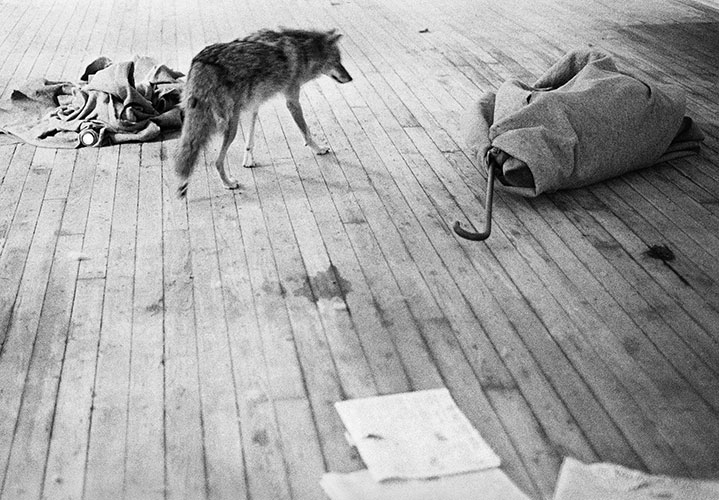
Photo by Caroline Tisdall
This is where my limited knowledge of all this runs out; I wish I knew more the fascinating ideas behind this exhibition but, as with the Special Unit artworks, there’s very little online about it and the people who know are either dead (Beuys died in 1986) or unobtainable (Jimmy Boyle lives between France, Morocco and Thailand and doesn’t answer emails).
But I searched the terms “coyote symbolism” and came across some extraordinary material. According to the Spirit Animal website: “The coyote totem is strikingly paradoxical and is hard to categorize. It’s a teacher of hidden wisdom with a sense of humor, so the messages of the coyote spirit animal may paradoxically appear in the form of a joke or trickery. Don’t be tricked by the foolish appearances. The spirit of the coyote may remind you to not take things too seriously and bring more balance between wisdom and playfulness.”
Did Beuys know about the symbolism of the coyote? It goes a long way to explain his approach which, on the one hand is very down to earth and simple, open to all; but on the other hand he was a very divisive figure who was rejected by much of the art establishment of Germany. Even to this day he is divisive; in 2019 Richard Demarco put on a retrospective of his work at the Edinburgh Festival and to this day people ask: “is this art?”
Jimmy Boyle opens the floodgates
Meanwhile, back in Scotland, a dam had burst – that is how Jimmy Boyle describes his outpouring of creativity when he got into sculpture and writing. In Barlinne Prison’s Special Unit he was able to divert his tremendous energy from fighting the system to creating artworks. But it almost never happened.
One of the best-known stories from the Special Unit was when Boyle arrived the head warder, an enlightened prison officer called Ken Murray, gave him a pair of scissors to open a parcel. To give “Scotland’s most dangerous criminal” a pair of scissors – a potentially lethal weapon – was an act of faith that showed Jimmy Boyle he was being trusted for the first time in years. It worked, and Boyle became one of the leading lights in the therapeutic community where prisoners and staff would together organise their schedule, menu and visiting hours.
Boyle rapidly integrated into the small community of ten prisoners, all of whom had been classified as “most dangerous” but he was nowhere near ready to do art. He later recalled that he saw art as almost something alien, a million miles from the macho culture he’d grown up in.
Scotland’s first art therapist – Joyce Laing – started visiting the unit and tried to get the inmates interested in practicing art. But it wasn’t working: the prisoners would sit round watching but they weren’t engaging. Joyce had decided to give it one last try and then she was going to give up, but before leaving she left a lump of clay and said, “maybe one of you can do something with this.”
When she came back for her last art class, Joyce was delighted to find that Boyle had created a sculpture out of the clay – a stick figure sitting down, surrounded by spear-like bars of a cage. I’m not sure exactly what happened next but the artworks came pouring out; not only sculptures, but also an avalanche of writing – not just the book that made him famous (A Sense of Freedom), but a series of stream-of-consciousness writings on all sorts of materials (paper was in short supply) written in a handwriting that was so small it’s barely possible to read. I’ve seen some of this material in one of the private archives and I’m pretty sure none of it has been published.
Enter Richard Demarco
Meanwhile, over in Edinburgh, Richard Demarco had been organising his own creative flood: he was to the Scottish arts establishment what Beuys was to the Germans – an annoying impresario who didn’t play by the rules, didn’t respect the arts establishment and kept coming up with new ideas, introducing new artists from all over the world and generally shaking things up. If you look at this link, Demarco’s CV-cum-biography, you’ll see the incredible amount of action he created on the Scottish arts scene over the last 50 years. 1974 was a particularly productive year.
Demarco picked up on the creative energy that was coming out of the Special Unit – the first time a prison had allowed such an outpouring of artistic expression – and was allowed to visit the unit with groups of artists. I presume this was also unprecedented and was, no doubt, one of the factors that the Scottish prison authorities disapproved of and used as an argument to shut it down in 1994.
In August 1974 Richard Demarco organised an exhibition in Edinburgh that was part of his sprawling Edinburgh Arts events. The exhibition included some sculptures by Jimmy Boyle who was still, at the time, very much in prison for murder.
Here you can see a photo of Boyle, Demarco and the art therapist Joyce Laing (note the bronze copy of Boyle’s first sculpture on the upper left):
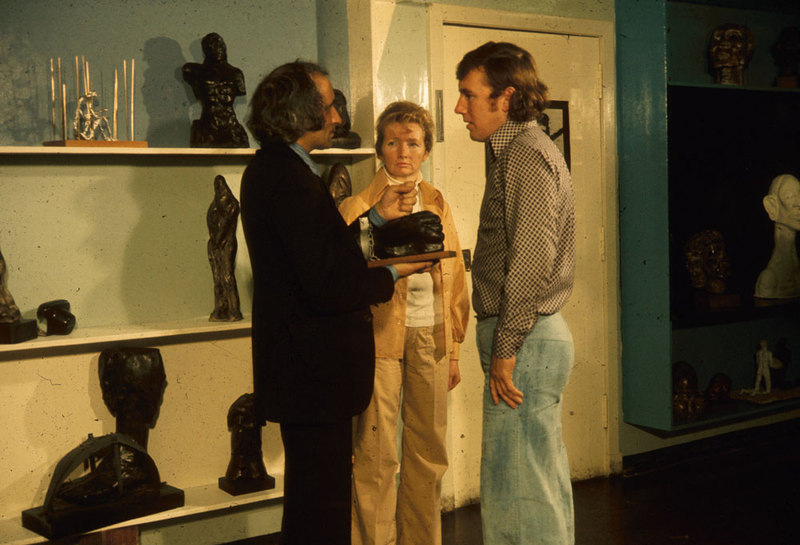
Thanks to the Richard Demarco Gallery for the photo.
The fact that Jimmy Boyle was allowed out of prison to attend this event was, presumably, unprecedented in Scottish prison history – and the forces of reaction at the prison service and Scottish government must have been furious.
The other extraordinary thing that happened at that exhibition was that Jimmy Boyle met Joseph Beuys, who had recently come over from New York after his coyote exhibition.
Boyle had presumably been told about the coyote exhibition by a mutual friend – Caroline Tisdall, an art critic for the Guardian and the photographer at the coyote exhibition. She was also a regular visitor to Boyle in the unit, and one of his most powerful advocates.
The story I heard from one of the artists who had been there was that Boyle went up to Beuys and said “I am the coyote!” I’m sure that those words, and their respective approaches to art, created a powerful bond that broke through all the conventional hierarchies of the art world.
Joseph Beuys went on to do some important work in Scotland. He also visited the Special Unit and represented Jimmy Boyle at a press conference that presented Boyle’s exhibition In Defence of the Innocent, at the Richard Demarco Gallery in 1976.
The most extraordinary thing that Beuys did for Boyle was go on hunger strike in 1980 – in protest at the prison services inexplicable transfer of Jimmy Boyle from the Special Unit to a “normal” prison at Saughton, Edinburgh.
The Scottish Prison Service, still feeling the humiliation that the Special Unit had brought down on them by showing signs of free expression, that they were determined to crack down. They didn’t yet have the political courage to close the unit down – that would happen about 14 years later – but by removing Jimmy Boyle and the enlightened head warder, Ken Murray, they were able to emasculate it. Their public intention was to “test” Boyle and make him “prove” that he could behave properly in a jail with the usual harsh military routines. Boyle survived this episode, but he was no longer allowed to practice his art and have free access to visitors. It must have been devastating and was, I’m sure, one of the factors that resulted in Boyle leaving Scotland soon after he was set free.
Two things bring all these historical events up to date: firstly, almost nothing has happened in terms of prison reform in UK, apart from a PR makeover, and surely the Special Unit deserves looking at in a serious way as they have a lot to learn from the experience (I think they should set up a permanent exhibition and archive in Glasgow).
Secondly, in 2019 there was an exhibition at the University of Hull with some of the artworks that were produced around the Special Unit in that incredible year (1974). I had posted a link to the exhibition but it’s been taken down.
I wrote this article as a supplement to a short piece I published in The Sunday National newspaper, a Scottish newspaper, which is worth looking at as it asks the question, why do we imprison people?
#
Postscript: This article was written from all sorts of fragments I picked up over the last 50 years – starting with my own visit to the Special Unit with my Mother, who published Jimmy Boyle’s books, conversations with Bill Beech who was behind the recent exhibition in Hull and also the scriptwriter for a great film that came out of that period: Silent Scream (1990).
I’d also like to thank Richard Demarco for making these photos available.
I took the above photo outside the exhibition in Hull. It was taken in 1974 and on the left you can see Richard Demarco, the impresario who introduced this prison experiment to the art world. On the right is the great Joseph Beuys.
Finally, here are some really interesting videos
This is an old documentary (1980s) about Jimmy visiting his home turf in Glasgow and asking if opportunities for young people have improved: Jimmy Boyle larchgrove & castlemilk – YouTube
And here’s a conversation between Jimmy and Ricky Demarco, shot in 2018: 1) Demarco and Boyle in coversation Dec 19 version – YouTube
by Rupert Wolfe Murray | 15 Feb, 2019 | Reviews
I’ve just published a new fairy tale and it’s called The Wind and the Castle. It was inspired by the strange fairy tales of Hermann Hesse. It’s my first eBook and putting it together was a scary adventure as an inner voice kept saying “you can’t do this.” Fortunately I have learned to ignore these voices, these inner demons.
My fairy tale is on Amazon and you can see it here.
If you look at my last blog post (5 Reasons to Publish an eBook) you’ll see that I recommend using the Draft2digital eBook platform, but I tried it, didn’t like it and am back with “the devil I know,” i.e. Amazon.
Chris Burn, a writer and therapist, sent me some interesting questions.I typed up the replies, which offer some insights into the fairy tale, and you can see them below. He then used some of this material to write a review for Reviewsphere, a cool new Edinburgh magazine. I thought it would be interesting to share the raw material — and if you agree please leave a comment below.
How did Herman Hesse inspire you?
One of the worst moments of my life was when I left my wife — long before the process of divorce brought some closure. I was wracked by waves of guilt and other negative emotions.
Then someone gave me a copy of Hesse’s fairy tales and for some reason I don’t really understand it provided me succor. His fairy tales are strange, modern, esoteric and more in the spirit of Philip K. Dick and Kurt Vonnegut than the classic tales I grew up with. I suppose they made me realise that this genre was more open than I had assumed and, in fact, anything goes.
So, later on, my own fairy tale popped out — rather like one of those quick births that women sometimes have. I wrote it really quickly and only later did I realise that it was full of scenes that directly relate to long-buried references to fairy tales I’d heard in childhood (e.g. the scene when Aladdin goes up to the princess on her horse); and other scenes were inspired by all those things I’d picked up over the years. This was the subconscious offering the right words at the right time, and I suppose this is what fiction writing is all about.
An example of this subconscious-feeding-of-words can be seen in this article: in the first paragraph of this interview I used the word “succor” and then immediately questioned myself: am I sure what this word means? No! Where did it come from? No idea! Maybe I should check! So I looked it up and realised that it was the perfect term for what I was saying (succor is a Latin word that means, amongst other things, “assistance and support in times of hardship and distress”). This sort of thing happens to me all the time. What’s great about it is that I can tap into this great power that we all have (the subconscious) but I don’t need to understand it rationally as it’s a mystery. In fact, I treat life as a mystery in that I don’t need to understand everything (or anything) and so I don’t stress when things don’t make sense.
All this is, I believe, in the spirit of Herman Hesse’s mysterious fairy tales.
Do you think there’s a place for fairy tales today?
If you had asked me this question before I wrote this tale I would have said “of course not — fairy tales are ancient stories for kids”. But now I think that this genre, as well as fiction in general, are useful tools for everyone. Here’s why:
- If you’re aware of the subconscious, fairy tales and fiction are good ways to engage it. The same could be said for any art form but, for me, writing is the easiest of them and the only one I can do with any competence.
- Writing fairy tales is fun. I’ve written loads of non-fiction, like opinion articles and travel books, but it’s a real slog as you need to be as accurate as possible. But with a fairy tale you can do what you want with your characters, and their stories, as long as they are true to the story, i.e. as long as everything written is done so in the spirit of that time and place. This comes naturally to anyone telling a story.
- If you are suffering from an addiction, or severe emotional problems, an important part of any therapeutic process is to engage in a creative act like writing. Writing fairy tales would be great for addicts; imagine the monsters! In 12-Step rehab they ask you to write your life story as well as to detail all the terrible things you’ve done when in the madness of addiction. That’s really hard stuff — the non-fiction part — but after that emotionally bruising exercise a bit of fairy tale writing would feel like a joy ride. It would also be away of telling your terrible stories in an entertaining way and without any real names.
- We are all full of knowledge, impressions, quotes, memories, lessons, stories — going all the way back to the nursery. Every one of us is like a walking Wikipedia, but we are totally unaware of this — at least I was. It was only when I wrote this fairy tale that I realised how much “content” I have stashed away in the archives, all ready to come out when needed. Our society is organised on competitive grounds (everything is a competition and only a few win). That makes most of us “losers” and who wants to hear their stories? But, funnily enough, the typical hero of a fairy tale is a loser who becomes a hero and this in itself is a reason to engage with the genre (it can be a way for us to deal with our negative self-perception).
- I think we all have an ethical duty to our families to write down as many stories, both from our own experiences and from our imagination, as possible. If your family is anything like mine they won’t be interested in anything you write now, they may even resent it, but future generations might cherish it. Just think how little written material, how few stories, we have about our ancestors; and what better way of recording all this than in writing?
- Self-publishing has become really easy. Once I had got over my illusions of making a fortune by selling books I realised that all I need to do is get the fairy tale off the shelf, out of the shadows, and into the light (it sat on the metaphorical shelf for years). At the very least it can be something to add to your CV.
- I think everyone has the potential to write a fairy tale.
Do you want children to read it as much as adults?
I don’t really have a neat answer to this, although I’d love it if teenagers read it. When I wrote the story I didn’t think about who might like to read it. In this I was guided by Philip Pullman who says he writes for himself, rather than publishers who often say you have to have your audience in mind before even starting (to me that approach seems far too calculating and misses out the joy and mystery that I delve into).
It made me think of The Alchemist by Paulo Coelho
This is one of those fascinating connections that has come up long after I wrote this fairy tale, and it goes back to my point about the subconscious — I’ve been inspired by things over the years (including The Alchemist) that come out in some other form. Thus far, I’ve identified various scenes in the book that I (later) realised were inspired by books I had read or things I’d learned; but this is the first time that someone has made a connection with an actual book.
An author friend of mine called Arabella McIntyre-Brown sent me this comment about my fairy tale:
[The Wind and the Castle] “is in the best tradition of storytelling that reaches back thousands of years. Stories that hide profound truths within simple tales. A love story and a dystopian drama, if you like – or that old favourite, the Warrior’s Journey.”
Will there be sequels?
I don’t have any other fairy tales in mind. Also, I have a lot of other books in the pipeline (some already finished, others half-done). The important thing is to keep up the momentum; a daily writing routine. But, having seen what a powerful release this genre is I will always know that it is something I can do at any time — so watch this space.
Apart from a love story it has an ecological message
The ecological side of the story was built on what I had learned from my eco-warrior brother (Moona) who taught me about Permaculture which, I believe, is an approach to agriculture that can save the planet from chemical doom. Just this week there was a news story about how modern agriculture is killing off insects at an incredible rate. Unless we take this seriously, and use methods like permaculture, we really are doomed.
Will it be out in paperback or audio book?
This is my first eBook and I did think about doing a print version. It’s easy to do on Amazon, who call it Print-on-Demand. But I would rather wait for a sponsor or publisher to come along and offer the resources needed to do it properly — which, in my view, would be a slim and very elegant hardback.
Audio book? I’d like to do it but would need a partner who would know how to fit it into the very crowded market.
If you’ve read this article I’d be very grateful if you could leave a comment below here, however short or negative. All feedback is encouraging.
by Rupert Wolfe Murray | 14 Jan, 2017 | Reviews
I am spending January in a cottage in the Netherlands, volunteering for one of the most impressive NGOs I’ve come across (Against Child Trafficking) and listening to Zappa.
I’m living alone and enjoying it so much that it almost makes me feel guilty. Aren’t we supposed to live with partners, parents, families, children? Trouble is, I find, that living with people results in endless compromise: if they cook, I don’t; if they watch too much TV, I do too; and if they don’t like my music I don’t listen to any.
Also, when I’m on my own I have so much more time to read and write. I experiment in the kitchen, I do silly exercises and I discover new music. I’m never bored or lonely and yesterday I went on a long walk down a windy and deserted beach.
Yesterday morning I discovered Frank Zappa and today I am revelling in one of the greatest rock songs I’ve ever heard: The Gumbo Variations. It starts out as a conversation between a confident saxophone, a subtle drummer and a persistent bass. The guitar makes an appearance later on and there is a very discreet electric organ in the background—something I only noticed after listening to the song five or six times in a row. The song lasts for 20 minutes and I’ve decided how I want my funeral arranged: buy a crate of whisky and play this song.
Here you can hear Zappa and his crew playing The Gumbo Variations.
I say I “discovered” Frank Zappa as if nobody else has heard of him, as if it was me who found him in Backwoodsville, Oklahoma and made him great. “The sheer arrogance of him,” you may be thinking, “who the hell does that Rupert Wolfe Murray think he is?”
What I mean is that, like most people of my generation (baby boomers), I’ve heard of Frank Zappa and I thought I knew him as I’d listened to his “Best of” album a few times. If you want to develop the Rupert-is-an-arrogant-shit theme I can give you more ammunition: I used to buy one or two albums of people like Bowie or the Beatles and think I knew their stuff. It’s only in my fifties that I’m discovering the depth of my ignorance.
The person who helped me realise my lack of musical knowledge was Claudiu Revnic, a brilliant Romanian who studied in Manchester and Edinburgh and whose knowledge of music and film in encyclopaedic. I mentioned David Bowie to him once and he talked about his life, his influences and so many albums that I’d never heard of. The great thing about Claudiu is that he doesn’t look down on us mere mortals, he doesn’t make us feel like the ignorant peasants we are, and he has endless patience in educating us. He really should have his own radio show.
Another Romanian with sophisticated musical tastes is Adina Daca. A few years ago, when I was living in Romania, I told Adina that I’d just lost my big collection of music as my computer had crashed and I had no backups. (The one thing I really miss was the complete works of Vangelis, picked up in a dodgy DVD market in Moscow; but I often listen to his soundtrack of Blade Runner on Youtube as it’s one of the few albums I can listen to while working).
Being a friendly type, Adina gave me some music. Not just an album or a playlist but the complete works of David Bowie: 23 Studio Albums; 4 Live Albums; 5 Tin Machine albums; 47 Eps and singles; 4 soundtracks; 15 compilation albums and two tribute albums.
Dear Adina, thank you so much for your generosity but I have to confess that I’ve only listened to a fraction of the great man’s work. I am unequal to the task of exploring the achievements of just one artist
I also want to thank Adina for giving me five albums by Frank Zappa. These have been sitting on my computer for years; an artist I didn’t bother listening to, partly because my only speakers are locked up in a store in Liverpool and also because it’s hard playing music in the presence of my family—my daughter, brother and mother all wince if I put music on.
But here in Holland nobody can hear me scream or see me dance (and I was dancing like a hippy earlier as I listened to The Gumbo Variations for the fifth time). The only decent music I thought I have on my computer (apart from Bowie of course, although, I must admit, I find a lot of his work a bit too serious) is a superb album called Rough Guide to Ethiopian Music.
Yesterday, between writing about intercountry adoptions and child trafficking, I decided to look for some other music. I find the ideal time to listen to music is when I’m cooking and eating (and now that I’m alone I can experiment with cabbage and sardines and onions and other concoctions that my family would, I suspect, not approve of).
I must have seen the name Frank Zappa on my short list of music a hundred times, but I never noticed it—which reminds me of Ron Weasley (or was it the bus conductor?) in one of the Harry Potter films who says “Muggles! They don’t see anything!”
Without any sense of anticipation, I put on one of Zappa’s albums—Freak Out—and started chopping up an apple, a banana and two oranges for my breakfast. Some of Zappa’s music sounds ridiculous; he uses kazoos, cheap organs and anything he can find to make horrible noises, to reflect horrible reality I suppose. He also uses sounds he’s recorded, and conversations, many bizarre and grotesque, and integrates them into his songs. If you want a short sample of what I’m talking about, look up the song Are You Hung Up? – a nasty but hilarious critique of phoney hippies and middle class American jerks.
My first reaction was to skip this nasty background noise but I was too busy chopping fruit and I just ignored it.
But then I started noticing that some of the music was seriously interesting and each song seemed totally different from the last one. The kazoos and cheap organs are only used for comedic effect, not when the real music is being played. And his lyrics are so fresh and challenging that they could have been written in 2017 as a protest about the Trump phenomenon.
Here is an extract from Trouble Every Day, a song about rioting in LA:
HEY, YOU KNOW SOMETHING PEOPLE?
I’M NOT BLACK BUT THERE’S A WHOLE LOTTA TIMES
I WISH I COULD SAY I’M NOT WHITE.
THE SAME ACROSS THE NATION
BLACK AND WHITE DISCRIMINIATION
YELLIN’ YOU CAN’T UNDERSTAND ME…
THERE AIN’T NO GREAT SOCIETY
AS IT APPLIES TO YOU AND ME
BLOW YOUR HARMONICA, TOM…
Why isn’t Frank Zappa better known? Why isn’t he appreciated and promoted and celebrated like we do endlessly with less interesting people of his generation (Iggy Pop, Tom Waits, Kinks, Eagles). He’s more revolutionary and experimental than the lot of ’em.
Everyone’s heard of him but nobody seems to listen to him or even know his songs (can you name a Zappa song? I think the best known is probably Don’t Eat the Yellow Snow!)
Ignoring the work I was supposed to be doing, I listened to another Zappa album – Apostrophe – and then another—Hot Rats—which is where I found the sublime track Gumbo Variations.
I felt the urge to describe him, to tell everyone about him, to celebrate him—which is something I very rarely do (in fact, I’m not sure if I’ve ever written an article like this). But I was alone in a cottage in the middle of nowhere and there was no audience to listen to my ravings.
Feeling the need to get these turbulent feelings out of my system, I wrote down the following words which came to me when listening: to the great Zappa: witty, psychedelic, experimental, funny, ironic, political, cosmic, pure rock, twisted, diseased, mystical, melodical (is that a word?) social commentary, harmonious, innovative, insane.
He reminds me of the Fabulous Furry Freak Brothers, an outrageous cartoon strip from the Sixties, as well as Billy Connolly. Unlike just about every other artist I can think of, Zappa’s whole sound says “I don’t give a shit what anyone else thinks. I’m just doing my own thing and if you don’t like it you can take a flying fuck.”
Okay, that’s enough about Frank Zappa—long may he Rest in Peace. I must have something to eat (sardines, onions, scrambled eggs and Ryvita) and then work on my current paper—a history of intercountry adoption.
A final note: if you’re still reading this far-too-long-for-the-media-article, let me know if you too discover Zappa and what you think of him. If you feel that he makes you feel uncomfortable, or that his sound could drive you insane, I will not be judgemental. I quite understand. There is something distinctly insane about Frank Zappa; he seems to occupy a curious borderland between madness and creativity. Some people would find this disturbing and others, like me, find it inspiring. Maybe that’s because I’m more on the insane side of the line (I can think of several people who would wholeheartedly agree with this).
That’s it from me. Please leave a comment. Even a rude one. They all count.
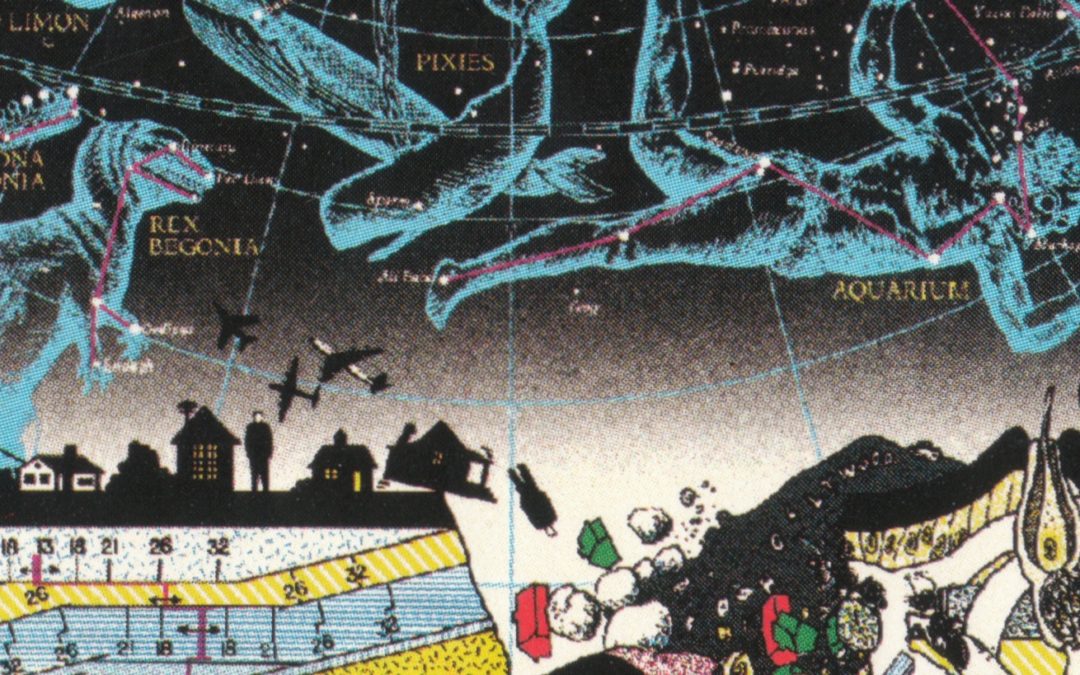
Photo Credit: the image is from the inside of the album cover for One Size Fits All (1974), Barking Pumpkin Records (which was Frank’s very own record company).
Postscript: if you’re still hungry for more info on the great Zap, this is what Wikipedia have to say about the man:
Frank Vincent Zappa[nb 1] (December 21, 1940 – December 4, 1993) was an American musician, composer, songwriter, producer, guitarist, actor, and filmmaker whose work is characterized by nonconformity, free-form improvisation, sound experiments, musical virtuosity, and satire of American culture.[2] In a career spanning more than 30 years, Zappa composed rock, pop, jazz, jazz fusion, orchestral and musique concrète works, and produced almost all of the 60-plus albums that he released with his band the Mothers of Invention and as a solo artist. Zappa also directed feature-length films and music videos, and designed album covers. He is considered one of the most innovative and stylistically diverse rock musicians of his generation.[3][4]

