by Rupert Wolfe Murray | 17 Mar, 2017 | Journeys
I recently met up with Xander Berkeley, a Hollywood actor who played in one of the greatest thrillers of all time – Terminator 2 – which was made in 1991. He has featured in over 200 films and TV shows since then and is currently working on the Walking Dead, one of Hollywood’s most successful exports.
Talk ranged far and wide and we talked of the time he visited us in Scotland, over 30 years ago, when my three brothers and I were in the midst of our teenage rebellions.
“Remember when we drove across Ireland,” said Xander, who then described a series of incidents that took place on the Emerald Isle – none of which I remembered. I had my own set of memories of that trip, perfectly preserved, like an insect in amber – none of which Xander remembered.
Memory is like a telescope. You look through it at a faraway point and see some interesting detail. When we look through a telescope we know we’re only seeing a microcosm, but when we look back at memories we think (at least I do) that we are seeing the whole picture. This helps me realise that I shouldn’t rely on memory too much.
Sometime later Xander sent me a stark photograph of himself at the Callanish Standing Stones on the Isle of Lewis, the most north westerly part of the (soon-to-be-defunct) United Kingdom. Here it is:
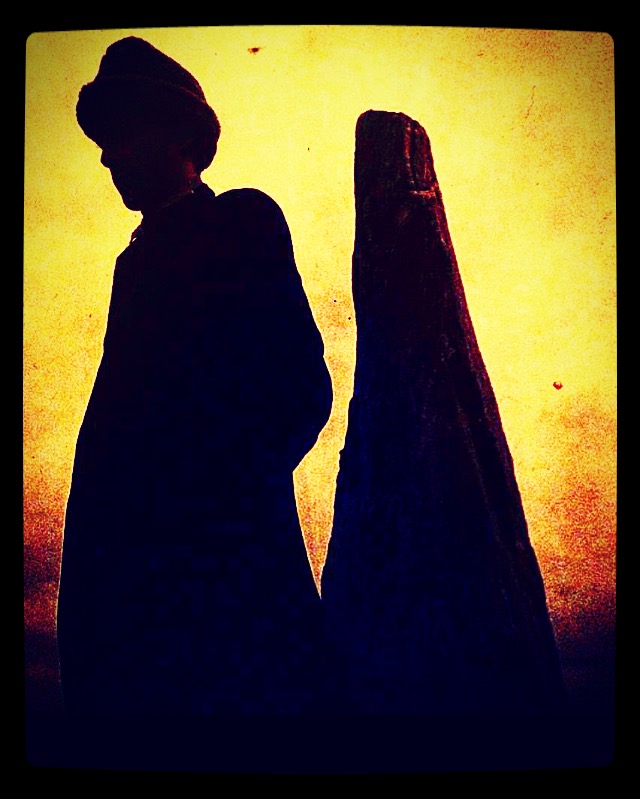
Xander Berkeley by Kim Wolfe Murray
All Xander said about this photo was that it had been taken by Kim, my elder brother, with whom he had travelled to Callanish back in the eighties. The third man on the trip was a school friend of my brother’s called Angus Farquhar, who now runs highly original events with his company NVA: “powerful public art that reaffirms people’s connection to the built and natural heritage” says his website.
My brother Kim went on to do great things too: not long after this Callanish experience he joined a group of Buddhists and became one of the first Buddhist monks in the UK. He stuck at this for over 12 years. Now he lives in Edinburgh where he does renovation work.
I knew that Callanish was a mythical place, location of a prehistoric stone circle that is said to be more impressive than Stonehenge. The fact that I have never been to the Callanish standing stones, and have always wanted to go there, made their journey seem all the more mysterious.
I then had an idea: ask each of the three travellers to send me their impressions of that journey and then edit it all together into an article. I thought they wouldn’t reply as they are all very busy but, to my surprise, they all did.
This is what they said:
Xander Berkeley on Callanish Standing Stones:
Lewis: a carved hulk of rock beaten by a billion crashing waves; held fast on the outermost point of Europe.
My recollections of that journey revolve around the striking circle of towering stones stabbed deep into the earth. The bleak landscape was barren of branch or flower, stone or structure, but for these tall shapes standing like robed druids in a circle.
The glacial jig-jagged cut-out of a landscape
Jet black against the moonlit overcast sky
Random pies of white scattered lochs
Reflecting moonlight
Bright in their sea of otherwise utter blackness.
We gathered all the dry brush we could find and brought it down to the sea. We imagined Vikings mooring ships in the very spot where we lit a bonfire. We danced around it like mad Rip Van Winkles singing a Leadbelly song.
*
Angus Farquhar’s Version
Mine are hazier recollections. Drugs and drink remove sections, while bringing certain visual images into startling clarity, and strong sense memories of place and texture.
Cold, wet beaches, gales of laughter with Kim as we convinced Xander that the limpet was a Scottish delicacy. We manically dislodged one from a rock. I’m pretty sure he ate it, and survived to tell the tale.
The strongest memory is taking some form of stimulant. I was never quite sure what it was. But we took it early one morning before going to the Callanish rock circle.
We stayed together and spent time on our own. At first I had spasms in my stomach and then slowly acclimatised to the place. I stood for what felt like hours with my face pressed against a standing stone. It was very quiet.
Time was rippling.
*
Kim Wolfe Murray’s play on Callanish:
Scene 1
Somewhere in a remote island croft three travellers face each other in the pre-dawn light. Stumbling around in the semi-dark of the hovel, coffee is shared and the group stagger out into the bleak heather landscape.
No words are spoken.
There is a plan.
Xander, the eldest, steps out in a dark greatcoat with a Russian fur hat.
He footles around in his pockets, produces a small tin and distributes tiny white pills.
Xander: Take these. I’ve kept them for this moment. They’re an experimental batch….first of its kind.
Angus & Kim are wearing tightly fitting combat gear. Their hair shaved at the sides, military style. Polish caps set off at an angle disguising their pubescent faces and lack of stubble.
They swallow the pills without question.
Scene 2
The three are driving in a small car around twisted roads through the unremittingly bare island.
Angus is at the wheel as they hurtle through low hills. The light outside is still dim. A fine mist seems to envelop them. The car is small. They are heading to the North West of the island. There is only one road and no signposts.
Scene 3
As they close in on their destination the terrain seems to flatten out and stretch into the far distance. The beginning of the sea and the end of the land is indistinguishable. The cloud cover is still complete in the grey dawn light. A lime-washed croft with a peat roof appears in the distance. Beyond the croft are primeval standing stones. So many of them placed in concentric circles.
The group emerge out of the car and skirt around the croft. Their pace is slowed. No one speaks.
Kim is listening to Einsturzende Neubauten on a Walkman as the first waves of pill induced euphoria sweeps over him.
Angus is prowling around the standing stones, his sharply angled features in silhouette against the flat seascape beyond.
Xander is standing astride a neolithic pit. A great stone towers over him, shadowing his frame.
The ancient runes seem to murmur their assent.
Daylight reveals the vast ocean horizon beyond where the stones have stood for thousands of years.
Scene 4
The group travel back the way they came.
The purple tints of the rolling heather hills seem brighter. The pale glint of the sun reflecting off the flat sea is lighter.
For a time they will bask in the afterglow….
The End
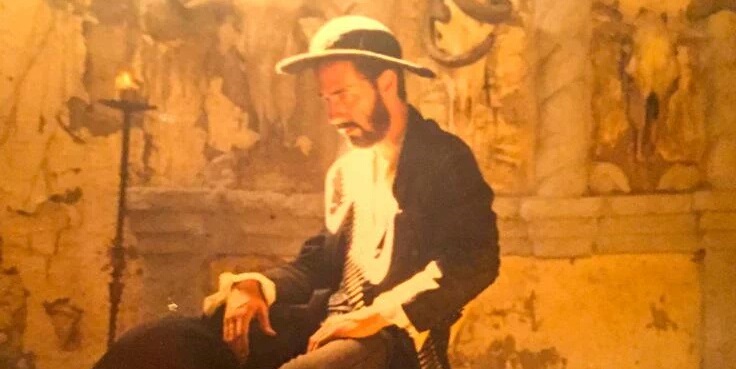
Photo of Xander Berkeley on the set of the film Straight to Hell (1986) directed by Alex Cox (“A gang of bank robbers with a suitcase full of money go to the desert to hide out.”)
by Rupert Wolfe Murray | 2 Mar, 2017 | Opinions
I feel rather guilty that I’ve not updated my wonderful Kickstarter supporters, from whom I got £600 to do my bike tour of the Highlands, we well as the readers of my blog.
My guilty conscience says “you took their money and ran…You didn’t deliver on your Kickstarter promise: you didn’t write a book and you didn’t become a writer.”
My not-guilty conscience refutes this. He knows that I did cycle round the Highlands, I did promote my Tibet book (it’s almost sold out in fact), I wrote a new book (well, I wrote about 75% of a new one) and my writer’s block is a thing of the past.
It is true that I didn’t become a writer. I didn’t step into a special machine and emerge as a fully formed, highly-paid, internationally celebrated writer.
But I did take an all-important step towards becoming a writer. I overcame some of my internal blocks, hang-ups and insecurities; I worked out methods of dealing with procrastination, distraction, complacency and depression. I’m working out a balance between making a living (doing a “normal” job) and writing a bit every day. I’m getting into a routine that will result in more books.
This morning I got up at five in the morning – without an alarm clock – and spent an hour and a half on my latest book. When this happens it’s incredibly satisfying. I had a moment of inspiration and wrote this Tweet for anybody who, like me, is trying to find the right routine: Want to write a book? After 30 years of trying I realise the key is to get up at 5am.
Update from Yours Truly
I must tell you what happened to the book I wrote on my bike trip and what I plan next. This will help explain my gradual transformation from normal human being into a sleepwalking zombie – oops, I mean into a writer.
But first, I need to tell you a story.
For over two decades I’ve had writer’s block. I first wrote my Tibet memoir in 1989 but I couldn’t find a publisher and realised it needed to be rewritten. I taught myself journalism in the deluded belief that it would help me write better (it didn’t. It just turned me into a high class literary prostitute – a PR consultant). Twenty-five years went by before I rewrote the damn thing and now it’s thirty years later.
But the deed was done and last autumn 9 Months in Tibet was published. I realised the only way to flog copies was to do it myself so I cycled round the Highlands and asked everyone I met to buy a copy. It worked and the best thing is that I’ve been getting good reviews. If you click on the book’s web page you can see some of them.
Getting good feedback has been essential. It is hard evidence for my ruthless, negative, cynical bastard of an alter ego that I’m not a total failure and that some people actually like what I write.
But the most remarkable thing about getting my Tibet memoir published is that it has unblocked me as a writer and since getting it published I have written four books. I’m churning them out. My Tibet book was a blockage in my irrigation system – I needed to get it out of the way before the life-nourishing water could come through. And it’s pouring out. I’m churning them out so fast that I have new problems; how to finish them and get published?
This is what I’ve been writing:
- I wrote a short fairy tale called The Wind and the Castle and it is the most complete of these works-in-progress. I dare to say it’s a beautiful book and I was inspired to write it after reading a little known classic: Fairy Tales by Herman Hesse.
- When doing my bike trip I wrote some of a book I called Writing on a Bike – Observations from a dis-united Kingdom – a book that has changed totally since I conceived of it. I started off wanting to record people’s observations about an independent Scotland and the breakup of the UK, but people didn’t seem to want to talk about that. And it got boring just writing about my daily grind on the bike and so I made a foray into fiction. This will be a very different travel book and it is dedicated to my wonderful Kickstarter supporters, to whom I feel big debt of gratitude for getting me going on this new chapter in my life.
- In January I helped out a Dutch charity called Against Child Trafficking, wrote them a new website and a wee book called a History of Adoption. I also wrote a diary-type book called Trailer Trash which is about my work with this charity, what music I was listening to and quotes from books I was reading. I wrote it in the trailer (mobile home) I was living in at the time. JK Rowling also features. Coming soon!
So here we are, in early March 2017. I think I have finally found a balance between writing books (and articles like this) and working for a living. As I said in my Tweet, the key is to get up early and write a little bit every day. Each little bit soon builds up into a book. I have discovered a very productive side of myself – I can start writing a book quickly and get to the half way mark in no time – but my problem is getting it finished before starting another one. It’s not good having so many books on the go, but I’m just learning how to control this creativity.
Currently I’m based at my parents’ house in the Borders region of Scotland, near a wee village called Traquair. It’s beautiful. Ours is the only inhabited house in the landscape – in other words it’s in the middle of nowhere. One would have thought that being here would be ideal for finishing off my books but it’s actually really hard to write here as there is so much to do: yesterday I took my mother to hospital where she got her latest dose of chemotherapy; today I must take her an hour in the other direction where she does hyperbaric oxygen therapy; we have a team of Romanian builders doing some renovation work and any day now convoys of big trucks will appear with hundreds of tons of gravel to re-surface the drive. I seem to have become the organiser of these jobs.
Next Stop Nepal
In a couple of weeks I’m going to Nepal where I’ll visit my brother Moona, who is working on post-earthquake reconstruction projects. I will also do some trekking, mountain biking, give a talk about my Tibet book and write a series of articles based on my observations – such as what does the modern independent traveller do? I will also make time to finish off some of these books I’m working on.
In the next few days I will launch a new Kickstarter project to raise funds for my Nepal trip. But before doing that I felt the need to update those wonderful people who supported me on my first Kickstarter project. I want their blessing before moving on to the next appeal.
I may sound a overly sentimental when writing about my Kickstarter supporters. You could say it’s no big deal, people sponsor things all the time. But when it’s for a new way of life that I’m trying to work out – a kind of transformation of my life – it feels incredible that people are willing to buy into it. I can’t tell you how grateful I am. I feel a tremendous loyalty towards these people, more than I have felt towards anything I can remember.
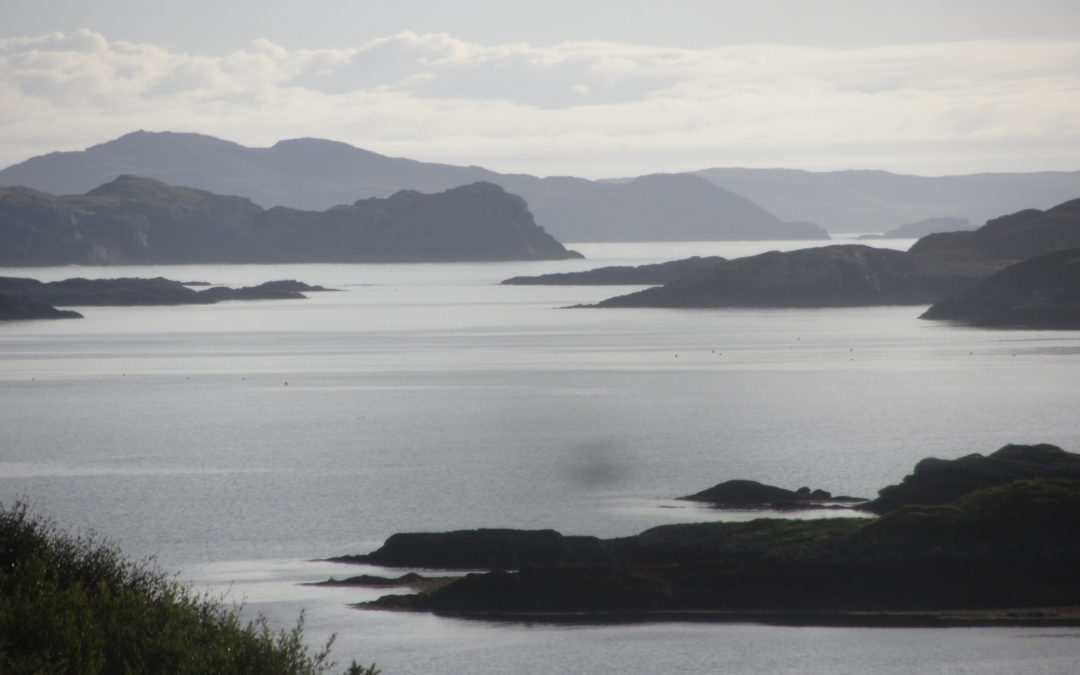
The photo in this article was taken by me in the NW coast of Scotland, when I was cycling round promoting my Tibet book.
by Rupert Wolfe Murray | 22 Feb, 2017 | Opinions
Soviet Russia was a very visual place, for all the wrong reasons. The colours were dark and gloomy, the people were listless and misshapen (air hostesses and officials tended to be huge while gymnasts and the poor were stick-thin). These were the images that we were shown by Hollywood and the media. They weren’t false but they were selective and didn’t get across the main thing — the atmosphere.
I’ve just seen a rather brilliant film called Bridge of Spies. It was written by the Coen brothers, directed by Spielberg and starred Tom Hanks. It’s the story of the U2 spy-plane incident and the exchange-of-spies that followed. Most of the action is set in East Berlin.
They did a good job of re-creating the look of life in the Soviet Bloc — and I say this as someone who visited East Berlin, in 1986, when it was still under Communist rule — but they didn’t really get across the feel of it. In particular the ever present feeling of fear. As a visitor to East Berlin in 1986 I sensed it; I knew that they could arrest me, imprison me, accuse me of anything, detain me forever, on a whim. I also knew they were unlikely to do so as I wasn’t a spy (I didn’t even have a job) even though I sometimes fancied myself as the next James Bond.
The actor who really steals the show in Bridge of Spies is Mark Rylance. He plays Rudolf Abel, the Russian spy who gets exchanged for Gary Powers (the captured U2 pilot). He won an Oscar for best supporting role but also managed to get across something of the dead-soul feeling of life under Communism. His character is melancholic, resigned to his fate, unfazed by arrest, interrogation, repatriation and a possible execution. It may sounds boring but it’s not; it was a brilliant performance and it’s no wonder that Rylance is being touted as one of Britain’s greatest actors.
However, he doesn’t get across the feeling of the Soviet Bloc as well as an actor who would be the first to admit he wasn’t as good on stage as Mark Rylance.
Enter Rupert Everett
I’m not sure what to say about Rupert Everett as an actor. All I know him for is playing a voice in Shrek 2 (Prince Charming), a butler in a film about a monkey called Dunston and the Edwardian headmistress in a crappy remake of St Trinians. He plays fops, dandies, aristocrats and upper class twits — and is probably an essential ingredient to casting directors as there is an endless need for such characters.
What I can say about him is that he’s a great writer. I’m reading his autobiography — Red Carpets and Other Banana Skins — which has this Daily Mail quote on the front page: “Funny, outrageous and extremely well written.” Everett’s description of his early life are brilliant and his description of his homosexuality, in an age when it was still quite taboo, very honest. He’s self-deprecating about his own talents and would be harsher on himself than any critic. But he gets a bit boring when he writes about the life of excess with famous Hollywood stars and he drops names as if they are confetti.
What about Russia? You may be wondering.
Rupert Everett did make a film about Russia. He played the lead role, Grigor, in Slowly Flows the Don, a classic Russian story in the civil war which took place in the 1920s. It was directed by legendary filmmaker Sergei Bondarchuk, friend of Stalin and director of Mosfilm. The movie was a Soviet-Italian co-production and, like many films made under in the Soviet Union, had access to whole divisions of soldiers. Bondarchuk is famous for his production of War and Peace and with this film he was presumably aiming for something similar.
But it was not to be. Communism crashed, his soldiers deserted, the Italians went mad and the rushes ended up in a basement in Naples, embroiled in legal difficulties. It was never released.
When will I get to the point? Here it comes:
The whole point of this article is to introduce some passages about Russia that Rupert Everett wrote in his autobiography. These short descriptions, his impressions of Moscow in the early 1990s, get across the feel of the Soviet Bloc more effectively than anything I have read or seen on film.
Here’s an extract of what Everett wrote in his 33rd chapter:
“There was a dead feeling in communist Russia. It banged into you as you stepped off the plane. Men in uniforms with blunt dull faces, tiny and cruel under enormous hats, went through my belongings item by item, endlessly examining a bottle of soy sauce, or a bag of rice. (I had brought a trunk of provisions). Others stood in groups with glassy, lobotomised eyes…
“Miles and miles of crumbling tower blocks surrounded the city…Everything was falling to pieces. A porch hung precariously over a front door. Windowpanes were held together by tape and newspaper…
“Inside, the crumbling studios were caked with years of mud and dust. Pipes with big rusting taps grew out of the ground, like living things, and ran along the walls and up over the street before diving back into the earth…
“It was exhausting but this was communism. It had hit them over the head and now it hit me over the head. One had to slow down or die trying.”
This seems authentic to me. You may be wondering who the hell am I to say it is authentic when I didn’t even visit Russia under Communism. I base my view on travelling through East Germany, Poland, Czechoslovakia, Hungary, Yugoslavia, Romania and Bulgaria, when they were all still part of the Soviet Bloc. During that trip in 1986 I had the same impressions as Everett describes in his book.
For me, Everett’s description reminds me of my own experiences in the Soviet Bloc. Just like Slumdog Millionaire was the first India film that reflected the atmosphere from my visits to India between 1984 and 1987.
Rupert Everett went to the Soviet Union and when he left, a year later, it was called Russia. He admitted that he was “vastly unsuited to the part in which I had been cast” — and it is this honesty, and lack of any attempt to explain what was going on politically, that makes his writing so valuable.
I wonder what else he’s written?
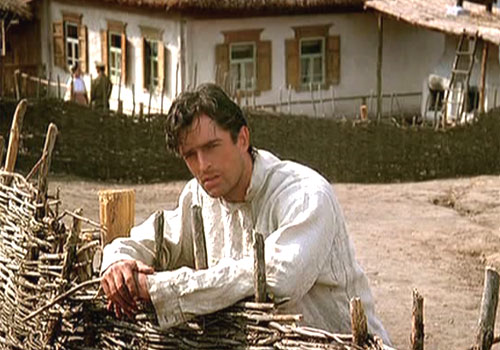
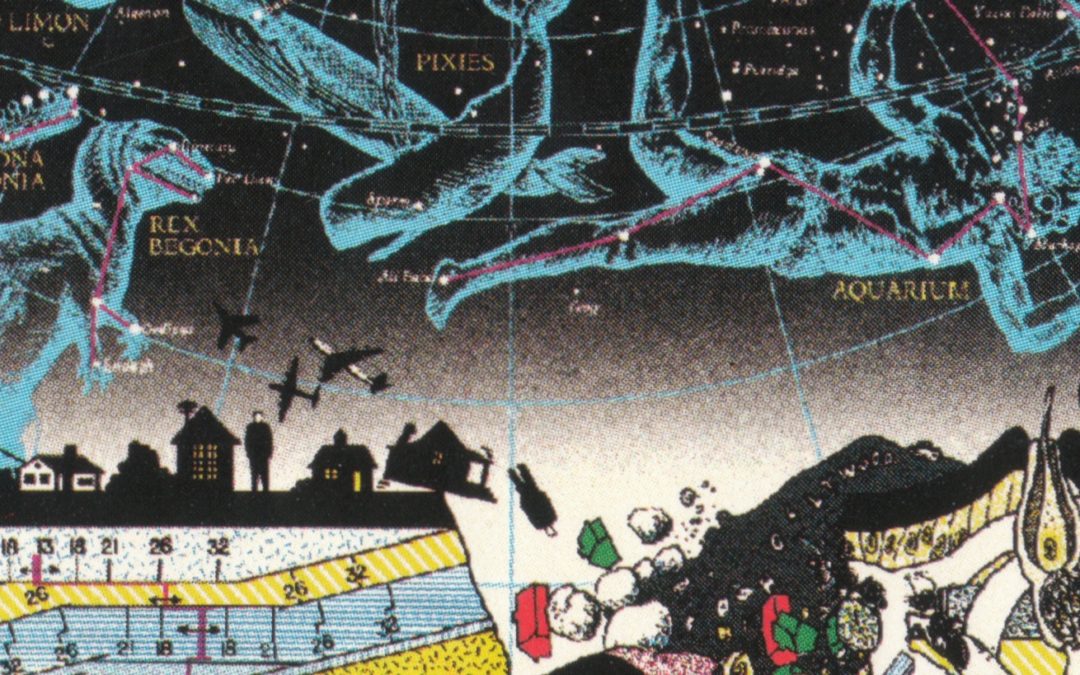
Photo credit to Russian Film (This photo shows a whole other side of life in the Soviet Bloc — in a village. The irony of these villages is that the ancient rural culture was preserved better under Communism than Capitalism for the simple reason that Communism had less money and therefore less ability to uproot people from their land and send them into cities. For that reason I miss Communism. Since its departure this village culture is vanishing fast and this makes me very sad).
by Rupert Wolfe Murray | 14 Jan, 2017 | Reviews
I am spending January in a cottage in the Netherlands, volunteering for one of the most impressive NGOs I’ve come across (Against Child Trafficking) and listening to Zappa.
I’m living alone and enjoying it so much that it almost makes me feel guilty. Aren’t we supposed to live with partners, parents, families, children? Trouble is, I find, that living with people results in endless compromise: if they cook, I don’t; if they watch too much TV, I do too; and if they don’t like my music I don’t listen to any.
Also, when I’m on my own I have so much more time to read and write. I experiment in the kitchen, I do silly exercises and I discover new music. I’m never bored or lonely and yesterday I went on a long walk down a windy and deserted beach.
Yesterday morning I discovered Frank Zappa and today I am revelling in one of the greatest rock songs I’ve ever heard: The Gumbo Variations. It starts out as a conversation between a confident saxophone, a subtle drummer and a persistent bass. The guitar makes an appearance later on and there is a very discreet electric organ in the background—something I only noticed after listening to the song five or six times in a row. The song lasts for 20 minutes and I’ve decided how I want my funeral arranged: buy a crate of whisky and play this song.
Here you can hear Zappa and his crew playing The Gumbo Variations.
I say I “discovered” Frank Zappa as if nobody else has heard of him, as if it was me who found him in Backwoodsville, Oklahoma and made him great. “The sheer arrogance of him,” you may be thinking, “who the hell does that Rupert Wolfe Murray think he is?”
What I mean is that, like most people of my generation (baby boomers), I’ve heard of Frank Zappa and I thought I knew him as I’d listened to his “Best of” album a few times. If you want to develop the Rupert-is-an-arrogant-shit theme I can give you more ammunition: I used to buy one or two albums of people like Bowie or the Beatles and think I knew their stuff. It’s only in my fifties that I’m discovering the depth of my ignorance.
The person who helped me realise my lack of musical knowledge was Claudiu Revnic, a brilliant Romanian who studied in Manchester and Edinburgh and whose knowledge of music and film in encyclopaedic. I mentioned David Bowie to him once and he talked about his life, his influences and so many albums that I’d never heard of. The great thing about Claudiu is that he doesn’t look down on us mere mortals, he doesn’t make us feel like the ignorant peasants we are, and he has endless patience in educating us. He really should have his own radio show.
Another Romanian with sophisticated musical tastes is Adina Daca. A few years ago, when I was living in Romania, I told Adina that I’d just lost my big collection of music as my computer had crashed and I had no backups. (The one thing I really miss was the complete works of Vangelis, picked up in a dodgy DVD market in Moscow; but I often listen to his soundtrack of Blade Runner on Youtube as it’s one of the few albums I can listen to while working).
Being a friendly type, Adina gave me some music. Not just an album or a playlist but the complete works of David Bowie: 23 Studio Albums; 4 Live Albums; 5 Tin Machine albums; 47 Eps and singles; 4 soundtracks; 15 compilation albums and two tribute albums.
Dear Adina, thank you so much for your generosity but I have to confess that I’ve only listened to a fraction of the great man’s work. I am unequal to the task of exploring the achievements of just one artist
I also want to thank Adina for giving me five albums by Frank Zappa. These have been sitting on my computer for years; an artist I didn’t bother listening to, partly because my only speakers are locked up in a store in Liverpool and also because it’s hard playing music in the presence of my family—my daughter, brother and mother all wince if I put music on.
But here in Holland nobody can hear me scream or see me dance (and I was dancing like a hippy earlier as I listened to The Gumbo Variations for the fifth time). The only decent music I thought I have on my computer (apart from Bowie of course, although, I must admit, I find a lot of his work a bit too serious) is a superb album called Rough Guide to Ethiopian Music.
Yesterday, between writing about intercountry adoptions and child trafficking, I decided to look for some other music. I find the ideal time to listen to music is when I’m cooking and eating (and now that I’m alone I can experiment with cabbage and sardines and onions and other concoctions that my family would, I suspect, not approve of).
I must have seen the name Frank Zappa on my short list of music a hundred times, but I never noticed it—which reminds me of Ron Weasley (or was it the bus conductor?) in one of the Harry Potter films who says “Muggles! They don’t see anything!”
Without any sense of anticipation, I put on one of Zappa’s albums—Freak Out—and started chopping up an apple, a banana and two oranges for my breakfast. Some of Zappa’s music sounds ridiculous; he uses kazoos, cheap organs and anything he can find to make horrible noises, to reflect horrible reality I suppose. He also uses sounds he’s recorded, and conversations, many bizarre and grotesque, and integrates them into his songs. If you want a short sample of what I’m talking about, look up the song Are You Hung Up? – a nasty but hilarious critique of phoney hippies and middle class American jerks.
My first reaction was to skip this nasty background noise but I was too busy chopping fruit and I just ignored it.
But then I started noticing that some of the music was seriously interesting and each song seemed totally different from the last one. The kazoos and cheap organs are only used for comedic effect, not when the real music is being played. And his lyrics are so fresh and challenging that they could have been written in 2017 as a protest about the Trump phenomenon.
Here is an extract from Trouble Every Day, a song about rioting in LA:
HEY, YOU KNOW SOMETHING PEOPLE?
I’M NOT BLACK BUT THERE’S A WHOLE LOTTA TIMES
I WISH I COULD SAY I’M NOT WHITE.
THE SAME ACROSS THE NATION
BLACK AND WHITE DISCRIMINIATION
YELLIN’ YOU CAN’T UNDERSTAND ME…
THERE AIN’T NO GREAT SOCIETY
AS IT APPLIES TO YOU AND ME
BLOW YOUR HARMONICA, TOM…
Why isn’t Frank Zappa better known? Why isn’t he appreciated and promoted and celebrated like we do endlessly with less interesting people of his generation (Iggy Pop, Tom Waits, Kinks, Eagles). He’s more revolutionary and experimental than the lot of ’em.
Everyone’s heard of him but nobody seems to listen to him or even know his songs (can you name a Zappa song? I think the best known is probably Don’t Eat the Yellow Snow!)
Ignoring the work I was supposed to be doing, I listened to another Zappa album – Apostrophe – and then another—Hot Rats—which is where I found the sublime track Gumbo Variations.
I felt the urge to describe him, to tell everyone about him, to celebrate him—which is something I very rarely do (in fact, I’m not sure if I’ve ever written an article like this). But I was alone in a cottage in the middle of nowhere and there was no audience to listen to my ravings.
Feeling the need to get these turbulent feelings out of my system, I wrote down the following words which came to me when listening: to the great Zappa: witty, psychedelic, experimental, funny, ironic, political, cosmic, pure rock, twisted, diseased, mystical, melodical (is that a word?) social commentary, harmonious, innovative, insane.
He reminds me of the Fabulous Furry Freak Brothers, an outrageous cartoon strip from the Sixties, as well as Billy Connolly. Unlike just about every other artist I can think of, Zappa’s whole sound says “I don’t give a shit what anyone else thinks. I’m just doing my own thing and if you don’t like it you can take a flying fuck.”
Okay, that’s enough about Frank Zappa—long may he Rest in Peace. I must have something to eat (sardines, onions, scrambled eggs and Ryvita) and then work on my current paper—a history of intercountry adoption.
A final note: if you’re still reading this far-too-long-for-the-media-article, let me know if you too discover Zappa and what you think of him. If you feel that he makes you feel uncomfortable, or that his sound could drive you insane, I will not be judgemental. I quite understand. There is something distinctly insane about Frank Zappa; he seems to occupy a curious borderland between madness and creativity. Some people would find this disturbing and others, like me, find it inspiring. Maybe that’s because I’m more on the insane side of the line (I can think of several people who would wholeheartedly agree with this).
That’s it from me. Please leave a comment. Even a rude one. They all count.
Photo Credit: the image is from the inside of the album cover for One Size Fits All (1974), Barking Pumpkin Records (which was Frank’s very own record company).
Postscript: if you’re still hungry for more info on the great Zap, this is what Wikipedia have to say about the man:
Frank Vincent Zappa[nb 1] (December 21, 1940 – December 4, 1993) was an American musician, composer, songwriter, producer, guitarist, actor, and filmmaker whose work is characterized by nonconformity, free-form improvisation, sound experiments, musical virtuosity, and satire of American culture.[2] In a career spanning more than 30 years, Zappa composed rock, pop, jazz, jazz fusion, orchestral and musique concrète works, and produced almost all of the 60-plus albums that he released with his band the Mothers of Invention and as a solo artist. Zappa also directed feature-length films and music videos, and designed album covers. He is considered one of the most innovative and stylistically diverse rock musicians of his generation.[3][4]
by Rupert Wolfe Murray | 20 Nov, 2016 | Journeys
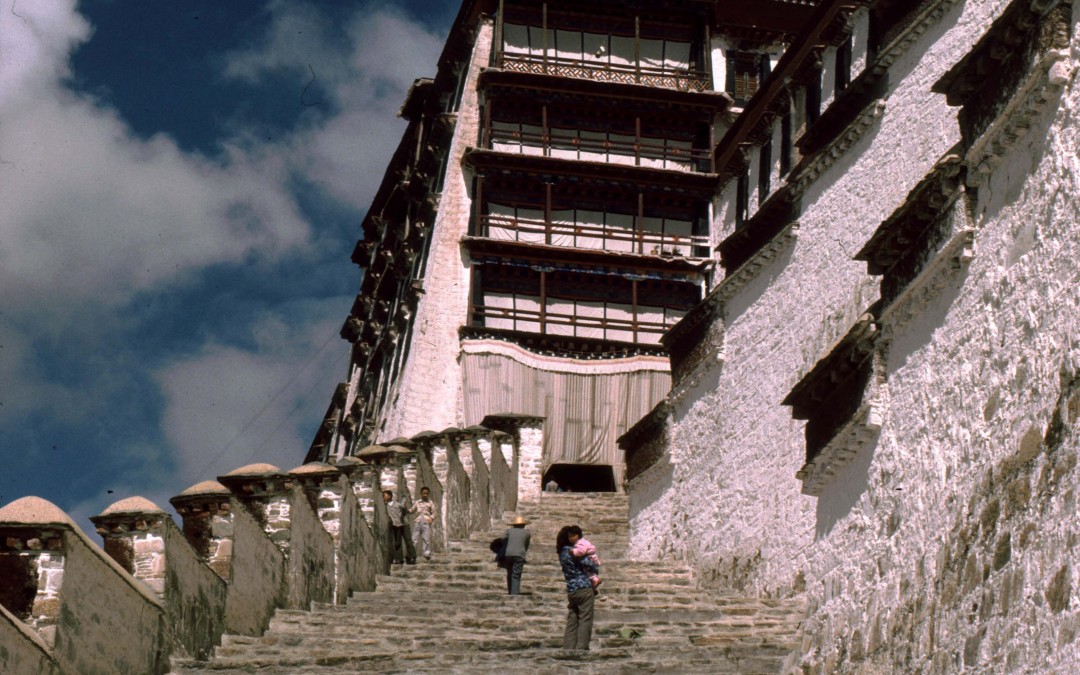
Some rather ridiculous impressions from my recent bike/book tour in Scotland…in diary format. The photo above is of the Potala Palace in Lhasa, Tibet, taken in 1987 by my friend Uli Zimmerman.
20 October, Edinburgh
Today I will fly to Frankfurt, location of the world’s greatest book fair, with my publisher Jean Findlay of Scotland Street Press. I’m being brought along to hustle my book – 9 Months in Tibet – as I’ve proven to be a good hustler over the last three months. (more…)

