by Rupert Wolfe Murray | 13 Oct, 2019 | Journeys
1963. Leeds
I was born in a house with wooden floors and an open-plan kitchen. It was located in a rural area by Leeds called Little London. I have flickering memories of a white coat with bloodstains, people standing around and a little sink.
1968. Scottish Highlands
A big unheated house in the middle of nowhere. I found endless entertainment in the rhododendrons, the trees and the burn – until I was dragged, kicking and screaming, to a faraway school.
1977. Scottish Lowlands
Another big house in the middle of nowhere. By now I’d learned to survive in the hostile environment of school and recover in the flowing hills around our home. I’d also learned to smoke.
1984. The Golden Triangle. Thailand
Trekking through the jungle with my mother. We stayed in a hut made of split bamboos in a traditional village. Below the single room stood the buffalos. An old man laid us on the floor and passed the opium pipe. I had an insight: the traditional, village way of life is ideal.
1987. Tibet
One month on horseback, illegally riding through Eastern Tibet. Every evening we’d find a village and beg for hay for the horses and a shelter for ourselves. It worked. Village people and nomads are generous in spirit and will help a traveller in need.
1992. Romania
A village in northeast Romania called “Top of the fields.” We live with a village family and renovate the orphanage (a big house on the hill). The family have a hectare or two where they grow all the food they need. They also have a pig, a cow, dogs and chickens — and grandchildren. They have it all. I come with plastic bottles and they turn them into pots and funnels. I come with newspapers, cans and other waste and it’s all used. There’s no such thing as rubbish.
2017. Scottish Lowlands
My mother is dying and I come home in a vain attempt to help. I try to work out a way of living in the British countryside but it doesn’t work. Although it’s been emptied of people there’s no room for me. I try to find a balance between doing the garden and working on my PR consultancy projects, but they cancel each other out. You must focus on one or the other. Is British rural life dead? Can it be revived?
2019. Central London
London is in revolt. The centre is blocked by tens of thousands of protesters who demand the government tell the truth about our impending extinction. We’re camping here for 10 days as the government promote their token gestures, the press mocks us and people hurry by.
I have the answer – living off the land with the help of modern technology, and making the economy strictly local – and supporting traditional lifestyles all over the world. Nature is ingenious and it’s by far the best manager of the earth. These are the trump cards, and the missing ingredient, in the discussions about how we need to re-organise ourselves and save the environment.
#
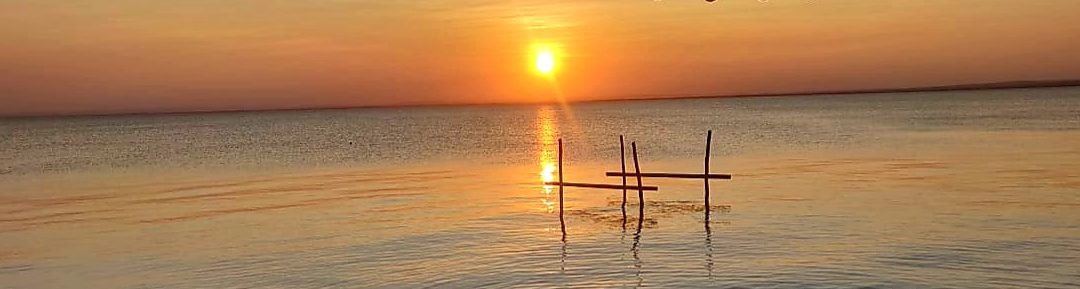
Thanks to my brother Magnus Wolfe Murray for the photo which is from Mozambique. It’s not exactly what I was looking for but it is rural and it does the trick — showing the beauty that can be found in most villages. My brother works on aid projects in Mozambique and you can check out his blog here. He’s quite ashamed that his blog is so out of date, but what’s there is absolutely fascinating — the first article is called “How to rebuild 100,000 houses”, which is typical of the sort of projects he does.
A version of this article was published in The National newspaper in Scotland on 13/10/19.
by Rupert Wolfe Murray | 16 Apr, 2019 | Journeys
As I looked out of the window of my dormitory I thought this must be the smallest capital city in the world.
The only traffic was an occasional tractor, or a truck, moving at walking pace, and lots of bicycles. There was so little traffic that pedestrians didn’t bother looking left or right before crossing and people were standing in the middle of the road, chatting. I saw crumbling old Tibetan buildings with new constructions tacked on shakily to the front, forming a higgledy-piggledy mess of shops and cafes, each with a hand painted sign.
Around the hostel was a rash of Sichuanese restaurants, each with a little crowd of foreign travellers, and I noticed that they all seemed to congregate in a tiny area on the Beijing Road, the main route through the city. I ate noodles in one of the Sichuanese places and eavesdropped on a group of travellers:
– Tourism will soon ruin Lhasa! Just like it did to Kathmandu…I wonder where we can score some hash in this town?
The people in my dormitory were friendly. They shared stories, books, chocolate, maps and teaspoons. They had formed into groups and the singles gravitated towards one another. So many questions: Have you been to….? Do you want to go to…? How much is….? The most frequently discussed issue was prices; they would quiz anyone who walked in about how much they paid for this or that and then compare, comment, complain and evaluate. All of them were on strict budgets so they could only spend a limited amount each day. They were carefully planning their time in Tibet: studying lists of monasteries that had to be visited; time and cost estimates; bus timetables; organising food, wash bags, water filters and purification tablets, first-aid kits and appropriate reading material. This approach to travelling looked stressful and I felt that in their zealous attempt to understand Tibet they were somehow missing the point. All this planning removed the spontaneity and joy of discovery that I thrived on.
– I am from Zurich, said a young lady with a big smile. My name is Christina. Would you like to come with us to visit the Potala?
Christina was travelling alone but she had attached herself to a group of Australian backpackers. I could sense that she was looking for a male travelling companion but I wasn’t ready to join their comfortable clique. I was drawn towards a group of Hong Kong Chinese who didn’t seem to want any contact with us westerners. They looked horrified when I first spoke to them but I persisted. Their English wasn’t good but one of them asked me:
– Where are you from?
– I am from Scotland.
– Ah, Scotland, he replied, not really knowing what to say next.
– I am from the city of Aberdeen, I said, knowing that Aberdeen is the name of the port in Hong Kong.
– Ah! Aberdeen! You from Hong Kong? They laughed. My little white lie seemed to have broken the ice and from that moment on they tolerated my presence.
I think the Hong Kong group were intimidated by the close proximity of so many westerners, but within a few days they had built up their confidence – as well as the amount of noise they were making. Their concept of conversation is totally different from ours. They all talked at once and if someone wanted to stress a particular point they started shouting, and inevitably someone else would shout back, and then they would laugh and the whole place would be in uproar. They could keep this up for hours and I found it entertaining. The westerners didn’t know how to deal with the noise they were making – in fact they hated it – I could feel the tension between the groups.
I noticed the Hong Kong travellers had organised themselves into groups and when I asked what was going on they told me they were looking for a cheaper place to stay. I was keen to get out of the friendly embrace of the western travellers and I asked if I could come along. To my surprise, they agreed. They divided into small groups and systematically searched the town for cheaper accommodation. Within a few hours they had re-assembled and were engaged in a noisy discussion, I presume about which option to choose. We all packed our rucksacks, paid up and left. I had no idea where we were going but I was delighted to be joining this group of nine.
#
This is an extract from my forthcoming eBook: 9 Months in Tibet. To see the feedback I got from the print version click here. If you’d like to reserve a copy just email me at wolfemurray@gmail.com (or post a short comment under this article).
by Rupert Wolfe Murray | 28 Aug, 2018 | Journeys
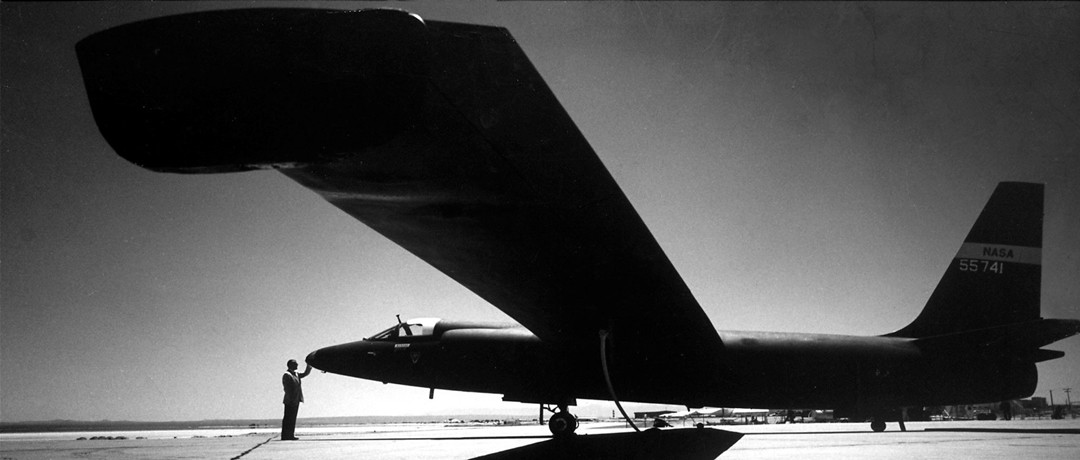
I travel a lot by plane even though it’s environmentally destructive and increasingly boring. Airports in places like Bucharest or Tirana used to be so different from anything we’d seen in the west – the airport terminal in Tirana, a European capital city, was no bigger than a cowshed when I went there in 1999 and the road was made of mud – but now it’s a modern glass cube at the end of a motorway. (more…)
by Rupert Wolfe Murray | 24 Mar, 2017 | Journeys
I want to describe my last visit to Nepal, a fascinating little Himalayan country.
Thirty years have passed since I was last in Kathmandu. My presence there was both dramatic — I had been kicked out of Tibet — but also depressing: I was broke, my dream of living in Tibet had been shattered and I couldn’t afford to fly home to Scotland.
I didn’t want to be in Nepal and I didn’t really notice it (yesterday I told a Nepalese man that I was here 30 years ago and he said “that was the golden time” before uncontrolled building development and pollution). Back then I didn’t take in the ancient buildings and culture and spent my time writing an article for the Daily Telegraph — an article that got me £500, a ticket home and a foothold in journalism.
The last chapter of my memoir, 9 Months in Tibet, describes the political situation in Tibet that led to my expulsion. But there are some things which I never wrote about, one of them being the government poster that appeared all over Lhasa on the 3rd of October 1987 — offering a sort of amnesty to the rioters.
The poster, which is the subject of this article, hasn’t been reproduced anywhere as far as I’m aware and so, in a small way, maybe this article is a historical document about the Chinese occupation of Tibet (for those of you who don’t know what happened, the Tweetable version is this: China invaded Tibet in 1949. They promised autonomy, killed millions and destroyed the culture. The Dalai Lama fled in 1959 and set up a Government in exile in India.)
3rd October 1987: the Government Poster in Tibet
It was badly written, typeset in the old fashioned way and printed on thin white paper. I ripped a copy off the wall and smuggled it out of the country — oblivious to the risk of getting caught.
The poster was just text and its title was simple:
No. 3 Announcement by the People’s Government of the City of Lhasa. October 3rd 1987
The first part of the poster sounded diplomatic in tone, but if it had been drafted by diplomats they weren’t very good at English. My rendering of the poster is verbatim, in other words I didn’t correct their spelling.
By the end of the text the anger the Chinese felt towards the Tibetan protesters, and us foreigners, became clear.
Here is the full text:
In order to ensure the smooth Implementation of the opening police, to promote the development of tourism industry in our region, to increase our economic and technical exchange and cooperation with different countries in the World,to avoid appearance of displeasure in foreign affair’s work, the city announces as follows:
- We extende welcome to friends from the different countries in the World who come to our region for sightseeing, tour, visit, work, trade discussion and economic cooperation.
- Who ever comes to our region must respects our State sovereignty, abide by the lows of our country. They are not allowed to interfere in internal affairs of our country and engage in activities that are incompatible with their status.
- Foreigners are not allowed to crowd around watching and photographing the disturbances manipulated by a few splittists,and they should not do any distorted propaganda concerning disturbances, which is not in agreement with the facts.
- In accordance with our lows, we shall mete out punishment to the trouble-makers who stir up, support and participate in the disturbance manipulated by a few splittists.
*
Points three and four remind me of the story of the riot and the Chinese reaction to it.
This is what happened: some monks protested against Chinese rule, the police opened fire, killed several protesters and arrested others. A Tibetan mob stormed the police station where the prisoners were being held and burned the place down. I turned up towards the end of the riot, saw a boy shot dead in front of me and spent the next few days working out what had happened.
A lot of foreign travellers were in Lhasa that day (1st of October 1987) as well as some journalists. Not only were photos and testimonials taken but they were smuggled out (the Chinese police were naive in the ways of the wily foreign journalists back then and they didn’t search those leaving). The international media told the story in gory detail and it was headline news for a few days. I remember thinking that the Chinese government would have felt humiliated by this outbreak of bad news and their revenge on the Lhasa population would be terrible.
The Chinese police were outraged that the Tibetans had protested against what they consider to be an enlightened regime. They assumed the rioters had been organised by the “Dalai Lama clique” and foreign spies like me (I was an English teacher in Lhasa but I always fancied myself as the next James Bond). They also invented a new word; “splittist”, meaning someone who wants to split Tibet away from the Chinese motherland.
The Chinese police gave the Tibetans a few days to confess all, hand themselves in and benefit from an amnesty. None of the Tibetans I spoke to trusted this amnesty and I don’t think anyone handed themselves in.
Soon enough the police cracked down, abducted people at night and tortured them in Lhasa’s notorious prison. They fulfilled point 4 of their foreign language poster: In accordance with our lows, we shall mete out punishment to the trouble-makers who stir up, support and participate in the disturbance manipulated by a few splittists.
A few days later I was arrested, told to write a self-criticism, which I refused to do, and ordered to leave China within 4 days. I organised a bus to the Nepalese border, a journey that took 4 days over unpaved roads, and ended up feeling glum in Kathmandu.
I wrote about my experiences in Tibet and this helped me to move on. I didn’t want to carry the terrible burden of Tibet’s tragedy for the rest of my life and so I didn’t get involved in the Free Tibet movement. I got into journalism instead, covered the Romanian revolution and spent the next 20 years in Eastern Europe.
Now that I am back in Nepal I can lay the ghost of the past (I don’t want to go back to Tibet in this lifetime), and I can look at this little Himalayan country with fresh eyes: in 1987 I saw Nepal as a transit point and safe haven; now I see it as a fascinating country in its own right and a place I intend to explore.
You can join me by reading these articles and adding a comment. I’d like to know what you think about all this.
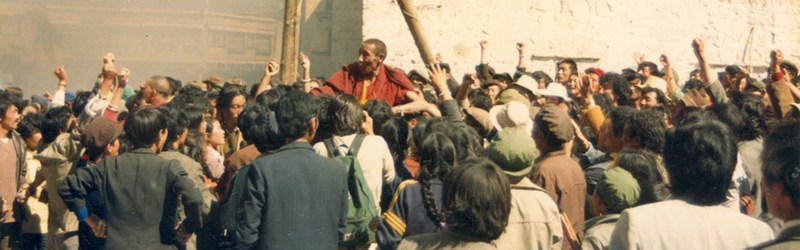
Photo credit: The Middle Way Approach (the photo shows Jampa Tenzin, a Tibetan Lama who was rescued from the burning police station on the 1st of October 1987).
by Rupert Wolfe Murray | 20 Nov, 2016 | Journeys
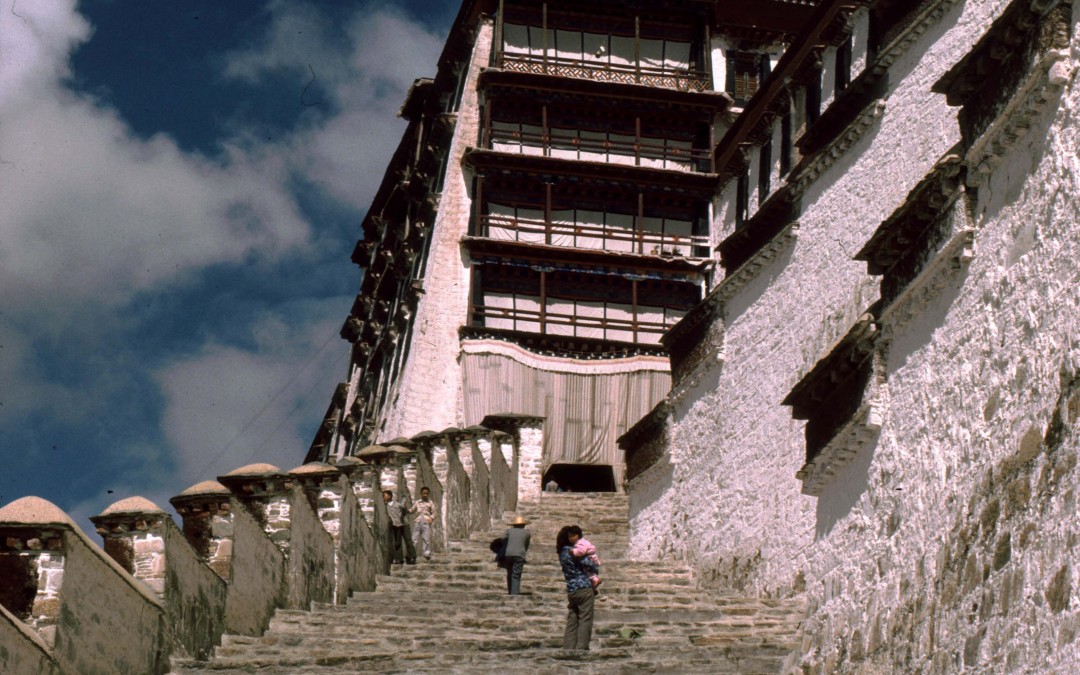
Some rather ridiculous impressions from my recent bike/book tour in Scotland…in diary format. The photo above is of the Potala Palace in Lhasa, Tibet, taken in 1987 by my friend Uli Zimmerman.
20 October, Edinburgh
Today I will fly to Frankfurt, location of the world’s greatest book fair, with my publisher Jean Findlay of Scotland Street Press. I’m being brought along to hustle my book – 9 Months in Tibet – as I’ve proven to be a good hustler over the last three months. (more…)

