by Rupert Wolfe Murray | 31 Aug, 2017 | Opinions
Crowdfunding is much harder than I had assumed although, on the face of it, what could be easier? Just fill in a form, make a video and Bob’s your uncle – the money starts pouring in.
The process is straightforward, at least on Kickstarter, one of the first crowdfunding platforms, but, in my case, it reduced me to a nervous wreck.
This is what happened:
On 24 June 2017 my mother died. Not only was she the heart and soul of our family but she had worked wonders for Scottish publishing — as well as various aid agencies she’d supported. I loved her as my mother but had not realised how appreciated she was. I got an email from Alexander McCall Smith who said she was “one of the most exceptional people I have ever met,” and Jamie Byng, of Canongate Publishing, wrote “she was an inspirational figure in my life.”
I didn’t know how to mourn. What are you supposed to do? Get sad and gloomy? Go into a depression? I was in denial and, to this day, can’t believe she’s gone. The only thing I wanted to do was write about her but I found that I couldn’t. I was blocked.
I did manage to write a short blog post, asking people to share their anecdotes about her. They came pouring in and soon I had 27 comments, some of which were lengthy and beautiful. With very little effort on my part, her life story was being written in draft form. Maybe I could turn these comments into a book? Hmm…nice idea but I was still being held back by the demons of doubt, sloth and complacency.
The spark came from Nick Barley of the Edinburgh Book Festival who, together with Jamie Byng of Canongate, organised an event about my mother at the Book Festival. It was suggested that a wee booklet about her be organised and I jumped at the opportunity.
I soon realised that doing a booklet or brochure was as much effort as doing a short book. Here was my chance to write about her; not the book that I had in mind (a swirl of self-indulgent ideas and sunny memories), but it was something I could put together quickly. I wrote to Alexander McCall Smith, who had published with my mother before he became famous, asked for a contribution and he agreed – as did Alasdair Gray, William Boyd and many others.
It came together in a few weeks mainly thanks to Jim Hutcheson who, my mother used to say, is the best book designer in Scotland. He agreed to work for free, as did everyone else who helped. All that was needed was £1,600 to print the thing.
Crowdfunding – asking individuals to contribute towards an online project – was the obvious solution and I had used Kickstarter to fund a bike tour round the Highlands, when I published my travel book about Tibet.
Until that point I had been riding a wave of optimism and positive energy. Everyone loved my mother and I had great material; what could possibly go wrong?
But when I got down to the nitty gritty details of Kickstarter, asking people for “rewards”, I was struck by doubt: Maybe I wouldn’t raise enough money? Why would anyone give me money? Who the hell was I to do this book anyway? Surely a proper writer should be doing it? Why the rush?
The darkest moment was when the appeal was ready to go. I felt I had exposed myself and would become a laughing stock. I convinced myself that the project was a failure, my reputation would be in ruins, and it was only with great difficulty that I launched it.
At first nothing happened and the voice in my head said “of course nothing happened. What did you expect?” The next morning I had only raised £30 which was, Kickstarter reminded me, not even 1% of my funding goal. My worst fears were realised. I was doomed.
I was a nervous wreck and I checked Kickstarter every hour. After breakfast it had risen to £120. An hour later it was on £240, and by lunchtime £350. By the end of that first day I had almost reached £900 and with rising optimism I knew I was home and dry. I left the neurotic wreck by the side of the road and became an excited teenager, unable to believe my luck. A week later I had shot past my target, comet-like, and raised £3,270. All the extra cash will go to her three favourite charities.
Conclusions? Crowdfunding is easy if you have a compelling idea, but it can bring out your worst fears. Sharing your hopes and dreams with the public can be terrifying. In my case, the problems were all in my head. Now I know that if you have a good project and a network of people who support it, a crowdfunding project can easily succeed.
You can see the Kickstarter project about my mum here. The books have all sold out and I’m thinking about a reprint. Let me know if you would like a copy.
This article was also published in The National.
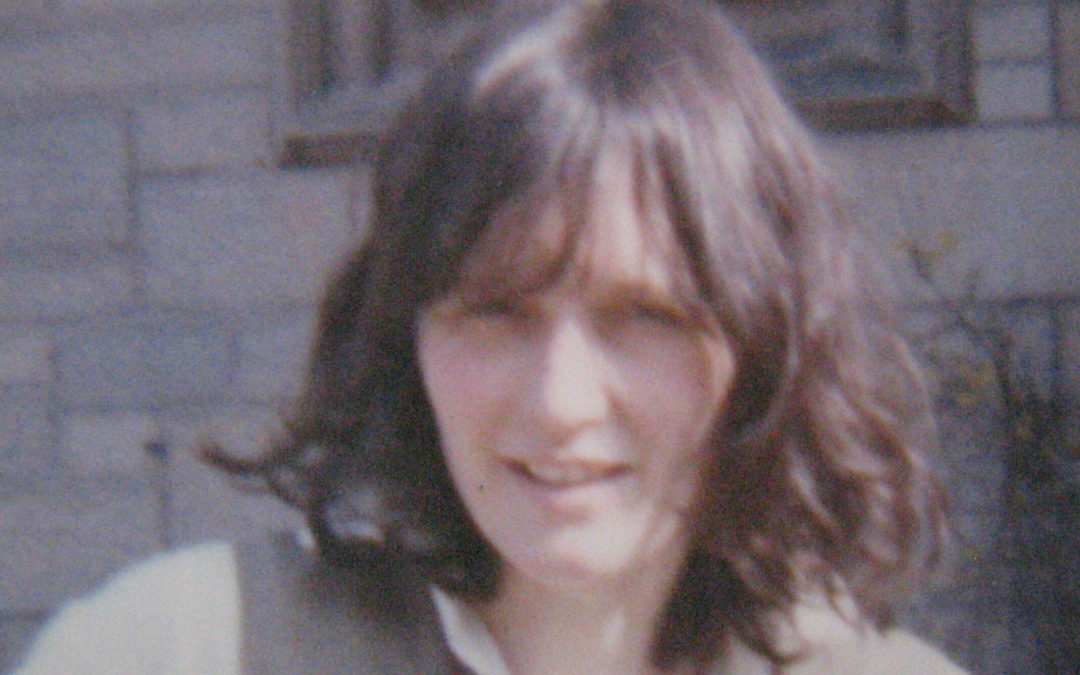
by Guest Blogger | 10 Jul, 2017 | Other People's Stories
This was the first address given at the funeral of Stephanie Wolfe Murray on the 5th of July 2017, at the Old Parish Kirk in Peebles.
By Gavin Wolfe Murray.
Stephanie, my mother, Mummy, the boss. She meant the world to me and I have been amazed to discover over the last few days how profoundly she affected the lives of so many people. She was a saint.
Endlessly loving, giving, thoughtful, curious. She always put others first. She always wanted to help, to care, to listen, to share, regardless of who it was.
My first memories are of Braulen, west of Inverness. Landsdowne Road in London. Glenternie in Kirkton Manor. Society House near South Queensferry, St Leonard’s Bank in Edinburgh. So many happy memories. More recently mother lived at the Laundry House at The Glen, and finally Glenlude House, high on the hill above Traquair, with the flag flying, and flowers of every colour, and house martens feeding their young in their little mud houses under the eaves.
Wherever Mummy lived was the centre of life for the whole family and a haven for poets, lost souls, travellers, neighbours, strangers; no one was turned away. All her homes were distinct but they were all the same because she was there. The aluminium cooking pots, the indestructible oak dining table, the Beatrix Potter books, worn and frayed with nibbled pages. I read the Tale of Miss Tiggy Winkle to her recently. They were very similar although my mother was a lot prettier.
Come inside, the door is open. The dogs are barking, a wonderful smell is coming from the kitchen, children are laughing, unopened letters are scattered on the table with card scores written on the back. There are seed packets, cups of tea, a pile of beetroot leaves from the polytunnel, and there is my mother chopping an onion, stirring the stew, popping rhubarb crumble into the over, wiping her dirty garden hands on a stained and torn tea towel, then greeting me with a happy smile: “Hello baalamb! Would you like a cup of tea?”
I want to tell you about my mother growing up in the War with her mother and her sister Virginia; how well she played the piano, the viola, organ, and flamenco guitar; the debutante staying at Blenheim Palace and gracing the covers of fashion magazines, living in Florence, New York, Paris, driving at impossible speeds on the wrong side of the road to get us to school on time, smoking opium in a tribal village in the jungle highlands of Thailand, riding a yak in Tibet, meeting my father and talking till dawn in a tree, barefoot, grabbing the notebook from a traffic warden’s hand and tearing off the first sheets and then driving away, living in a tent in Kosovo while helping displaced people, picnics on the river and on the hill, summer days making daisy chains, picking elderflowers, raspberries, blackcurrants, throwing on a thin cotton dress at the first hint of summer, and laying on a rug on the lawn, reading a book, pressing flowers into the pages of a book, publishing books with Canongate, changing the face of Scottish literature forever, a model and inspiration for women, visiting her children and grandchildren in America, the Maldives, Romania, raising her grandchildren, swimming in the sea, at the witch’s pool, living in a hut in an African village walking into the Sahara desert to raise money for Maggie’s Centre, giving endlessly to charities, passionately concerned about climate change, working to find a better way to live that would have a positive impact on people and the planet, singing in the Traquair choir, listening to Radio 4, talking about current affairs, making orange marmalade to send out at Christmas, hanging Christmas decorations, setting out the nativity figurines, cutting her own hair, rescuing stray dogs from Montenegro and Portugal and bringing them home to Scotland, holidays on Rhum, Eigg, Barra, Colonsay, Arran.
I want to tell you these things and many more but I have no more time. But I have the rest of my life to cherish the memory of my sweet mother, Stephanie. I do have the rest of my life to honour my Mother by living as well as I can, by loving and caring for others, and for the world.
Mummy, I feel you here with me always. Your spirit will never die. I love you forever.
by Rupert Wolfe Murray | 5 Jul, 2017 | Opinions
Since the loss of our darling Mother I have wanted to write about her, but the feelings are too raw and all I can say right now is that grief is a much more confusing process than I had imagined. I thought it was just sadness and gloom but it’s like being bounced around the inside of a pinball machine.
But I have been getting the most remarkable eulogies by email and I want to create a space — under this article — where we can collect up some of this warm and loving material. If we don’t pro-actively collect these tributes they may get lost in the fast flowing currents of modern communication.
If you knew Stephanie, or even just met her once, please would you add a comment below here — an anecdote would be nice, or a memory (even a feeling) as short or as long as you like. My friend Tom Wilson only met her once (in Romania) but he was moved by her interest in his Dad’s unpublished novel. What may seem silly and inane to you might be a real insight to me. It’s all helping me get to know the breadth of my mother’s influence.
It’s really quite remarkable what an impact she had on so many people; to me she was just Mother; I had no idea she transformed so many lives, inspired so many people, was so widely admired — and I don’t think she knew it either as she was very humble.
I want to share with you three messages that I got by email soon after her death. These were the messages that inspired this idea of collecting these tributes
The first one came from Alexander McCall Smith who said “She was one of the most exceptional people I have ever met.”
Then my friend Gardner Molloy wrote to me. Gardner is an artist who carves in stone, lives along the coast from Edinburgh and creates wonderful sculptures for buildings. He’s also a remarkable (but unpublished) writer with an imagination that reminds me of Alasdair Gray. He wrote of an incident I have long since forgotten but it sounds familiar as this is now my approach to cooking:
“I will never forget turning up at society [our house] with you one evening
to find there was no food in the cupboards whatsoever
and her sending you all out to pick armfuls of nettles
and then making a big pot of delicious soup
literally out of nothing
and feeding us all
total earth mother”
My final message offers an insight into her impact on Scottish publishing. The email came from Michael Wigan who used to stay with us when we were kids, and it was only recently that I found out he’s a writer (he wrote a fascinating book about salmon). This is what he sent me:
“She broke the mould in Scottish publishing and I remember well how her innovation, sheer go-and-get-it brio, just swept everyone away in her path. More than a breath of fresh air in rather staid Caledonian publishing, she was a whirlwind. Her charm turned scowling misogynist monosyllabic authors inside out, into grinning schoolboys. I remember everyone did what she wanted, however improbable, without hesitation. Above all, writers were published who would not have been without her, and new reputations made. She galvanised Scotland’s literary culture.”
If you would like to read more, here you can see her obituary in The Times and here you can see a wonderful account of her life by the good folk at Publishing Scotland.
Now it’s over to you. I would really appreciate it if you could share your most joyous, funny or ridiculous memory of Stephanie. It would be a shame if all this wonderful material, this outpouring of love for an exceptional soul, gets lost among the ceaseless chatter of daily emails.
And remember, you can write as much or as little as you like. Whoever you are, if Stephanie touched you, please leave a note here. It’s all valuable.

