by Rupert Wolfe Murray | 26 Nov, 2019 | Journeys
It’s easy to feel despair about global warming. The IPCC tells us we have less than 12 years to cut CO2 in half — or face devastating consequences. But wherever you look people are driving more, consuming more and those who say we must change our ways are often ridiculed and marginalised.
I doubt Romania’s new government will take these warnings seriously. Why should they when countries like Sweden, which trumpet their green credentials are, according to Greta Thunberg, hypocrites for ignoring aviation, shipping and the carbon-cost of manufacturing in Asia.
It might seem better in countries like mine, the UK, where the government passed a Climate Change Act in 2008 and, ever since, has been able to “claim the moral high-ground globally on this fast-emerging global issue.” But they haven’t stood up to Big Oil (in fact they subsidise the oil industry with billions of pounds a year) or started on the most important task of all: educating the public about the need for “unprecedented transitions in all aspects of society.”
Instead of changing attitudes about climate change, Boris Johnson’s government is arresting people for challenging their hypocrisy and lack of action. Over 1,300 people were arrested at the recent “October Rebellion” protest in London – and the media portrayed the climate protesters as the problem, for blocking traffic, which enabled them to “shoot the messenger” and avoid discussing the real issue.
I know how hard it is to change. I found it really difficult to give up my car and go around by bike, bus and train – and to stop eating meat (which is one of the biggest contributors to greenhouse gases). It has taken me years to make these modest changes.
When I look at Romanians driving along in their expensive cars I wonder “how can I convince them to switch to electric?” How dare I say that everything he’s been working towards, and saving up for, is wrong? How can I counter his view that electric cars are just as toxic as his one, if he’s read articles like this: Are electric cars actually worse for the environment?
Hamburgers give me hope
It’s hard to find signs of hope in Romania, where car-driving and meat-eating are central to their modern culture, and the whole green issue seems to be of marginal importance (pretty much like in the UK).
But I’m an optimist and, after many years of living in Botosani and Bucharest, I see signs of hope where many Romanians see only despair. And recently I found hope in a very unusual place: the website of METRO, the wholesale supplier to shops and the catering industry all over the country.
I would never have looked at METRO’s website had the editor of Romania’s main weather channel (Meteo.ro) not emailed it to me – by mistake. His autocorrect function inserted it.
I was amazed to find that METRO was promoting a vegetable-based burger to an industry that is well known globally to be highly resistant to change – the waste and pollution that restaurants and hotels emit is biblical in its proportions.
METRO’s description of their veggie burger is well written, convincing and on the front page of their website. Here’s an extract:
“Beyond Meat® is as succulent and delicious as beef … and its production uses 99% less water and 93% less farming land,” [than the production of beef]. “This means 90% less greenhouse gases are produced and 46% less energy consumed.”
These are some of the facts that radical vegans use to convince others to join them. But the problem with vegans is that many are so passionate in their beliefs, so purist in their faith, that it repels people who don’t want to give up meat, fish and dairy. The carnivores become defensive, it becomes what the Americans call a “culture war,” and the whole issue is thus marginalised (and politicised, often casting us into the left wing of politics, whereas these issues are “beyond politics” to quote Extinction Rebellion).
But when a major food supplier can pick up the key points – non-meat farming emits far fewer greenhouse gases – without mentioning veganism or being political – it’s a really encouraging sign that things can change.
Apart from those in the catering industry, think how many people in other parts of the economy will have read that veggie-burger text by METRO and, in doing, have become more informed about one part of the problem (our methane-emitting-agricultural-system).
Although most people are aware that global warming is a big problem, very few know what they can do about it and the tendency is to just shrug and carry on as normal. Now, thousands of people in the heart of Romania’s economy have been provided with a better way.
#
A Romanian language version of this article was published on that country’s main weather site. I’ll be writing a series of articles for that site as they have a unique target audience — people checking the weather — that is refreshingly non-political.
by Rupert Wolfe Murray | 13 Oct, 2019 | Journeys
1963. Leeds
I was born in a house with wooden floors and an open-plan kitchen. It was located in a rural area by Leeds called Little London. I have flickering memories of a white coat with bloodstains, people standing around and a little sink.
1968. Scottish Highlands
A big unheated house in the middle of nowhere. I found endless entertainment in the rhododendrons, the trees and the burn – until I was dragged, kicking and screaming, to a faraway school.
1977. Scottish Lowlands
Another big house in the middle of nowhere. By now I’d learned to survive in the hostile environment of school and recover in the flowing hills around our home. I’d also learned to smoke.
1984. The Golden Triangle. Thailand
Trekking through the jungle with my mother. We stayed in a hut made of split bamboos in a traditional village. Below the single room stood the buffalos. An old man laid us on the floor and passed the opium pipe. I had an insight: the traditional, village way of life is ideal.
1987. Tibet
One month on horseback, illegally riding through Eastern Tibet. Every evening we’d find a village and beg for hay for the horses and a shelter for ourselves. It worked. Village people and nomads are generous in spirit and will help a traveller in need.
1992. Romania
A village in northeast Romania called “Top of the fields.” We live with a village family and renovate the orphanage (a big house on the hill). The family have a hectare or two where they grow all the food they need. They also have a pig, a cow, dogs and chickens — and grandchildren. They have it all. I come with plastic bottles and they turn them into pots and funnels. I come with newspapers, cans and other waste and it’s all used. There’s no such thing as rubbish.
2017. Scottish Lowlands
My mother is dying and I come home in a vain attempt to help. I try to work out a way of living in the British countryside but it doesn’t work. Although it’s been emptied of people there’s no room for me. I try to find a balance between doing the garden and working on my PR consultancy projects, but they cancel each other out. You must focus on one or the other. Is British rural life dead? Can it be revived?
2019. Central London
London is in revolt. The centre is blocked by tens of thousands of protesters who demand the government tell the truth about our impending extinction. We’re camping here for 10 days as the government promote their token gestures, the press mocks us and people hurry by.
I have the answer – living off the land with the help of modern technology, and making the economy strictly local – and supporting traditional lifestyles all over the world. Nature is ingenious and it’s by far the best manager of the earth. These are the trump cards, and the missing ingredient, in the discussions about how we need to re-organise ourselves and save the environment.
#
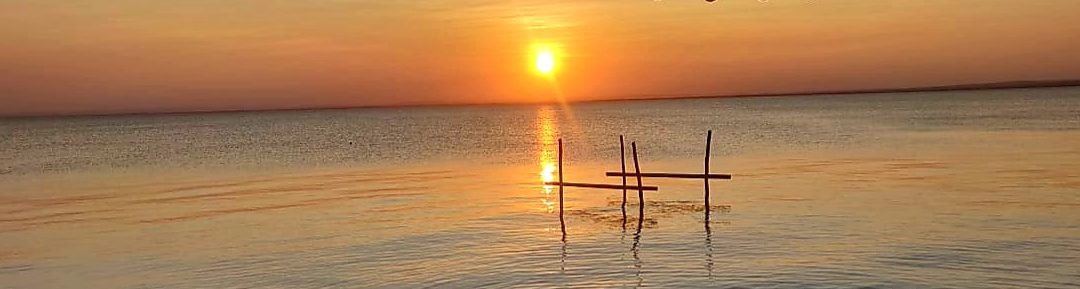
Thanks to my brother Magnus Wolfe Murray for the photo which is from Mozambique. It’s not exactly what I was looking for but it is rural and it does the trick — showing the beauty that can be found in most villages. My brother works on aid projects in Mozambique and you can check out his blog here. He’s quite ashamed that his blog is so out of date, but what’s there is absolutely fascinating — the first article is called “How to rebuild 100,000 houses”, which is typical of the sort of projects he does.
A version of this article was published in The National newspaper in Scotland on 13/10/19.
by Rupert Wolfe Murray | 16 Mar, 2019 | Journeys
Next on the agenda was Romania, the biggest country in that part of Europe. I had been interested in Romania since university because it never appeared in the media. All the other Communist Bloc countries got mentioned now and again, but Romania seemed forgotten. All the Hungarians I met hitching across their country warned me about visiting their eastern neighbour:
– You go Romania?
– Yes.
– Why you go Romania?
– It’s on my route to China.
– China? But Romania not near China. I not understand.
– I’m on my way to China. Romania is in the way.
– You no go Romania. Not good country. No food in Romania. They steal everything. Bad people.
These warnings made me even more curious to see Romania, but I did take the advice about the food situation seriously. Could it be true that there was no food in Romania? Surely that would have been a news story at some point? I had some space in my old canvas rucksack and I went to a grocer’s shop and filled it up with tins of grim-looking beans and a big leg of smoked ham. The shopkeeper asked where I was going and shook his head in sympathy, as if I was off to the front.
The border crossing was deserted. There was space for trucks and cars and people, and men in uniform everywhere, but the only form of transport I saw going in or out of Romania that day was a single car, surrounded by armed soldiers who were patiently going through all the driver’s possessions, and a lone cyclist. None of the uniforms seemed interested in my appearance – I presume they were geared up to search vehicles and interrogate drivers and didn’t know how to deal with a foreigner who’d appeared on foot – and they seemed rather bored. I had a brief chat with the cyclist, who was an American. He was middle-aged, skinny and didn’t seem to have any luggage at all. I wondered if he was some kind of undercover missionary. I asked him what it was like in Romania and he said:
– It’s exotic.
I tried to hitchhike but it didn’t work. I walked from the border crossing point and eventually got a lift from a tractor driver, black with grease, to the nearby city of Oradea, a horrendous looking dump that had been disfigured by grotesque architecture. In fact, the whole country had been ruined by Communist architects. I walked through the city, saw greasy looking cakes in a shop – there was food but it looked inedible – and tried to hitch towards Bucharest on the road south. I stood on the outskirts for the rest of the day but none of the drivers would even look at me. On the street nobody would make eye contact and I couldn’t understand it. Nowhere else had I encountered unfriendliness on such a scale. They also looked incredibly shabby, as if they had been wearing the same clothes for months. That night I walked back into town, found the railway station and got a ticket to Bucharest and thought: What a horrendous place. I can’t wait to get away from here.
I was travelling in terra incognita and the only contact names I had were reluctantly given by the boyfriend of Gwen Hardy, the artist I had visited in Berlin who had given me the tip about the Künstlerhaus exhibition in Vienna. Gwen’s boyfriend was a dark, brooding, silent Romanian called Marian. He didn’t say much when I visited their apartment – was he jealous I had come to visit Gwen? When I found out he was from Romania I asked for some contact names, and he reluctantly gave me a scrap of paper with two names and two numbers. The names were Lolla and Vlad and there was no mention of a surname, address or any other information.
I was standing in Gara de Nord, the main railway station in Bucharest, the capital of this accursed country, holding that scrap of paper in my hand and wondering if I should call the numbers or get the next train to Bulgaria. The thought of leaving was most tempting but something made me hesitate. I found an antediluvian phone box and some grubby, aluminium coins and made the call. No reply. Vlad wasn’t in. Things were looking up: one more phone call and I could hit the road. I was keen to get away from the oppressive atmosphere of this station. And then I called Lolla – what kind of a name is that? – and a grumpy female voice shouted Alo and I was at a loss for words. I hadn’t learned even one word in the Romanian language and I had no intention of doing so. Marian hadn’t told me anything about this Lolla character. Was it male, female or animal? Did it speak English? What was I supposed to say?
– Do you speak English?
– Poftim!
– Sprechen Sie Deutsch?
– Moment! barked the female voice. There was a long silence. After what seemed like an eternity I heard footsteps approaching the phone.
– Alo, said a male voice.
– Do you speak English, oder Deutsch?
– Ja, the voice said, followed by a long pause
I explained in my kindergarten German that I had got this number from a friend of his in Berlin, Marian Stoica. There was another long silence on the phone and I could hear a frantic, whispered conversation going on at the other end. This is ridiculous, I thought, deciding to get the next train to Bulgaria and be done with this Godforsaken place. Eventually the voice said:
– You wait in station. We come! The line went dead.
I wouldn’t have been surprised if a squad of policemen had dragged me off in the next half hour. Maybe it was true what the Hungarians told me, that half the population were informers for the dreaded Securitate, the secret police. Had this Lolla character called them up and told them there is a dangerous foreign spy lurking in the station? And was Lolla the woman or the man? Maybe Lolla was the acronym for the Secret Police? Should I go and get my ticket to Sofia now? What was I doing here?
The scene that followed could have been from a romantic film. I was standing in the station looking at the collection of people walking by, wondering why everyone looked so depressed, as if we were in a massive psychiatric ward not a busy European railway station. And then the sun burst through the gloom, lighting up the station for the first time and, just as the orchestra struck up, a handsome looking couple appeared. It had to be Lolla and his sister, or was it Lolla and her brother? I just knew it was them as they looked so different from the mentally disturbed crowd that I had been observing.
– Guten Tag, I said, addressing the tall and handsome man. I was so pleased to meet normal people that I couldn’t get the huge smile off my face.
– I am Laurentiu. This is my sister Cristina, introducing me to a beautiful young lady who had a perfectly formed round face and long, flowing black hair. Her smile was enchanting.
– But who is Lolla?
– I am Lolla. My name is Lolla. And Laurentiu.
– Aha, so Lolla is a nickname?
– We must go from this place.
– You speak good English, I said to Laurentiu on the way out of the station.
– I do not speak English. I speak German.
– But you are speaking good English.
– I never speak English before. I watch English films.
Laurentiu was a maths teacher and a film buff and he had watched all the classic old films at the National Film Archive, the Cinemateca, learning English, French and Russian in the process. German was the only language he had studied formally and he knew it so fluently that when I tried to speak it he would wince in pain as he knew my pronunciation was appalling. He was incredibly good looking but seemed a bit sad and I presumed this was to do with the repressive country he lived in. Why didn’t he go to Berlin like his school friend Marian? But he didn’t want to talk about Romania, emigrating, the Securitate or the dictator who overshadowed everything – Nicolae Ceausescu. In fact, he didn’t want to talk about anything – but he was warm and understanding and silent communication worked fine.
We drove off in their father’s Wartburg, an ancient East German car with a two-stroke engine, leaving behind a cloud of blue-grey smoke. We went to their house in the old town, an apartment in a street of elegant nineteenth century town houses. They welcomed me in and fed me. I handed over the leg of smoked pork I had carried from Hungary in my rucksack but they refused it. I insisted and so did they, but when they weren’t looking I put it in their ancient fridge and it wasn’t mentioned again. Later on I learned that Romanians are the most welcoming people in Europe and if they take you into their home they will refuse payment and share all their food with you, however little they have.
Bucharest felt scary, especially at night when each street seemed to be lit up by a single street lamp. It felt good to have a friendly base in such a hostile location. The next day I walked the streets alone and saw the biggest queues in my life. I passed what seemed to be a grocers shop but noticed that instead of fruit and veg on the tables outside the shop they were displaying books. When I looked closer I noticed they were all the same books, all with the name Nicolae Ceasescu on the cover. This was strange; I understood the Communist Party urge to sell the great words of the leader, but to sell them on the street like fruit and veg? Didn’t that lower the tone? Later on I came across the Museum of Romanian History, one of the few buildings with an English sign on it, and noticed that the whole upper level of the building was dedicated to Nicolae Ceausescu. There was a big sign that described in glowing terms his personal contribution to Romanian history. This didn’t feel right, the creep wasn’t even dead yet and already he’s got half the National History Museum. Needless to say my new friend Laurentiu didn’t explain any of this.
But he did take the weekend off and show me round town. Gradually, I realised it wasn’t as grim as I had first thought. We met with Victor, his sister’s boyfriend, who had smiling eyes, a stylish 1930s moustache, a devil-may-care attitude, and a car. We went to a park that was wrapped round by a lake, shadowed on all sides by trees, where we played ping-pong on concrete tables outside and drank strange fizzy juice from glass bottles. Laurentiu took me to a screening of a new Russian film called Come and See and we sat in a small, grimy but totally packed cinema watching scenes of butchery as the Nazi army invaded Belarus and proceeded to burn, shoot and destroy the local population. The film was in Russian, the subtitles in Romanian, but I didn’t need to know a word of either language to understand it. Never before or since have I seen such a powerful war film. I later found out that the director of Come and See, Elem Klimov, decided that all he wanted to say was in that film and he never made another.
#
This is an extract from 9 Months in Tibet — the eBook — which will be published soon. If you’d like to reserve a copy just email me at wolfemurray@gmail.com