by Rupert Wolfe Murray | 22 May, 2021 | Opinions
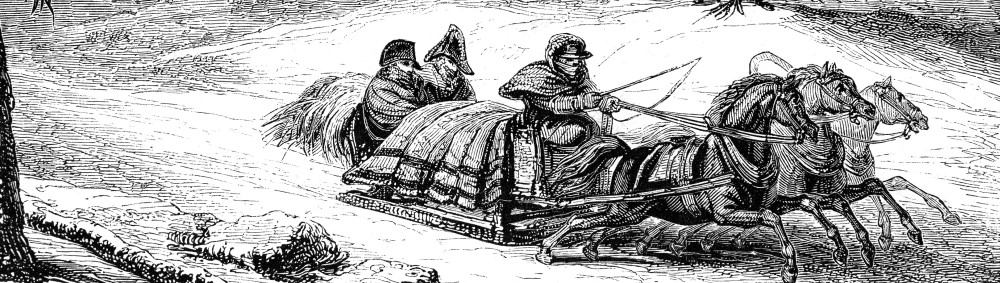
If I was planning to invade Russia with a massive land army (Napoleon went in with 635,000 men and emerged with about 20,000) I would set off in the middle of winter.
“But zat is madness your Highness,” they would say. “Even the simplest peasant in from Bordeaux knows that Russia in winter is well below freezing. Zey will turn to ice. Zey will die like flies. It cannot be done…”
With a knowing smile I would calmly explain my plan: by setting off in winter everyone would make sure that not only were the men suitably attired; but they’d be well trained and we’d make damn sure we had the right supplies.
Not only would we be prepared for winter – we would learn from it and eventually master it, as the Finns did when their small force beat the Soviet Union’s massive invading army in 1940. It would give us time to deal with the myriad of unforeseen problems that would emerge, such as an effective defence when camping out in the frozen wilderness.
And we’d learn from the mistakes of previous invading dictators by not assuming the whole thing would have succeeded by the onset of winter.
And when the Spring came it would be met with such delight and relief that the whole army would get a morale boost. Onwards we would march, to Moscow and beyond…
My own winter campaign
Right now I’m in Brighton and it’s freezing. It’s not minus twenty but I wish it was, as then there would be no moisture in the air; dry cold makes me feel inspired and motivated while the damp cold of Britain is the worst.
The temperature hovers just above ten degrees Celsius and what makes it miserable is that it’s Spring and that means the heating is off. Are British Springs always so cold? (I don’t know, I’ve spent most of my life abroad). I’d rather be in a Russian snowdrift.
Moan, groan, grumble.
My plan for the rest of this year is to go to Bosnia and help re-publish an amazing book of posters that were produced during the Bosnian war (1992 to 1995). The book is called Evil Doesn’t Live Here and it was first published almost 20 years ago; but now it’s out of print and we want to make sure it gets into the hands of young Bosnians all over the world – as it’s an important part of their history and there’s a risk that this war will be forgotten as the Serb/Russian propaganda machine has never stopped pumping out alternative facts about what really happened there.
As soon as I get my second Covid-19 injection I plan to go to Bosnia and get all this organised, and hopefully I can get there in the summer when the weather in that part of the world is amazing; and get the whole project done and dusted before their continental (i.e. bloody freezing) winter sets in. If I do get stuck there next winter it won’t be too bad as they have dry cold rather than our insidious, soul-destroying damp version.
As soon as I post this I’m going on a weekend hike along the south coast, to the Romney Marshes which is a large chunk of wilderness between Brighton and Dover. My flatmate asked why I’m going camping when the weather forecast is bad and I said the only way to deal with shitty weather is walk into it. If you try and hide from it, as I’ve been doing all week, huddling over my laptop, it creeps up on you and gets into your bones. By walking all day you generate enough heat to stay warm in all weathers – even a Russian winter.
Let me know how you handle the weather in the comment box below. Even the smallest comment is most welcome. Lotsaluv, Rupert
by Rupert Wolfe Murray | 4 Dec, 2019 | Journeys
Since I first came to Romania in 1986, it’s been clear to me that Romanians don’t understand the full potential of the tourism business.
Over the 17 years I lived in Romania I’ve had countless conversations with people who own pensions, hotels and restaurants; village and city mayors and even a minister of tourism. All these people reacted in the same way to my advice on the tourism business: they get defensive and offer rationalisations about the unchanging nature of tourism.
I’ve never met anyone in Romanian tourism who is interested in my perspective – an individual traveller who wants to tour by bicycle, hitchhike, camp and stay in hostels, or with ordinary families in traditional houses that haven’t been homogenised with mass produced paint and furnishings.
It’s clear that the type of “individual” tourism that I do simply does not register with people in Romania’s tourism sector. They tend to see the business as in terms of “mass tourism”: huge resorts like Mamaia and Poiana Brasov.
Mass tourism certainly does exist in Romania and it’s done rather well. I’ve just been soaking in a sulphur pool in Calimanesti and love the old-Communist-era vibe to the place. A large number of low-income Romanians, such as pensioners, as well as the sick, get free tickets to these spas and that really is excellent. In my country (UK) I don’t think anyone gets a free holiday and, as a result, those who need one most – the poor, elderly and sick – don’t get them.
The missing opportunity
Tourism is one of the biggest business sectors in the world, accounting for about 10% of global GDP. The UN’s World Tourism Organization says “the business volume of tourism equals or even surpasses that of oil exports, food products or automobiles…This growth goes hand in hand with an increasing diversification…”
By not understanding the industry, and focusing exclusively on mass tourism, Romania is missing out on this huge business opportunity. By dismissing the sort of individual tourism I love – staying in traditional houses in the Moldavian countryside for example – thousands of potential micro-business ideas are dismissed by “experts” and never get off the ground. Imagine if every village had at least one traditional guest house and one campsite – all of which could be promoted on Google Maps and other free online services.
But people who own houses in beautiful locations are told they must tear it down and build a modern hotel if they want tourists – because we all (apparently) want standard modern buildings, cable TV, air conditioning and a bar. But from the business point of view why invest in a huge new building when all you need to do is tidy up the spare room and share the meals that you’re already making? We want to eat sarmale, ciorba, fresh veg from the market and tea from the garden; not frozen food and fizzy drinks from Kaufland.
About campsites: whenever I’ve suggested to village mayors, or rural householders, that they should organise a campsite they always think of reasons why it wouldn’t work. The most common rebuttal is that “nobody would come,” and if I say “I would,” they laugh dismissively. Then they say they’d need to build a “bloc sanitar” which is basically a toilet and washroom. I say they don’t need to build anything as travellers like me are used to “wild camping” — when you just put your tent up in a forest or somewhere out of sight — and having a designated location would be great.
Very few Romanian villages have campsites and those which exist are massive, noisy, smoky, crowded and horrible. The campsites could be set up in a simple field by a family that is willing to share their toilet and offer water and catering services. If nobody came then there would be no losses but if the site was registered on Google Maps and other (free) online services I think they’d get plenty of visitors. Thousands of bums like me are criss-crossing their beautiful land every summer.
Introducing the hostel
The other business opportunity that is appearing in Romania is the hostel – almost a century after they were common in west European cities. A hostel is an apartment (or house) with bunk beds in the rooms, shared bathrooms and an open kitchen. The cost is usually around 10 Euro a night, security is good (I’ve never heard about a robbery in a hostel) and I actually prefer hostels to hotels as the chances of meeting people are much higher.
The west European hostels I’ve stayed in tend to be massive, and sometimes very stylish, but many of the Romanian ones are in single apartments – which is fine. Every town and city in the land should have at least one as they are a useful low-cost option for visitors (as is Airbnb, but that’s a different kettle of fish I’m not going to discuss here).
I’ve stayed in two hostels in Bucharest, one of which (Midlands Hostel) has a great atmosphere and is very central; and one of which behaved towards me with an arrogance I found surprising (Umbrella Hostel). The other guests were foreign “backpackers” who like to party at night and sleep during the day – which was ideal for me as I would get up early and use the empty kitchen as my temporary writing office.
In Iasi I stayed in Andrei Hostel which is just behind the hospital on Copou, and is what we Brits call “Cheap and cheerful”. The guests were Romanian villagers coming to town for some nasty medical operation and Arab students using it as a temporary base before they rented a flat. We all got on fine and what I liked best was the owners had an “honesty box” for your registration form and 50 RON-a-night fee. What a great way to save money on personnel costs!
My hope is that Romanians can stop thinking of the tourism business as requiring millions of Euros, backed up by major strategic investments in infrastructure, and realise that there are many people who would love to stay in a traditional village house, or camp in a forest meadow, and take the opportunity that we in the west lost many generations ago – to get closer to nature.
#
What do you think? I’d be really grateful if you added a comment below — even negative comments are inspiring as we can debate the issue.
by Rupert Wolfe Murray | 20 May, 2016 | Journeys
Camping is a paradox. On the one hand it’s really simple — you sleep outside — but on the other hand it’s really complicated: before you set off you must check you have a suitable tent (is it waterproof? do you have the poles and pegs?); do you have the right sleeping bag and mat? What about cooking gear, food and water? How many clothes, books, torches and other stuff do I need? Where am I going? Can I pitch a tent there? How am I going to get there? Can I carry that heavy rucksack? And when you’re organising gear for other people it gets much, much more complicated — especially when one of them says “I don’t like camping”. (more…)
by Rupert Wolfe Murray | 21 May, 2015 | Journeys
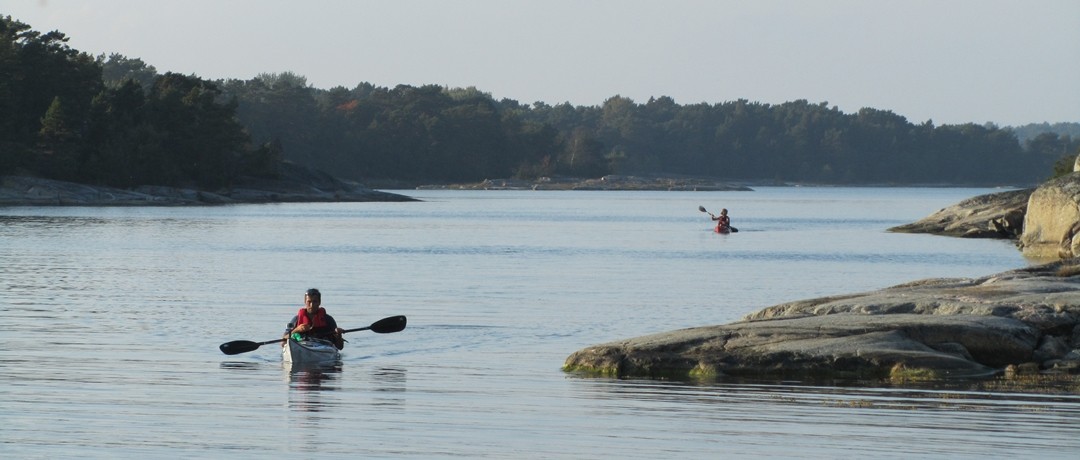
When I was a kid we lived in a white house by the Firth of Forth, an estuary just north of Edinburgh. The house was so close to the sea that waves would splash into the garden when it was rough. Inside one of the garden sheds was an old kayak made of thin fibre glass but I never knew who it belonged to, how it had got there and as far as I remember I was the only one who ever went kayaking. (more…)
by Rupert Wolfe Murray | 24 Apr, 2015 | Journeys
My first thought about camping is that I don’t want to do it: it’s cold and wet outside and even thinking about what I would need to pack sends a shiver down my spine. So much easier to sit in my warm room, go to work and meet a friend for a pizza this evening. (more…)

