by Rupert Wolfe Murray | 31 Aug, 2017 | Opinions
Crowdfunding is much harder than I had assumed although, on the face of it, what could be easier? Just fill in a form, make a video and Bob’s your uncle – the money starts pouring in.
The process is straightforward, at least on Kickstarter, one of the first crowdfunding platforms, but, in my case, it reduced me to a nervous wreck.
This is what happened:
On 24 June 2017 my mother died. Not only was she the heart and soul of our family but she had worked wonders for Scottish publishing — as well as various aid agencies she’d supported. I loved her as my mother but had not realised how appreciated she was. I got an email from Alexander McCall Smith who said she was “one of the most exceptional people I have ever met,” and Jamie Byng, of Canongate Publishing, wrote “she was an inspirational figure in my life.”
I didn’t know how to mourn. What are you supposed to do? Get sad and gloomy? Go into a depression? I was in denial and, to this day, can’t believe she’s gone. The only thing I wanted to do was write about her but I found that I couldn’t. I was blocked.
I did manage to write a short blog post, asking people to share their anecdotes about her. They came pouring in and soon I had 27 comments, some of which were lengthy and beautiful. With very little effort on my part, her life story was being written in draft form. Maybe I could turn these comments into a book? Hmm…nice idea but I was still being held back by the demons of doubt, sloth and complacency.
The spark came from Nick Barley of the Edinburgh Book Festival who, together with Jamie Byng of Canongate, organised an event about my mother at the Book Festival. It was suggested that a wee booklet about her be organised and I jumped at the opportunity.
I soon realised that doing a booklet or brochure was as much effort as doing a short book. Here was my chance to write about her; not the book that I had in mind (a swirl of self-indulgent ideas and sunny memories), but it was something I could put together quickly. I wrote to Alexander McCall Smith, who had published with my mother before he became famous, asked for a contribution and he agreed – as did Alasdair Gray, William Boyd and many others.
It came together in a few weeks mainly thanks to Jim Hutcheson who, my mother used to say, is the best book designer in Scotland. He agreed to work for free, as did everyone else who helped. All that was needed was £1,600 to print the thing.
Crowdfunding – asking individuals to contribute towards an online project – was the obvious solution and I had used Kickstarter to fund a bike tour round the Highlands, when I published my travel book about Tibet.
Until that point I had been riding a wave of optimism and positive energy. Everyone loved my mother and I had great material; what could possibly go wrong?
But when I got down to the nitty gritty details of Kickstarter, asking people for “rewards”, I was struck by doubt: Maybe I wouldn’t raise enough money? Why would anyone give me money? Who the hell was I to do this book anyway? Surely a proper writer should be doing it? Why the rush?
The darkest moment was when the appeal was ready to go. I felt I had exposed myself and would become a laughing stock. I convinced myself that the project was a failure, my reputation would be in ruins, and it was only with great difficulty that I launched it.
At first nothing happened and the voice in my head said “of course nothing happened. What did you expect?” The next morning I had only raised £30 which was, Kickstarter reminded me, not even 1% of my funding goal. My worst fears were realised. I was doomed.
I was a nervous wreck and I checked Kickstarter every hour. After breakfast it had risen to £120. An hour later it was on £240, and by lunchtime £350. By the end of that first day I had almost reached £900 and with rising optimism I knew I was home and dry. I left the neurotic wreck by the side of the road and became an excited teenager, unable to believe my luck. A week later I had shot past my target, comet-like, and raised £3,270. All the extra cash will go to her three favourite charities.
Conclusions? Crowdfunding is easy if you have a compelling idea, but it can bring out your worst fears. Sharing your hopes and dreams with the public can be terrifying. In my case, the problems were all in my head. Now I know that if you have a good project and a network of people who support it, a crowdfunding project can easily succeed.
You can see the Kickstarter project about my mum here. The books have all sold out and I’m thinking about a reprint. Let me know if you would like a copy.
This article was also published in The National.
by Rupert Wolfe Murray | 5 Jul, 2017 | Opinions
Since the loss of our darling Mother I have wanted to write about her, but the feelings are too raw and all I can say right now is that grief is a much more confusing process than I had imagined. I thought it was just sadness and gloom but it’s like being bounced around the inside of a pinball machine.
But I have been getting the most remarkable eulogies by email and I want to create a space — under this article — where we can collect up some of this warm and loving material. If we don’t pro-actively collect these tributes they may get lost in the fast flowing currents of modern communication.
If you knew Stephanie, or even just met her once, please would you add a comment below here — an anecdote would be nice, or a memory (even a feeling) as short or as long as you like. My friend Tom Wilson only met her once (in Romania) but he was moved by her interest in his Dad’s unpublished novel. What may seem silly and inane to you might be a real insight to me. It’s all helping me get to know the breadth of my mother’s influence.
It’s really quite remarkable what an impact she had on so many people; to me she was just Mother; I had no idea she transformed so many lives, inspired so many people, was so widely admired — and I don’t think she knew it either as she was very humble.
I want to share with you three messages that I got by email soon after her death. These were the messages that inspired this idea of collecting these tributes
The first one came from Alexander McCall Smith who said “She was one of the most exceptional people I have ever met.”
Then my friend Gardner Molloy wrote to me. Gardner is an artist who carves in stone, lives along the coast from Edinburgh and creates wonderful sculptures for buildings. He’s also a remarkable (but unpublished) writer with an imagination that reminds me of Alasdair Gray. He wrote of an incident I have long since forgotten but it sounds familiar as this is now my approach to cooking:
“I will never forget turning up at society [our house] with you one evening
to find there was no food in the cupboards whatsoever
and her sending you all out to pick armfuls of nettles
and then making a big pot of delicious soup
literally out of nothing
and feeding us all
total earth mother”
My final message offers an insight into her impact on Scottish publishing. The email came from Michael Wigan who used to stay with us when we were kids, and it was only recently that I found out he’s a writer (he wrote a fascinating book about salmon). This is what he sent me:
“She broke the mould in Scottish publishing and I remember well how her innovation, sheer go-and-get-it brio, just swept everyone away in her path. More than a breath of fresh air in rather staid Caledonian publishing, she was a whirlwind. Her charm turned scowling misogynist monosyllabic authors inside out, into grinning schoolboys. I remember everyone did what she wanted, however improbable, without hesitation. Above all, writers were published who would not have been without her, and new reputations made. She galvanised Scotland’s literary culture.”
If you would like to read more, here you can see her obituary in The Times and here you can see a wonderful account of her life by the good folk at Publishing Scotland.
Now it’s over to you. I would really appreciate it if you could share your most joyous, funny or ridiculous memory of Stephanie. It would be a shame if all this wonderful material, this outpouring of love for an exceptional soul, gets lost among the ceaseless chatter of daily emails.
And remember, you can write as much or as little as you like. Whoever you are, if Stephanie touched you, please leave a note here. It’s all valuable.
by Rupert Wolfe Murray | 2 Mar, 2017 | Opinions
I feel rather guilty that I’ve not updated my wonderful Kickstarter supporters, from whom I got £600 to do my bike tour of the Highlands, we well as the readers of my blog.
My guilty conscience says “you took their money and ran…You didn’t deliver on your Kickstarter promise: you didn’t write a book and you didn’t become a writer.”
My not-guilty conscience refutes this. He knows that I did cycle round the Highlands, I did promote my Tibet book (it’s almost sold out in fact), I wrote a new book (well, I wrote about 75% of a new one) and my writer’s block is a thing of the past.
It is true that I didn’t become a writer. I didn’t step into a special machine and emerge as a fully formed, highly-paid, internationally celebrated writer.
But I did take an all-important step towards becoming a writer. I overcame some of my internal blocks, hang-ups and insecurities; I worked out methods of dealing with procrastination, distraction, complacency and depression. I’m working out a balance between making a living (doing a “normal” job) and writing a bit every day. I’m getting into a routine that will result in more books.
This morning I got up at five in the morning – without an alarm clock – and spent an hour and a half on my latest book. When this happens it’s incredibly satisfying. I had a moment of inspiration and wrote this Tweet for anybody who, like me, is trying to find the right routine: Want to write a book? After 30 years of trying I realise the key is to get up at 5am.
Update from Yours Truly
I must tell you what happened to the book I wrote on my bike trip and what I plan next. This will help explain my gradual transformation from normal human being into a sleepwalking zombie – oops, I mean into a writer.
But first, I need to tell you a story.
For over two decades I’ve had writer’s block. I first wrote my Tibet memoir in 1989 but I couldn’t find a publisher and realised it needed to be rewritten. I taught myself journalism in the deluded belief that it would help me write better (it didn’t. It just turned me into a high class literary prostitute – a PR consultant). Twenty-five years went by before I rewrote the damn thing and now it’s thirty years later.
But the deed was done and last autumn 9 Months in Tibet was published. I realised the only way to flog copies was to do it myself so I cycled round the Highlands and asked everyone I met to buy a copy. It worked and the best thing is that I’ve been getting good reviews. If you click on the book’s web page you can see some of them.
Getting good feedback has been essential. It is hard evidence for my ruthless, negative, cynical bastard of an alter ego that I’m not a total failure and that some people actually like what I write.
But the most remarkable thing about getting my Tibet memoir published is that it has unblocked me as a writer and since getting it published I have written four books. I’m churning them out. My Tibet book was a blockage in my irrigation system – I needed to get it out of the way before the life-nourishing water could come through. And it’s pouring out. I’m churning them out so fast that I have new problems; how to finish them and get published?
This is what I’ve been writing:
- I wrote a short fairy tale called The Wind and the Castle and it is the most complete of these works-in-progress. I dare to say it’s a beautiful book and I was inspired to write it after reading a little known classic: Fairy Tales by Herman Hesse.
- When doing my bike trip I wrote some of a book I called Writing on a Bike – Observations from a dis-united Kingdom – a book that has changed totally since I conceived of it. I started off wanting to record people’s observations about an independent Scotland and the breakup of the UK, but people didn’t seem to want to talk about that. And it got boring just writing about my daily grind on the bike and so I made a foray into fiction. This will be a very different travel book and it is dedicated to my wonderful Kickstarter supporters, to whom I feel big debt of gratitude for getting me going on this new chapter in my life.
- In January I helped out a Dutch charity called Against Child Trafficking, wrote them a new website and a wee book called a History of Adoption. I also wrote a diary-type book called Trailer Trash which is about my work with this charity, what music I was listening to and quotes from books I was reading. I wrote it in the trailer (mobile home) I was living in at the time. JK Rowling also features. Coming soon!
So here we are, in early March 2017. I think I have finally found a balance between writing books (and articles like this) and working for a living. As I said in my Tweet, the key is to get up early and write a little bit every day. Each little bit soon builds up into a book. I have discovered a very productive side of myself – I can start writing a book quickly and get to the half way mark in no time – but my problem is getting it finished before starting another one. It’s not good having so many books on the go, but I’m just learning how to control this creativity.
Currently I’m based at my parents’ house in the Borders region of Scotland, near a wee village called Traquair. It’s beautiful. Ours is the only inhabited house in the landscape – in other words it’s in the middle of nowhere. One would have thought that being here would be ideal for finishing off my books but it’s actually really hard to write here as there is so much to do: yesterday I took my mother to hospital where she got her latest dose of chemotherapy; today I must take her an hour in the other direction where she does hyperbaric oxygen therapy; we have a team of Romanian builders doing some renovation work and any day now convoys of big trucks will appear with hundreds of tons of gravel to re-surface the drive. I seem to have become the organiser of these jobs.
Next Stop Nepal
In a couple of weeks I’m going to Nepal where I’ll visit my brother Moona, who is working on post-earthquake reconstruction projects. I will also do some trekking, mountain biking, give a talk about my Tibet book and write a series of articles based on my observations – such as what does the modern independent traveller do? I will also make time to finish off some of these books I’m working on.
In the next few days I will launch a new Kickstarter project to raise funds for my Nepal trip. But before doing that I felt the need to update those wonderful people who supported me on my first Kickstarter project. I want their blessing before moving on to the next appeal.
I may sound a overly sentimental when writing about my Kickstarter supporters. You could say it’s no big deal, people sponsor things all the time. But when it’s for a new way of life that I’m trying to work out – a kind of transformation of my life – it feels incredible that people are willing to buy into it. I can’t tell you how grateful I am. I feel a tremendous loyalty towards these people, more than I have felt towards anything I can remember.
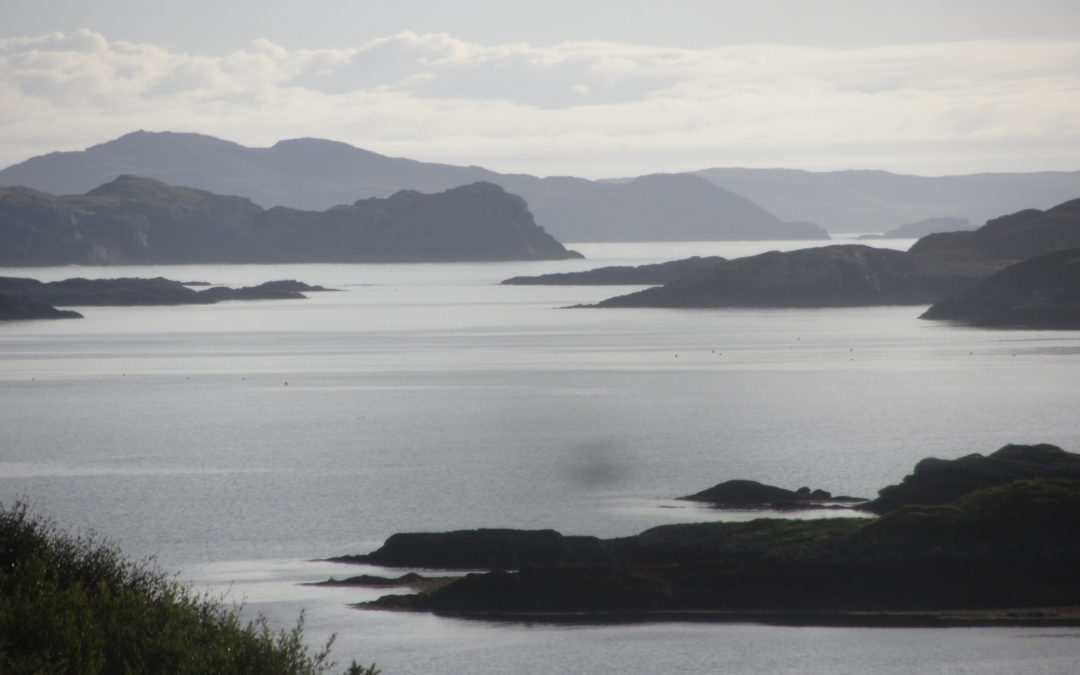
The photo in this article was taken by me in the NW coast of Scotland, when I was cycling round promoting my Tibet book.
by Rupert Wolfe Murray | 22 Feb, 2017 | Opinions
Soviet Russia was a very visual place, for all the wrong reasons. The colours were dark and gloomy, the people were listless and misshapen (air hostesses and officials tended to be huge while gymnasts and the poor were stick-thin). These were the images that we were shown by Hollywood and the media. They weren’t false but they were selective and didn’t get across the main thing — the atmosphere.
I’ve just seen a rather brilliant film called Bridge of Spies. It was written by the Coen brothers, directed by Spielberg and starred Tom Hanks. It’s the story of the U2 spy-plane incident and the exchange-of-spies that followed. Most of the action is set in East Berlin.
They did a good job of re-creating the look of life in the Soviet Bloc — and I say this as someone who visited East Berlin, in 1986, when it was still under Communist rule — but they didn’t really get across the feel of it. In particular the ever present feeling of fear. As a visitor to East Berlin in 1986 I sensed it; I knew that they could arrest me, imprison me, accuse me of anything, detain me forever, on a whim. I also knew they were unlikely to do so as I wasn’t a spy (I didn’t even have a job) even though I sometimes fancied myself as the next James Bond.
The actor who really steals the show in Bridge of Spies is Mark Rylance. He plays Rudolf Abel, the Russian spy who gets exchanged for Gary Powers (the captured U2 pilot). He won an Oscar for best supporting role but also managed to get across something of the dead-soul feeling of life under Communism. His character is melancholic, resigned to his fate, unfazed by arrest, interrogation, repatriation and a possible execution. It may sounds boring but it’s not; it was a brilliant performance and it’s no wonder that Rylance is being touted as one of Britain’s greatest actors.
However, he doesn’t get across the feeling of the Soviet Bloc as well as an actor who would be the first to admit he wasn’t as good on stage as Mark Rylance.
Enter Rupert Everett
I’m not sure what to say about Rupert Everett as an actor. All I know him for is playing a voice in Shrek 2 (Prince Charming), a butler in a film about a monkey called Dunston and the Edwardian headmistress in a crappy remake of St Trinians. He plays fops, dandies, aristocrats and upper class twits — and is probably an essential ingredient to casting directors as there is an endless need for such characters.
What I can say about him is that he’s a great writer. I’m reading his autobiography — Red Carpets and Other Banana Skins — which has this Daily Mail quote on the front page: “Funny, outrageous and extremely well written.” Everett’s description of his early life are brilliant and his description of his homosexuality, in an age when it was still quite taboo, very honest. He’s self-deprecating about his own talents and would be harsher on himself than any critic. But he gets a bit boring when he writes about the life of excess with famous Hollywood stars and he drops names as if they are confetti.
What about Russia? You may be wondering.
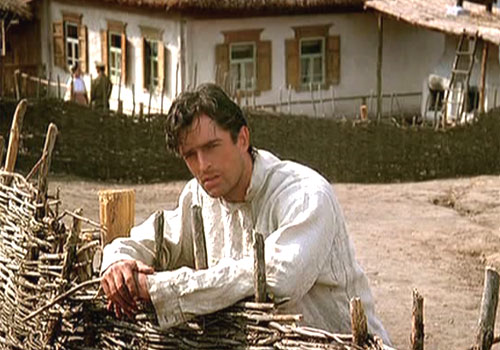
Rupert Everett did make a film about Russia. He played the lead role, Grigor, in Slowly Flows the Don, a classic Russian story in the civil war which took place in the 1920s. It was directed by legendary filmmaker Sergei Bondarchuk, friend of Stalin and director of Mosfilm. The movie was a Soviet-Italian co-production and, like many films made under in the Soviet Union, had access to whole divisions of soldiers. Bondarchuk is famous for his production of War and Peace and with this film he was presumably aiming for something similar.
But it was not to be. Communism crashed, his soldiers deserted, the Italians went mad and the rushes ended up in a basement in Naples, embroiled in legal difficulties. It was never released.
When will I get to the point? Here it comes:
The whole point of this article is to introduce some passages about Russia that Rupert Everett wrote in his autobiography. These short descriptions, his impressions of Moscow in the early 1990s, get across the feel of the Soviet Bloc more effectively than anything I have read or seen on film.
Here’s an extract of what Everett wrote in his 33rd chapter:
“There was a dead feeling in communist Russia. It banged into you as you stepped off the plane. Men in uniforms with blunt dull faces, tiny and cruel under enormous hats, went through my belongings item by item, endlessly examining a bottle of soy sauce, or a bag of rice. (I had brought a trunk of provisions). Others stood in groups with glassy, lobotomised eyes…
“Miles and miles of crumbling tower blocks surrounded the city…Everything was falling to pieces. A porch hung precariously over a front door. Windowpanes were held together by tape and newspaper…
“Inside, the crumbling studios were caked with years of mud and dust. Pipes with big rusting taps grew out of the ground, like living things, and ran along the walls and up over the street before diving back into the earth…
“It was exhausting but this was communism. It had hit them over the head and now it hit me over the head. One had to slow down or die trying.”
This seems authentic to me. You may be wondering who the hell am I to say it is authentic when I didn’t even visit Russia under Communism. I base my view on travelling through East Germany, Poland, Czechoslovakia, Hungary, Yugoslavia, Romania and Bulgaria, when they were all still part of the Soviet Bloc. During that trip in 1986 I had the same impressions as Everett describes in his book.
For me, Everett’s description reminds me of my own experiences in the Soviet Bloc. Just like Slumdog Millionaire was the first India film that reflected the atmosphere from my visits to India between 1984 and 1987.
Rupert Everett went to the Soviet Union and when he left, a year later, it was called Russia. He admitted that he was “vastly unsuited to the part in which I had been cast” — and it is this honesty, and lack of any attempt to explain what was going on politically, that makes his writing so valuable.
I wonder what else he’s written?
Photo credit to Russian Film (This photo shows a whole other side of life in the Soviet Bloc — in a village. The irony of these villages is that the ancient rural culture was preserved better under Communism than Capitalism for the simple reason that Communism had less money and therefore less ability to uproot people from their land and send them into cities. For that reason I miss Communism. Since its departure this village culture is vanishing fast and this makes me very sad).
by Rupert Wolfe Murray | 14 Jul, 2016 | Opinions
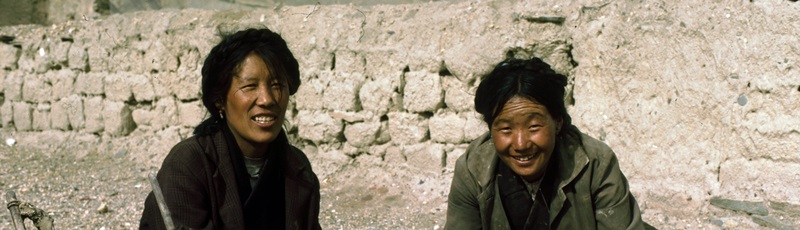
It’s bizarre. I’ve written so much about my time in Tibet – I’ve got a book about Tibet coming out next month – and yet I haven’t written an article about it since 1987. (more…)

by Rupert Wolfe Murray | 23 Jun, 2016 | Opinions
This started out as an email to my family, who are debating furiously on email about the EU referendum, immigration … and the Armageddon which will happen tomorrow if the wrong side wins. (more…)

