by Rupert Wolfe Murray | 22 May, 2021 | Opinions
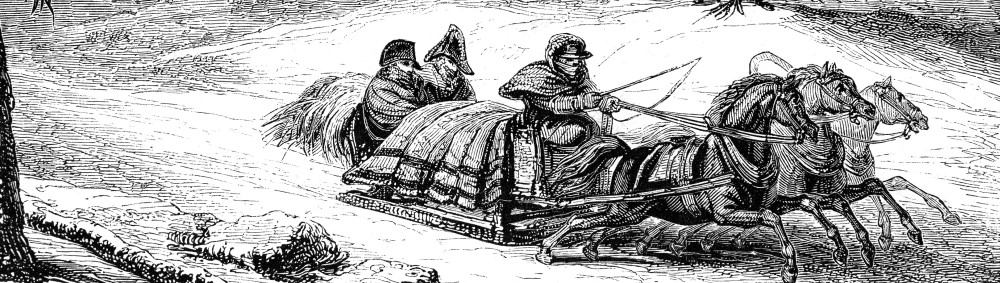
If I was planning to invade Russia with a massive land army (Napoleon went in with 635,000 men and emerged with about 20,000) I would set off in the middle of winter.
“But zat is madness your Highness,” they would say. “Even the simplest peasant in from Bordeaux knows that Russia in winter is well below freezing. Zey will turn to ice. Zey will die like flies. It cannot be done…”
With a knowing smile I would calmly explain my plan: by setting off in winter everyone would make sure that not only were the men suitably attired; but they’d be well trained and we’d make damn sure we had the right supplies.
Not only would we be prepared for winter – we would learn from it and eventually master it, as the Finns did when their small force beat the Soviet Union’s massive invading army in 1940. It would give us time to deal with the myriad of unforeseen problems that would emerge, such as an effective defence when camping out in the frozen wilderness.
And we’d learn from the mistakes of previous invading dictators by not assuming the whole thing would have succeeded by the onset of winter.
And when the Spring came it would be met with such delight and relief that the whole army would get a morale boost. Onwards we would march, to Moscow and beyond…
My own winter campaign
Right now I’m in Brighton and it’s freezing. It’s not minus twenty but I wish it was, as then there would be no moisture in the air; dry cold makes me feel inspired and motivated while the damp cold of Britain is the worst.
The temperature hovers just above ten degrees Celsius and what makes it miserable is that it’s Spring and that means the heating is off. Are British Springs always so cold? (I don’t know, I’ve spent most of my life abroad). I’d rather be in a Russian snowdrift.
Moan, groan, grumble.
My plan for the rest of this year is to go to Bosnia and help re-publish an amazing book of posters that were produced during the Bosnian war (1992 to 1995). The book is called Evil Doesn’t Live Here and it was first published almost 20 years ago; but now it’s out of print and we want to make sure it gets into the hands of young Bosnians all over the world – as it’s an important part of their history and there’s a risk that this war will be forgotten as the Serb/Russian propaganda machine has never stopped pumping out alternative facts about what really happened there.
As soon as I get my second Covid-19 injection I plan to go to Bosnia and get all this organised, and hopefully I can get there in the summer when the weather in that part of the world is amazing; and get the whole project done and dusted before their continental (i.e. bloody freezing) winter sets in. If I do get stuck there next winter it won’t be too bad as they have dry cold rather than our insidious, soul-destroying damp version.
As soon as I post this I’m going on a weekend hike along the south coast, to the Romney Marshes which is a large chunk of wilderness between Brighton and Dover. My flatmate asked why I’m going camping when the weather forecast is bad and I said the only way to deal with shitty weather is walk into it. If you try and hide from it, as I’ve been doing all week, huddling over my laptop, it creeps up on you and gets into your bones. By walking all day you generate enough heat to stay warm in all weathers – even a Russian winter.
Let me know how you handle the weather in the comment box below. Even the smallest comment is most welcome. Lotsaluv, Rupert
by Rupert Wolfe Murray | 13 Mar, 2021 | Opinions
Writing about a book of essays is hard because each essay is a complex entity unto itself; each one has a brilliant idea that I’d like to write about – but then I read the next one and I forget what I was so interested in a few pages back.
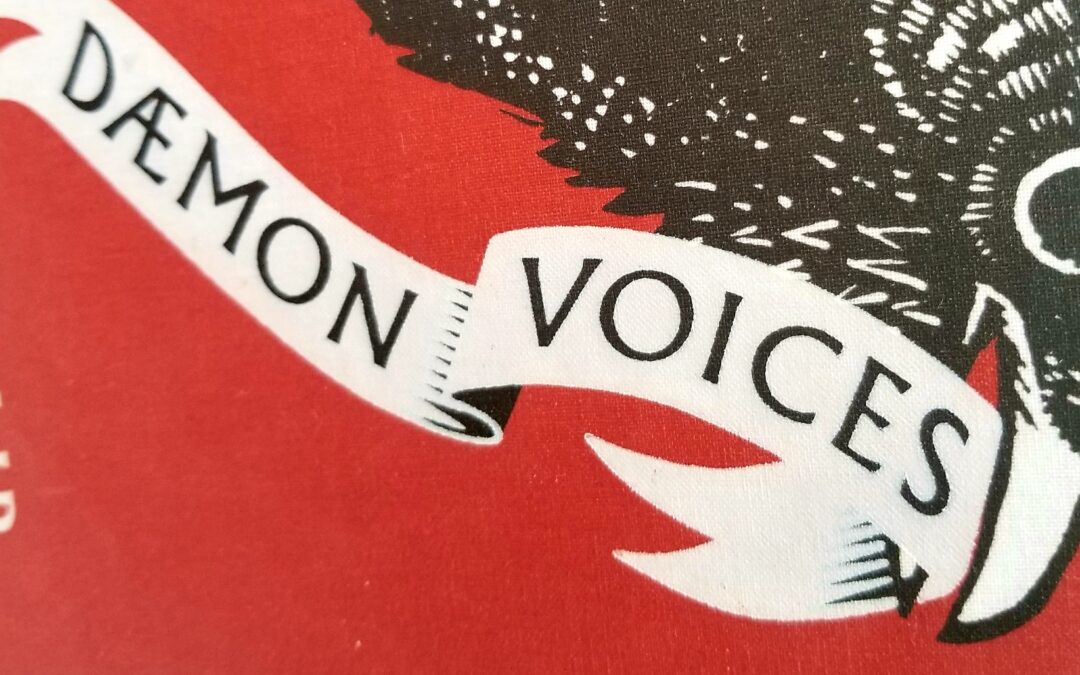
Suffice to say that this book analyses the writing of stories and is made up of talks the great Mr Pullman gave (I’m not sure why this collection of transcribed talks is described as a book of essays, but that’s neither here nor there.) I think this book is mainly of interest to people who write stories, but if you’re a Philip Pullman fan and would like to know more about the ideas in His Dark Materials trilogy, then this is the book for you. But it’s quite long and pretty heavy at times.
The bit I want to focus on in this review comes from the chapter called I Must Create a System (subtitle: A Moth’s-eye view of William Blake). One problem with this book is that Pullman describes himself as being a lowbrow intellectual and yet he’s read, and re-read, the likes of Milton and Blake – ancient poets that I’d heard of but certainly never read. If he’s a lowbrow then I’m a Neanderthal (one effect of reading this book is that it makes me feel rather ignorant).
I’m not going to go into the ideas of William Blake or this review would go on forever, but I’ll give you a relevant quote from Pullman: “William Blake, as we know, had such extraordinary and penetrating insights into the nature of religion, and expressed them with such force and clarity, that it’s always worth looking at what he has to say on the matter.”
All I want to do here is give you one amazing quote which shows a brilliant way of writing, or “literary device” to the highbrow. The context of this quote is systems; in other words systems for thinking about life and for writing stories. Christianity is a system in that it explains life, as is Marxism, Feminism and – a particularly relevant one today as it describes an ancient form of conspiracy theory – Gnosticism.
This whole discussion comes from the following line by William Blake:
“I must create a system, or be enslav’d by another Mans…”
When I first read that line I thought Pullman would write about how modern man is trapped (enslav’d) in economic systems of work and debt – but he didn’t. He’s more interested in systems that help people write stories and think about life.
The quote I offer you here makes the idea of systems seem more approachable, in that (unlike religions or ideologies) it doesn’t claim to have all the answers.
Here’s the quote (by Pullman, not Blake):
“So each one of us has a whole complex of attitudes and experiences which, if they’re not as coherent as a worked-out system, function in a similar way. They provide the solid and unquestioned support for all the work we build on top of them…
“It might seem from the outside like a haphazardly acquired combination of prejudice, ignorance, random experience, scraps of cracker-barrel sententiousness, things they were taught before they were seven, superstition, sentimentality, wishful thinking and saloon-bar knowingness; a gimcrack, jerry-built, patchwork thing, crawling with dry rot, with rats in the basement and death-watch beetle in the attic, with staircases that lead nowhere and corridors blocked off by fallen masonry, with broken windows banging in the wind and great holes in the roof letting in the rain.” (from Daemon Voices by Philip Pullman, page 391).
What I love about that passage is how beautifully it flows; it’s fun to read and each one of the items listed could open up another story.
What’s brilliant about this literary device is that you can use it to summarise a large number of complex things. One of the problems I find with writing an article is that I’ve got too much to say: pages of notes, website links, facts, figures, opinions, and quotes – all of which are clamouring for entry into the promised land (my article).
But, as St Peter might say at the Pearly Gates, only a few are allowed in. Sometimes I get overwhelmed by it all and forget what I was writing about in the first place; I forget that I wanted to make a point and should be using facts, figures, and quotes to back up my point.
A final word to end this article: in case you were wondering that Philip Pullman is some sort of new-age, born-again Christian who writes fiction to peddle religious messages – rest assured. He went through a short religious period when a teenager and has been a sceptic ever since, but an enquiring sceptic who searches through religious texts for a better understanding of how their systems works – some of which is put to work in His Dark Materials.
This quote, from the essay Talents and Virtues, sums up his approach rather well:
“So when I say ‘theocracy’ in the context of what I’m saying tonight, I’m not limiting the term to those states that base their authority on the existence of a supernatural creator. What I’m talking about is the tendency of human beings to gather power to themselves in the name of something that may not be questioned, and to justify what they do in terms of absolutes: absolute truth; absolute goodness; absolute evil; absolute hatred; if you’re not with us you’re against us.” (from Daemon Voices by Philip Pullman, page 407).
Although Pullman is right to condemn the tendency to use religion to control other people, isn’t he throwing the baby out with the bathwater? Don’t religions have some spiritual and social value?
A final observation: the final part of this quote shows how the colon and semi colon should be used; it’s one of the few things I remember from school; and Pullman uses it here to present a list; this is quite rare as my impression is that people use these punctuation marks in a way that wasn’t sanctioned in school, like I am doing here, as a means of separating up sentences; I’ve been told this is not good practice so I better stop here.
This review was also published on Goodreads: Daemon Voices by Philip Pullman | Goodreads
by Rupert Wolfe Murray | 14 Feb, 2021 | Opinions
The National newspaper in Scotland just published my comment piece on the hypocrisy of Scotland’s leadership when it comes to climate change…You can read it here (without having to subscribe)…
The Scottish government is ignoring a once-in-a-century opportunity: leading the transition to a carbon zero economy. By going along with the business-as-usual model, as perfected by Westminster, Scotland is allowing itself to be led by the charming lobbyists of big business.
The SNP like to talk up their environmental credentials. Their policy says a lot about “ambition”, plenty about cutting CO2 emissions (due to the closure of two coal-fired power stations), lots of breathless news about small “pilot” projects, but nothing (that I can find) on changing the status quo.
Scottish news shows a government that lacks the courage to implement its own rhetoric: The Herald reports that North Sea oil “flaring” pumps out 4m tonnes of CO2 a year; and the Climate Change Committee, which advises the UK government, says that Scotland’s targets for cutting greenhouse gas emissions are “fantastic” but Holyrood is unlikely to achieve them.
The Scottish government isn’t alone in ignoring the problem. A new report found that oil and gas subsidies amount to hundreds of billions of pounds a year: “Fossil fuel production subsidies – such as those used by the US, UK, Russia, China and the EU – make fossil fuel industries more profitable by reducing their costs, boosting the returns to elites and helping sustain their political power.”
With a hostile press, political challenges, financial pressures, not to mention the pandemic, is it any surprise that climate change policy is left on the shelf? Surely this can be prioritised when Scotland is independent?
The time for leadership is now!
I would argue that now is the ideal time to stake Scotland’s claim as a global leader in climate change transition – especially with the next big climate jamboree (COP26) slated for Glasgow.
Currently there is a vacancy for the top job of “Global Leader in Climate Change Transition”. We need a national leader with the courage, conviction, focus and determination of Greta Thunberg. Someone who calls out the greenwash and token gestures of industry and government.
Most citizens of the world now realise that we must change our ways if we are to avoid climate catastrophe, and all governments pay lip service to it. What’s missing is one government actively putting it into practice; to demonstrate that it is possible to aggressively take on big industry.
Perhaps the most difficult challenge is for governments to tell its citizens the truth; that our way of heating, eating, dressing, and travelling is killing the planet. The good news is that each carbon cutting alternative – such as renewable energy and vegan food – represents a sector of new business growth.
What do you think? Do you agree there is a huge opportunity for a national leader to take the lead when it comes to climate change? Could it be Scotland? Could it be your national leader? Will it be anyone or will we continue to pay lip service as our future burns?
I’d be most grateful if you left a comment below here.
by Rupert Wolfe Murray | 31 Jan, 2021 | Opinions
I first published this article in 2021 but now (2025) it still seems relevant.
Here’s the article:
During the 2014 referendum I was against independence but now I’m in the unclaimed centre ground, the no-man’s land, the “Don’t Knows”. I’m open to persuasion.
I could have been a Yes voter first time round but two things put me off: Alex Salmond’s bulldozing through of Donald Trump’s application to destroy a Site of Special Scientific Interest, to create a golf course near Aberdeen; and the fact that my questions about Scottish independence were met with abuse on social media.
For many years I worked on EU-funded projects in Central and Eastern Europe and in 2006 I spent a frantic month helping the Romanian government (successfully) negotiate the most difficult part of EU-accession: the chapter on Justice and Home Affairs. I naively thought this experience would be of interest to Yes supporters, but whenever I asked how Scotland would re-join the EU I got shot down in flames (this comment I wrote in Huffington Post caused outrage on social networks).
New Questions
This time round Brexit and the shambolic way the British government have managed the pandemic has pushed me back into the centre.
But my questions are different now: how will Nicola Sturgeon handle Donald Trump in the future; and can Scotland show genuine leadership regarding climate change?
Although the SNP distanced themselves from Trump after his 2016 presidential election victory, they are currently faced with an embarrassing question: will the Scottish Government seek an Unexplained Wealth Order (UWO)? Where did he get the cash to buy two Scottish golf courses? If they acted on this issue, the SNP would show that they don’t tolerate rich crooks.
My biggest concern is the climate emergency which is more serious than Brexit and the Covid 19 pandemic combined. If the SNP could show any real leadership on the issue I would be their biggest fan. But the Scottish government just follow the tired old formula used by Boris Johnson: recognise the problem, set up commissions, agree targets, fund small pilot projects – kick the issue along the road, claim success and, above all, do nothing to upset the status quo.
The Scottish government’s web page on climate change claims it is, “winning international respect for our ambition and leadership on climate change. Scotland’s greenhouse gas emissions have already been reduced by almost half from the 1990 baseline.”
But the latest report by the Climate Change Committee says two thirds of these reductions in carbon emissions were due to closing a few coal-fired power stations, and: “Emissions from all other sectors outside of electricity generation have fallen by just 14%.”
The real elephant in the room is Big Oil. As with Trump, it comes down to raw political courage: will the SNP have the guts to stand up to the oil companies and – equally difficult – tell the people of Scotland that we all need to start making plans for a carbon-free future?
Writing in The National, Mark Ruskell says New Zealand recently ended new offshore oil and gas exploration and the government was rewarded at the polls: “Jacinda Ardern won a landslide and her Green Party allies increased their share of the vote while climate-ambivalent parties saw their vote share decrease.”
Perhaps the Scottish government could be the first European country that tells its people “Enough! No more oil! No more plastic! No more pollution! On your bikes!” That sort of leadership would inspire the continent and even big business would have to comply.
The one good thing about Covid 19 is that it has shown what governments can do – close down whole economies – if they feel the problem is serious enough. Whichever European leader has the guts to make this call will instantly become a leader in the new green economic revolution.
#
This article was also published in the (pro-independence) Scottish newspaper, The National, in 2021. Here’s the link.
It was written in parallel with another article I wrote on the issue: Could Scotland Provide the Leadership Needed to Save the Planet?
What do you think about Scottish independence? I’d love to know, even if you live on the other side of the world. Please leave a comment below.
by Rupert Wolfe Murray | 27 Jan, 2021 | Reviews
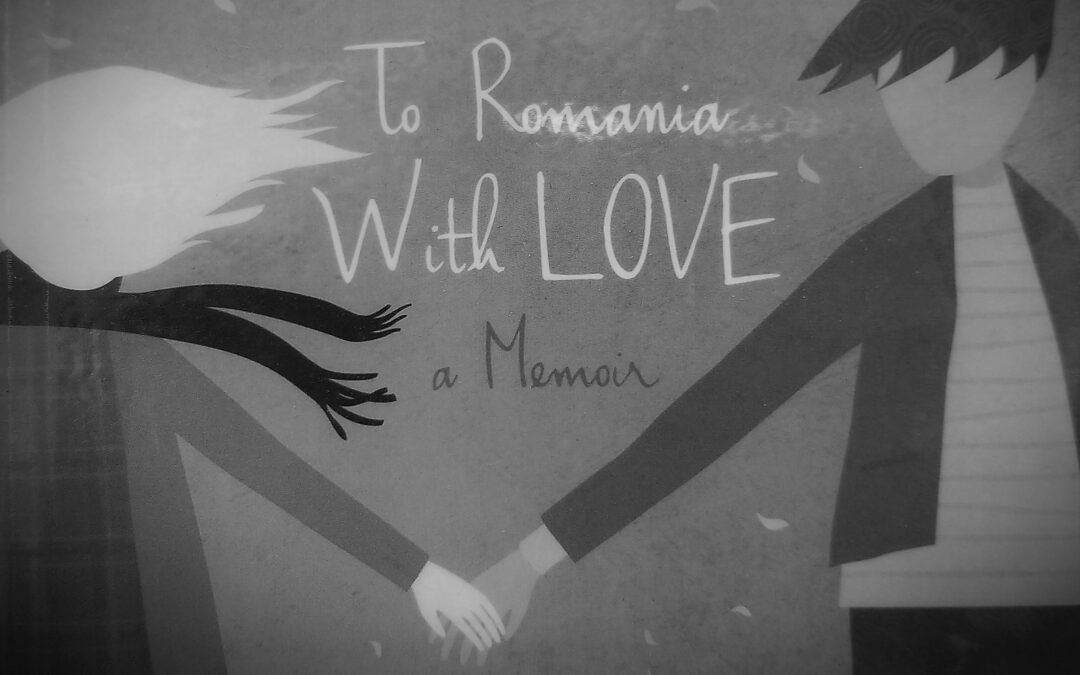
I sometimes review* books on this blog — either because they are totally brilliant or really bad. This one is a bit of both. This is my view of Tessa Dunlop’s To Romania with LOVE, which was published in 2012
This is a book that should never have been published — the author’s introverted husband tried to stop it and is probably still cringing — but I’m glad it was because it’s a snapshot of a particular time in Romanian history and the details of an Anglo-Romanian relationship (endless family misunderstandings, Britain’s horrendous visa application system pre-Brexit, as well as wildly different attitudes towards money, work, leisure) are fascinating.
Now that we’re out of the EU maybe Britain will go back to imposing deliberately opaque immigration rules on people the British tabloids don’t approve of. Maybe it’s the end of easy cross-border marriages and divorces?
On one level I wouldn’t recommend this book to anyone as it’s badly edited (why didn’t they delete all the Romanian words she uses, without translation, plunging all non-Romanian speakers into confusion?); but on the other hand I’d recommend it to all those having a relationship with a Romanian. It offers an insight into their history of poverty and Communism, and the resulting behavioural patterns.
I almost didn’t get past the first few chapters, which are set in Romania, as they really grated. I know the area she describes, and worked in a nearby village at the same time (almost 30 years ago), and while there were no factual errors I didn’t like her style, pace and observations. She’s much better when describing things in the UK.
This rather breathless book is full of things that wouldn’t make sense to anyone who doesn’t know the locations. For example, on page 205 she writes “He almost ran down Jules Michelet…” Surely any normal reader would assume that he had almost “run down” someone with a French name with his car? Fortunately I happen to to know that Strada Jules Michelet is the location of the British Embassy in Bucharest.
What are editors and publishers for if not to spot such problems? Isn’t it obvious that if things only make sense to people who know the Romanian words that fill the book, not to mention the locations, they are drastically reducing their audience?
When I used to run a charity in Romania many of our volunteers would write reports using Romanian words, words like caruta (cart) that we would use daily; but they were writing for an internal audience in a small charity, not a big publishing house like Quartet.
There are also incidents in the UK that don’t make any sense: for example near the end of the book they go to visit her parents in Scotland; they hire a car and then, quite near the parents’ house, crash it; not only is there no mention of any detail of the actual accident; but in the next scene they are in Weston Super Mare — beyond Bristol, 500 miles to the south. Suddenly, in the very next scene, they are arriving at their parents house in the Highlands of Scotland, in a car that has a Tardis-like quality of repairing itself and being in two places at once.
None of this seems to bother the rave reviewers you can see on Goodreads, Amazon and on the back of the book. Toby Clements, of the Daily Telegraph, says “a rare, brave and honest account of finding love and holding on to it.”
The common theme running through all this praise is “honesty” and I have to agree with them. Despite my criticisms I liked this book and felt close to all the characters Tessa so lovingly described. Yes, they are all deeply flawed but aren’t we all? And, come to mention it, aren’t most marriages what the Americans would call “a train wreck”?
Tessa Dunlop not only shows great honesty in writing about a difficult relationship but also a lot of courage. This book should never have been written as one doesn’t write (or even Tweet) about relationship difficulties — it’s not the decent thing — so that bloke Clements from the Telegraph is right in saying that such courage in publishing stories like this is “rare”.
Reading this book makes me feel closer to Tessa, who I met a few times in Bucharest, and her introverted Romanian husband (who I never met and probably never will). Tessa clearly loves Romania as she’s produced a series of short YouTube videos about Great Romanians which are really very good — she has something of the delectable Joanna Lumley on screen — and I’m keen to read her next book which is about Romania’s stylish and clever Queen Marie “of Edinburgh”, who reigned in the inter-war period.
I’ve just realised the parallels between Tessa Dunlop and Queen Marie — both were upper class Scots who married Romanians in difficult circumstances; and I expect that as many people predicted the royal marriage wouldn’t work as said that Tessa’s love affair was just “another of her projects” and she would soon drop him.
As far as I know Tessa has managed to keep her marriage on the road, unlike me (I also married a Romanian) — and for this she deserves a lot of praise. Not only is it hard to keep any marriage together in this day and age, when divorce is so easy, but it’s especially hard when you marry a foreigner from a country that was put through the mill by the Communists.
A shorter version of this review was first published on Goodreads.
*A word about reviews: I only do them for books that inspire or infuriate me. Some of them are very old; books that I’ve stumbled across by chance; but books that are worth knowing about. I don’t think I’ve ever reviewed a new book because I don’t want to fork out an inflated amount — and this is my point here: the media only review new books because publishers send them free copies, take them out to lunch (or send them God knows what incentives during lockdown); the whole “review” part of the modern media is built around new things being sponsored, even though most of them are far worse than the classics. “Why not review the classics?” You might ask. You could make a series of in-depth articles out of them. The answer is simple; there’s no charming public-school girl persuading you do to so on the phone, or offering to take you out for a drink later on.
The other way author’s get reviews is call on their friends. This works particularly well when the friend is a journalist, as they have a lot more reach than my pals who can only post something on Amazon or Goodreads. You can spot this happening every time a journalist writes a book as its cover is plastered with praise from…other journalists.
That’s how the cookie crumbles when it comes to promoting books.

