

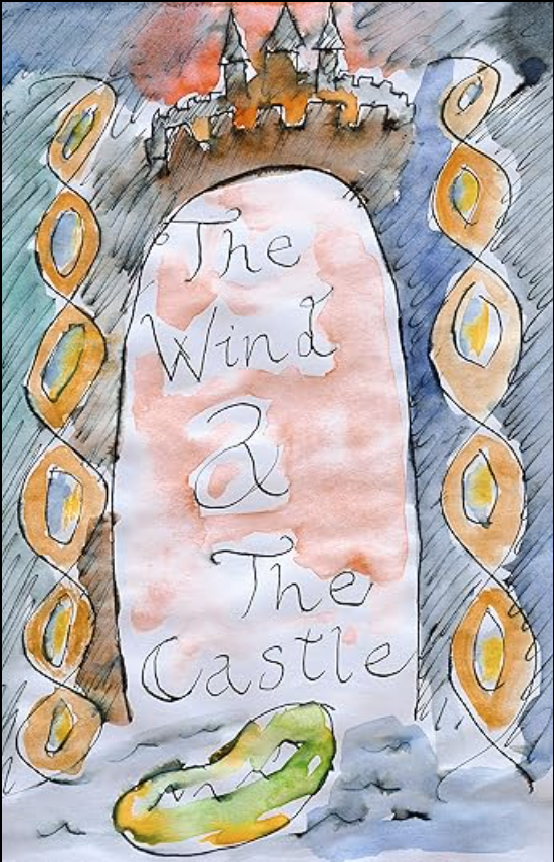
The Wind and The Castle
Inspired by the Fairy Tales of Hermann Hesse
"A Fairy Tale for all ages. I spent some very agreeable hours in the wondrous world of Rupert Wolfe Murray." From an Amazon review
Why I wrote this book?
After my divorce I read the Fairy Tales of Hermann Hesse and they helped me sort out my troubled psyche. Then this story just poured out of me.
I wrote it quickly but it took me years to publish. This is because of self-doubt, fear of rejection by publishers and procrastination.
When I wrote this story I didn’t think about any other fairy tales. But when I re-read Aladdin I realised that I’d borrowed a scene from that great tale: when Aladdin sees the princess and is smitten by love.
I was quite shocked; for a moment I felt like one of Ali Baba’s forty thieves -- I had stolen something. But this feeling soon passed as I knew it had been done unconsciously. I also knew that artists, writers and musicians often borrow (and adapt) things from each other, and from the ancients. It’s how creativity works.
Ancient fairy tales that I heard as a child are buried deep in my subconscious, as are countless details from books, films and conversations. It’s all there, like some massive library, just waiting for me to summon them. We all have this resource within, it's called the subconscious.
Book summary
Arthur falls in love with Gwendolyn, the daughter of the local aristocrat, but he is a commoner and not allowed near her.
He sets off on a quest, learns to survive in the wild forest and hears the strange legend of the wind and the castle.
Some years later he makes his way home, but things are very different...
Reviews:
"Magical realism and humanity. A simple but eternal story... You could say that it is ‘of all ages and for all ages’." Chris Burn, Poetry Changes Lives
"This story is full of life and imagination. It transported me to the setting and made me feel like a child. The characters are strong and it’s full of vivid imagery. What a great bit of writing." Amazon reader (anonymous)
"The fable with a strong moral has a long tradition. It almost certainly predates writing. "The Odyssey" is of this genre. So is the oldest known novel in English, "Beowulf". This most readable fairy tale has many of the elements so well known from classic fables; there are castles and peasants and princesses and forests and journeys to far countries. But the messages of respect for nature are of now." Arabin, on Amazon
"A powerful message in today's world - a short story with cleverly woven descriptive passages that will keep you turning the pages. This is a book which will touch the hearts of adults and children alike." Gaskit, on Amazon
"It is easy to read this book. I liked the fact that I wanted to continue reading, I wanted to know what happened and so I happily read until the conclusion. I really liked what Rupert wrote at the end about his mother and how she inspired him. There is something very clear about the way he writes; it is direct and true. This story though is really about loving life and honouring all that surrounds us. The spirit of the book is what makes it work so well. Under the guise of a ‘fairy tale’ we are shown what’s really important, what really matters and that I think is what makes this wee book so delightful and uplifting. It is full of heart." Starface, on Amazon